

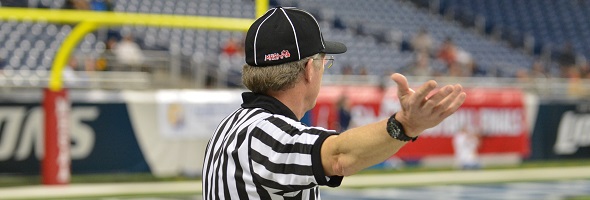
Be the Referee: Automatic 1st Downs
October 29, 2020
This week, MHSAA assistant director Brent Rice explains how high school football rules differ from those at the collegiate and professional levels when it comes to awarding automatic first downs.
Be The Referee is a series of short messages designed to help educate people on the rules of different sports, to help them better understand the art of officiating, and to recruit officials.
Below is this week's segment - Automatic 1st Downs - Listen
Today we are going to talk about one of the biggest rule difference areas in high school football from those rules used in college and pro games, and that deals with automatic first downs.
When watching that college game on Saturday or the pro game on Sunday, all of us know there are several defensive fouls that give the offense an automatic first down. However, under high school rules, the opposite is true most of the time.
The only high school fouls that result in an automatic first down for the offense are the roughing fouls – roughing the passer, the kicker, the holder and the long snapper. Fouls such as defensive pass interference or any other personal foul do not bring an automatic first down under high school rules.
Past editions
10/22: You Make the Call: Illegal Kick - Listen
10/15: Toe the Line on Penalty Kicks - Listen
10/8: Disconcerting Acts - Listen
10/1: Ball Hits Soccer Referee - Listen
9/24: Clocking the Ball from the Shotgun - Listen
Clip of the Week: Davison's Caleb Smith
November 20, 2019
By Geoff Kimmerly
Second Half editor
The latest State Champs Sports Network's “Clip of the Week” captures Davison's Caleb Smith intercepting a Utica Eisenhower pass in the end zone and returning it for a touchdown in last week's Regional Final win.
Click to check out all of the coverage from State Champs!