

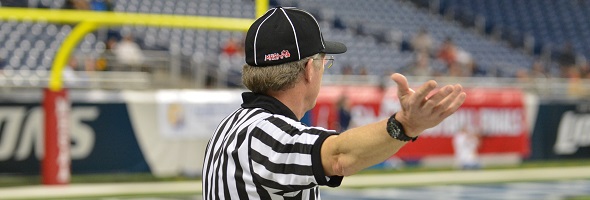
Be the Referee: Disconcerting Acts
October 8, 2020
This week, MHSAA officials coordinator Sam Davis explains a change in football meant to reduce a form of gamesmanship at the line of scrimmage.
Be The Referee is a series of short messages designed to help educate people on the rules of different sports, to help them better understand the art of officiating, and to recruit officials.
Below is this week's segment - Disconcerting Acts - Listen
Among the rules changes in high school football for the 2020-21 school year is an adjustment in the penalty assessed to the defense for disconcerting acts and sounds.
Among the gamesmanship that sometimes takes place near the line of scrimmage at the start of the play, defensive players have been known to make sounds or act in a manner which otherwise might distract an offensive player waiting for the snap signal. Previously, the most egregious of these actions would be penalized 15 yards for unsportsmanlike conduct.
But beginning this year, the disconcerting act foul is a five-yard penalty. The change in the rule actually makes it more likely that this kind of behavior will be flagged, and may eventually lead to a reduction is this type of activity.
Past editions
10/1: Ball Hits Soccer Referee - Listen
9/24: Clocking the Ball from the Shotgun - Listen
1st & Goal: 2026 Week 8 Preview
By
Geoff Kimmerly
MHSAA.com senior editor
October 15, 2026
Winner takes it all.
 That might be the most to-the-point expression in sports – and most exhilarating scenario.
And it’s going to play out all over Michigan this weekend, as one last game will determine several league championships and provide crowning achievements – at least for now – rewarding the last two months of work.
Games highlighted are tonight unless noted. Tune in to the NFHS Network to watch the majority and follow the MHSAA Scores page for results as they’re submitted. Keep an eye as well on the Playoff Point Summary page to watch how those lists are updated with every win and loss.
Bay & Thumb
Grand Blanc (7-0) at Davison (6-1)
The Saginaw Valley League South title has come down to these rivals for the third straight season, as neither has lost a conference game this fall although Davison has two remaining and Grand Blanc finishes up tonight. Last season it was the Bobcats with a 57-29 win that decided the league title, and they’ve won two straight championships after Davison’s most recent in 2023. Neither has been challenged much over the last month; the lone loss between them was the Cardinals’ in Week 2 to still-undefeated Detroit Catholic Central.
Keep an eye on these FRIDAY Flint Elite (5-2) at Burton Bendle (7-0), Goodrich (7-0) at Fenton (6-1), Frankenmuth (6-1) at Saginaw Swan Valley (7-0), Gladwin (5-2) at Sanford Meridian (7-0).
Greater Detroit
Detroit Cass Tech (7-0) vs. Detroit Martin Luther King (6-1) at Ford Field
Although King has defeated Cass Tech twice over the last five seasons, the Technicians have won all five of their city championship game rematches and will attempt to add this time to a 20-7 victory over the Crusaders in Week 5. That was easily the toughest challenge Cass Tech has faced this season, and if King generates more offense this time it could make a run at breaking a four-game losing streak against its rival.
Keep an eye on these FRIDAY Detroit Central (6-1) vs. Detroit Denby (5-2) at Ford Field, Ecorse (7-0) at Detroit Edison (6-1), Clarkston (7-0) at Harper Woods (6-1), Walled Lake Western (6-1) at South Lyon East (6-1).
Mid-Michigan
DeWitt (6-1) at Grand Ledge (7-0)
Despite suffering its first regular-season loss this fall since 2023, DeWitt still has a 21-game Capital Area Activities Conference Blue winning streak intact and a familiar challenge ahead as these two also decided the league title last season. DeWitt won that one 59-7 amid a perfect fall that ended with a Division 3 championship victory, and the lone loss this season came to still-unbeaten Mason. The Comets will work to slow the Panthers’ offense, but instead may have to answer it with a similarly successful attack.
Keep an eye on these FRIDAY Fowler (6-1) at Ithaca (7-0), Napoleon (6-1) at Leslie (4-3), Hastings (52) at Mason (7-0), Olivet (5-2) at Lake Odessa Lakewood (6-1).
Northern Lower Peninsula
Marquette (5-2) at Petoskey (5-2)
Petoskey has been chasing in the Big North Conference since falling to Cadillac 22-20 in Week 5, but the Northmen have lost twice by a combined five points this fall and can finish with a share of the league title by getting past the Sentinels. Marquette already owns a share and won last year’s meeting 20-7. After opening this fall with a pair of nonleague losses to Negaunee and Menominee, the Sentinels have run through the BNC unscathed, with a 33-27 win over Cadillac especially of note.
Keep an eye on these FRIDAY Escanaba (3-4) at Cadillac (5-2), Charlevoix (5-2) at Elk Rapids (5-2), East Jordan (6-1) at Frankfort (5-2), Evart (3-4) at McBain (5-2).
Southeast & Border
Monroe Jefferson (7-0) at Monroe St. Mary Catholic Central (7-0)
It’s difficult to imagine a better way to end an era, as this will be the final Huron League matchup between these neighbors for now with St. Mary moving to the Catholic High School League next fall. The Falcons are seeking a third-straight Huron title on their way out, having won it outright in 2024 and then sharing with Jefferson and Riverview last season. That split title was the product in part of SMCC’s 20-15 win over Jefferson, and both have fended off close challenges this fall to set up this winner-take-all scenario.
Keep an eye on these FRIDAY Saline (7-0) at Temperance Bedford (7-0), Adrian Madison (6-1) at Clinton (6-1), Ida (6-1) at Hudson (6-1). SATURDAY Hanover-Horton (6-1) at Manchester (6-1).
Southwest Corridor
Vicksburg (7-0) at Edwardsburg (7-0)
This isn’t quite winner-take-all, but the winner will earn a share of the Wolverine Conference title although Vicksburg must still face Paw Paw next week and Edwardsburg will travel to see three-time reigning champ Niles. An Eddies win tonight would give them their first Wolverine championship since 2022, while Vicksburg is seeking its first since the league went to one division again in 2015. Vicksburg won both of last season’s matchups, 38-35 during the regular season and 43-30 in a Division 4 District opener.
Keep an eye on these FRIDAY Reading (4-3) at Bronson (5-2), Coldwater (5-2) at Marshall (6-1), Lawton (5-2) at Parchment (4-3), Portage Northern (4-3) at Kalamazoo Loy Norrix (4-3).
Upper Peninsula
Kingsford (7-0) at Menominee (7-0)
The Western Peninsula Athletic Conference Copper could send five of its seven teams to the playoffs this season, and great matchups have abounded all fall – but this is the title decider most have anticipated. Kingsford won 14-12 in 2024 to claim the championship, and Menominee stormed back with a 49-14 clincher last season on the way to also claiming the Division 7 title. Both are coming off close wins last week, Kingsford over Ishpeming Westwood and Menominee over Negaunee.
Keep an eye on these FRIDAY Manistique (4-3) at Bark River-Harris (6-1), Hancock (3-4) at L’Anse (3-4), Houghton (2-5) at Negaunee (4-3), Calumet (4-3) at Gladstone (1-6).
West Michigan
Ravenna (6-1) at North Muskegon (6-1)
North Muskegon is 27-0 in the West Michigan Conference Rivers since the league split into divisions in 2022, but arguably the most consistent challenges during that run have come from Ravenna – which actually avenged a title-deciding loss in 2022 with a 10-7 playoff win over the Norsemen. North Muskegon did win last year’s meeting 36-29 and has extended its streak in part with a one-point victory over Shelby in Week 3 and 11-pointer over Manistee in Week 6.
Keep an eye on these FRIDAY Middleville Thornapple Kellogg (6-1) at East Grand Rapids (5-2), Cassopolis (6-1) at Saugatuck (5-2), Rockford (4-3) at Hudsonville (5-2), Grand Rapids Kenowa Hills (6-1) at Lowell (5-2).
8-Player
Mendon (7-0) at Climax-Scotts (6-1)
One of these two has won their league the last four seasons, with Mendon already securing a share of the Southern Central Athletic Association Red championship this fall. The Hornets will attempt to make that title outright with a third-straight victory over Climax-Scotts (including a 2024 Regional win). But the Panthers can grab a share as well as they’ve rebounded nicely from a Week 4 loss to Colon, putting up a combined 157 points over three wins since scoring eight in that defeat.
Keep an eye on these FRIDAY Powers North Central (5-2) at Felch North Dickinson (4-3), Pickford (6-1) at Gaylord St. Mary (7-0), Marion (7-0) at Onekama (6-1). SATURDAY Mio (5-2) at Merrill (6-1).
MHSAA.com's weekly “1st & Goal” previews and reviews are powered by MI Student Aid, a division within the Department of Lifelong Education, Advancement, and Potential (MiLEAP). MI Student Aid encourages students to pursue postsecondary education by providing access to student financial resources and information. MI Student Aid administers the state’s scholarship and grant programs that help make college Accessible, Affordable and Attainable for you. Click to connect with MI Student Aid and find more information on Facebook and Twitter @mistudentaid.
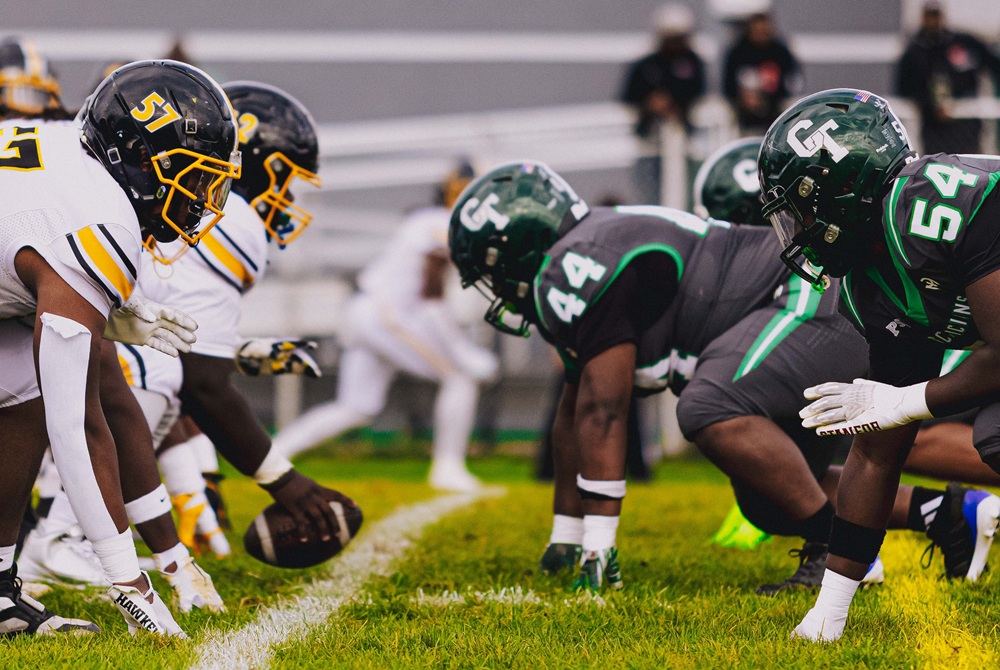
PHOTO Detroit Martin Luther King and Cass Tech linemen line up across from each other during their Week 5 matchup. (Click for more from Olivia B. Photography.)