

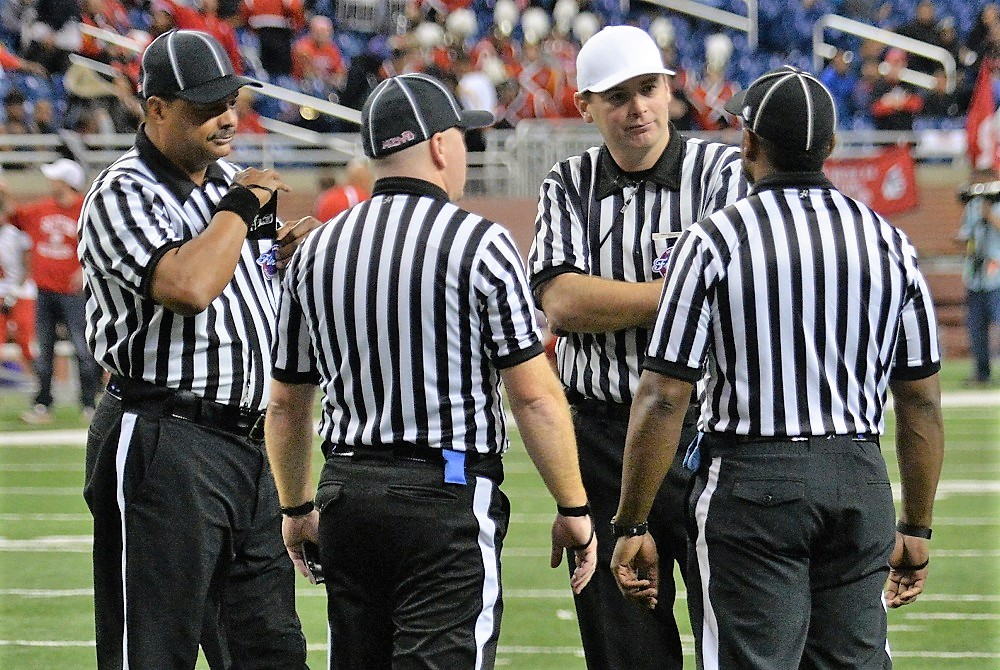
Be the Referee: Safety in End Zone
By
Geoff Kimmerly
MHSAA.com senior editor
October 11, 2022
Be The Referee is a series of short messages designed to help educate people on the rules of different sports, to help them better understand the art of officiating, and to recruit officials.
Below is this week's segment – Safety in End Zone - Listen
Team A has the ball on its own 3-yard line – facing a 4th-and-10. The quarterback drops back into the end zone, and just before he’s about to be sacked, he throws the ball away.
Out comes the flag for intentional grounding – which would give the defense two points and force Team A to kick off. But the coach of the team on defense would rather decline the penalty and take over at the 3-yard line. Can he do that?
Not exactly.
While he can decline the penalty, the result of the play is the same. A safety for the defense. If the penalty is accepted, the enforcement is from the end zone resulting in a safety. Incomplete illegal passes end the play where the pass is made, so even if the penalty is declined, it’s a safety because the play ended behind the goal line.
Previous Editions:
Oct. 4: Football Overtime Penalty - Listen
Sept. 27: Kickoff Goal - Listen
Sept. 20: Soccer Timing - Listen
Sept. 13: Volleyball Replays - Listen
Sept. 6: Switching Sides - Listen
Aug. 30: Play Clock - Listen
Aug. 23: Intentional Grounding Change - Listen
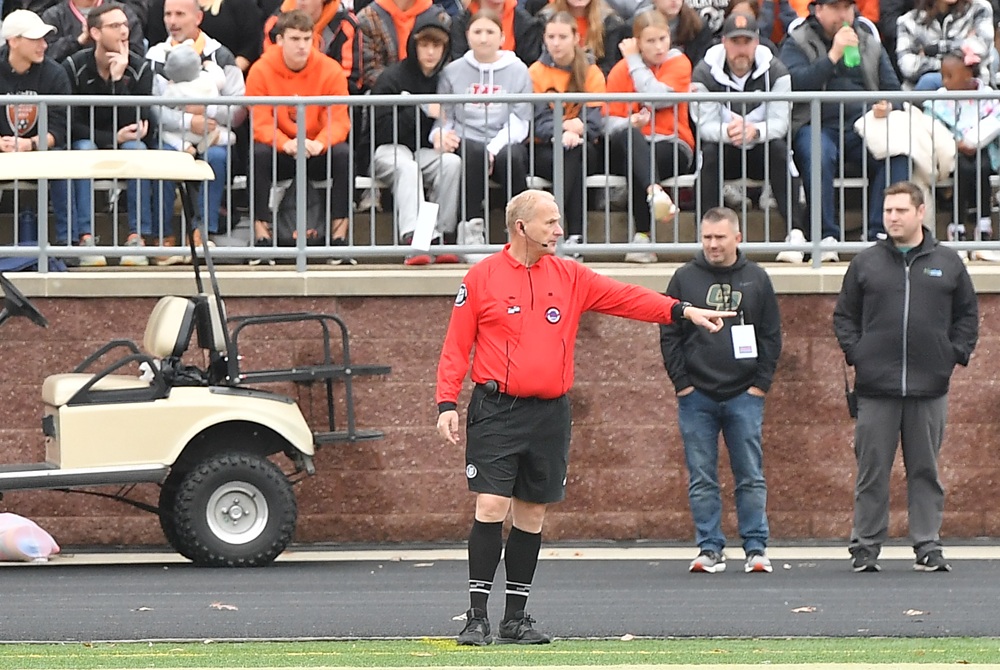
Be the Referee: Soccer Foul After Shot on Goal
By
Paige Winne
MHSAA Director of Brand Management
September 2, 2026
Be The Referee is a series of short messages designed to help educate people on the rules of different sports, to help them better understand the art of officiating, and to recruit officials.
Below is this week's segment – Soccer Foul After Shot on Goal - Listen
We’re on the soccer field today, and the home team has the ball and is on the attack.
The ball makes it around to a forward from the home team, who is on-side and within the penalty area. His shot just misses – going wide for a goal kick.
However, just after the ball crossed the goalline, a player from the away team tackles the home team forward with excessive force.
What’s the call?
Because excessive force was used, it’s a red card for the away team player, which is an automatic ejection. But because it happened after the ball crossed the goalline and not at the time of the shot, it’s still a goal kick for the away team, not a penalty kick for the home team.
Previous 2026-27 editions
Aug. 25: Fumble Out of Bounds - Listen