


Heads and Heat
August 16, 2012
We are engaged in very serious discussions. They’re not only complicated, with unintended negative consequences possible from what are thought to be positive actions; they’re also a matter of life and death.
The topic is football – the high school sport under most scrutiny today and suffering from the most criticism it’s seen since the 1970s when catastrophic neck injuries spiked, liability awards soared, many insurers balked, and most helmet manufacturers abandoned the business altogether.
During recent years we have learned about the devastating long-term effects of repeated blows to the head; and we’re trying to reduce such hits. We’ve learned that 70 percent of concussions in football result from helmet-to-helmet contact, and we’re trying to have coaches teach blocking and tackling differently and have officials penalize “high hits” consistently and rigorously.
During the past several years we’ve learned that serious heat illness and heat-related deaths are 100 percent preventable, yet nationwide there were 35 heat-related deaths in high school football alone from 1995 to 2010; and we’re promoting practices that acclimatize athletes more gradually than “old school” traditionalists might advocate.
As we simultaneously address issues of heads and heat in football, some coaches may think we’re being overbearing, while many in medical fields say we’re out of date, citing higher standards of the American Academy of Pediatrics, National Athletic Trainers Association and National Federation of State High School Associations, as well as many of our counterpart organizations across the country.
As we consider in-season changes to improve athlete acclimatization and reduce blows to the head, we should be open to making out-of-season changes that work toward rather than in opposition to those objectives. There can be no sacred cows. The topic is too serious.
Ultimately, if we err in the outcome of this year’s discussions about heads and heat in football, it must be on the side of safety, on minimizing risks for student participants. They deserve it and, once again, the sport of football needs it.
Drive for Detroit: Playoff Week 1 Review
November 4, 2019
By Geoff Kimmerly
Second Half editor
Everything starts fresh in the playoffs. It’s not supposed to matter which teams have dominated during the regular season or won the first time when two rivals are set to meet again.
 When coaches need a little help convincing their players of any of that, they should remember this first weekend of the 2019 postseason.
Upsets abounded, rematches reversed, and a few brackets saw some serious shake-up during the Pre-District and Pre-Regional rounds in 11- and 8-player, respectively.
Our weekly review, playoff edition, glances at some of the results from every division as we move one step closer to Ford Field and the Superior Dome.
"Drive for Detroit" is sponsored by MI Student Aid.
11-Player
Division 1
HEADLINER Macomb Dakota 34, Clinton Township Chippewa Valley 13 The reigning Division 1 champion Big Reds (9-1) had won 23 straight games including three during that time over rival Dakota, but this year’s first meeting was an indication of what might be possible. Chippewa Valley won the Week 6 meeting only 27-21, and unlike last year – when the Big Reds won the regular-season game by seven and the playoff rematch by 41 – Dakota flipped the result for perhaps the biggest upset from a weekend full of them. Click for more from the Macomb Daily and see highlights below from State Champs Sports Network.
VIDEO: Check out the highlights of the Macomb Dakota (@DakotaFootball) at Chippewa Valley football game from last night. @Dakota_Cougars @dhscougars20
Brought to you by @MHSAA pic.twitter.com/cSz2geAXPS— STATE CHAMPS! (@statechampsnet) November 2, 2019
District Digest East Kentwood 38, Rockford 12 This nearly overtook the above for biggest upset statewide. A week after Rockford (8-2) downed East Kentwood 17-7 to lock up the Ottawa-Kent Conference Red title, the Falcons (6-4) stormed back to hand the Rams their earliest playoff exit since 2002. Belleville 49, Saline 10 This matchup of 2018 semifinalists went Belleville’s way big as the Tigers (10-0) achieved double-digit wins for the third straight season and held the Hornets (8-2) to their fewest points this season. Detroit Cass Tech 24, Grosse Pointe South 17 The Technicians (6-4) may have made the playoffs as an additional qualifier, but they always are tough to beat in the postseason and advanced to the District Finals for the 12th straight year. The Blue Devils finished 7-3. Davison 35, Romeo 21 The Cardinals (8-2) bounced back from a Week 9 loss to Lapeer and also a first-round playoff exit a year ago to get past Romeo (7-3) and earn a rematch this week with the Lightning.
Division 2
HEADLINER Detroit U-D Jesuit 34, North Farmington 21 The Cubs (7-3) did win the Detroit Catholic League AA title this fall, but had to beat Dearborn Divine Child a second time Week 9 to make the playoffs as an automatic qualifier. So on paper, they may not have been expected to hand North Farmington (9-1) its first and only loss – although digging deeper, it’s key to remember Jesuit’s defeats were to annual powers Bloomfield Hills Brother Rice, Detroit Catholic Central and Warren De La Salle Collegiate – valuable preparation for games of this magnitude. Click for more from the Oakland Press.
VIDEO: Check out the highlights of the U of D Jesuit (@UDJ_Football) vs. North Farmington football game from this afternoon. @UofDJesuit @UDJCubs
Brought to you by @hungryhowies pic.twitter.com/SE2cuoeBkJ— STATE CHAMPS! (@statechampsnet) November 3, 2019
District Digest Farmington 12, Oak Park 6 The Falcons (8-1) fell short of winning the Oakland Activities Association Blue because of a four-point loss to North Farmington, but they’ll play for a District title after this win over the OAA White champion Knights (8-2). Midland Dow 27, Traverse City Central 24 The Chargers (7-3) are riding as hot a streak as any team in the state and followed up a league title-clinching win Week 9 by edging the Big North Conference champion Trojans (8-2). Muskegon Mona Shores 20, Midland 13 The Sailors (8-2) began a march they hope leads to a second-straight trip to Ford Field with a second straight win over the Chemics (8-2) after also defeating them in last year’s Semifinal. Port Huron 27, Port Huron Northern 21 The Big Reds (7-3) broke a three-game losing streak against their crosstown rival as they continued their best season since 2014. Northern (8-2) had won the first meeting Week 7, 29-26, but lost star defensive end Braiden McGregor to a season-ending injury in that victory.
Division 3
HEADLINER St. Johns 17, Mason 7 The Redwings (7-3) have made nice strides under first-year coach Andy Schmitt this fall, with their best record since 2015. But they’ve also made big improvements over just the last five weeks – St. Johns had fallen to Mason 46-7 in Week 5, and the Bulldogs (9-1) went on to achieve their first undefeated regular season. The rematch win gave the Redwings a 6-2 advantage on Mason since the teams became part of the same league in 2014. Click for more from the Lansing State Journal and see highlights from WILX.
The St Johns Redwings with a huge upset win over Mason tonight on the road. It was a little bit cold for that shower Andy Schmitt got after the game ?? @BlitzNews10 @SJ_StudentSect @StJohnsSports @StJohnsFB pic.twitter.com/QVfAgYj8bA
— Seth Wells (@SethWILXSports) November 2, 2019
District Digest DeWitt 21, East Lansing 13 On the other side of the District from St. Johns, DeWitt (8-2) avenged its only Capital Area Activities Conference Blue defeat by downing the Trojans (7-3) in a matchup of two of the three teams that shared the league title. Flint Kearsley 20, Bloomfield Hills Brother Rice 19 The Hornets (8-2) made their first playoff game since 1998 count winning a game that saw both teams score during the final minutes. Rice finished 6-4. Cedar Springs 34, Mount Pleasant 7 The Red Hawks (9-1) will play for a District title for the third-straight season after opening the playoffs for the second straight with a win over the Oilers (7-3). Zeeland West 38, Zeeland East 7 The Dux (9-1) avoided the rematch upset that had occurred between these rivals in the playoffs three of the last seven years, finishing a season sweep of the neighboring Chix (5-5).
Division 4
HEADLINER Sparta 35, Muskegon Orchard View 0 This looked on paper like potentially one of the first round’s best matchups, and Sparta (9-1) showed up big in its first playoff game since 2013. The Spartans not only handed Orchard View (9-1) its lone loss, but shut out an offense averaging 40.7 points per game entering the weekend. See highlights below from FOX 17.
Sparta ends Orchard View's perfect season. The Spartans advance to face Grand Rapids Catholic Central in the district finals. https://t.co/150d0mMYad
— FOX 17 Blitz (@FOX17Blitz) November 2, 2019
District Digest Grand Rapids South Christian 31, Grand Rapids Christian 28 The Sailors had given Grand Rapids Christian (7-3) one of the latter’s two closest O-K Gold games, losing by just seven Week 7. South Christian (6-4) avenged that 27-20 defeat, hanging on after a late Eagles score. Cadillac 35, Escanaba 12 The Vikings’ first playoff win since 2013 came at Escanaba (7-3) against a team that had won three straight District titles. Cadillac (6-4) heads back over the Bridge this week to Sault Ste. Marie. Fowlerville 29, Goodrich 28 (OT) The Gladiators (7-3) went for a 2-point conversion after its overtime touchdown and knocked out a league champion in the Martians (7-3). Milan 14, Carleton Airport 13 The Big Reds (10-0) narrowly escaped joining the list of those who suffered rematch downfalls, getting past Airport (6-4) for the second time in three weeks after winning the Week 8 meeting 20-6.
Division 5
HEADLINER Almont 30, Richmond 20 The Raiders traveled to Richmond (8-2) for the second time in four weeks and came home victorious again against the team it defeated previously to clinch a share of the Blue Water Area Conference title. Almont (10-0), which then won the league outright, also reached double-digit wins for the second-straight season and will play this week for what would be its first District title since 2014. Click for more from the Port Huron Times Herald.
District Digest Kalamazoo United 16, Berrien Springs 12 The Titans (6-4) are surging, claiming a share of their league title Week 9 against previously-unbeaten Schoolcraft and this week ending the season for another undefeated team in the Shamrocks (8-1). Lansing Catholic 28, Olivet 21 The Cougars (9-1) got past Olivet (8-2) in the first round for the third-straight year to again earn a chance to avenge its only loss against rival Portland. Dearborn Heights Robichaud 29, Dundee 28 A fourth-quarter score gave the Bulldogs (8-2) their first playoff win since 2015 and sent Dundee to 5-5, still tying its winningest season since 2012. Whitmore Lake 45, Ann Arbor Father Gabriel Richard 28 The Trojans (8-2) earned their first postseason win since 2006 by avenging a 22-20 Week 5 loss to the Fighting Irish (5-5).
Division 6
HEADLINER Sanford Meridian 19, Ithaca 14 Talk about perseverance. The Mustangs (7-3) are in the playoffs for the first time since 2015 and after three straight sub-.500 seasons. During their last three-year playoff stretch from 2013-15, they were eliminated by Ithaca (8-2) twice. And Meridian also put this win together on the road and coming off its third loss over the final five weeks of the regular season. Click for more from the Mount Pleasant Morning Sun and see highlights below from MI Sports Now.
Sanford Meridian upsets Ithaca in D6 playoffs https://t.co/LAZKajEmKK pic.twitter.com/p4QPUrxJCo
— MISportsNow (@MISportsNow) November 2, 2019
District Digest Menominee 48, Ishpeming Westwood 18 The Maroons (7-3) moved to 24-8 in playoff contests this decade and appear to be heating up with at least 47 points for the third straight game, this total the most given up by Westwood (7-3) since 2013. Harrison 38, Clare 6 The Pioneers (8-2) rarely lose during the Jack Pine Conference season, but Harrison (6-4) came back from a 42-40 Week 3 defeat to win this rematch 38-6. Constantine 58, Niles Brandywine 8 The Falcons’ best season since 2014 now includes a share of a league title and handing the only loss to Brandywine (9-1). Constantine (8-2) increased its points per game average to 42.3. Millington 21, Flint Hamady 14 The Cardinals (6-4) extended their playoff season streak to 16 as an additional qualifier, then opened the postseason by defeating a league champion in Hamady (7-2).
Division 7
HEADLINER Riverview Gabriel Richard 17, Clinton 14 The Pioneers won on a field goal as the final seconds ticked off the clock. Gabriel Richard (8-2) has had a nice run over the last five years and will play in its fourth District Final during that time and third straight. But this still likely was considered a slight upset with Clinton (9-1) undefeated for the regular season for the fifth time in eight years and having beaten all but one of its opponents this fall by double digits. Click for more from the Adrian Daily Telegram.
District Digest Charlevoix 32, Harbor Springs 0 The Rayders (7-3) won in the playoffs for the first time with their first shutout of the season and after also defeating Harbor Springs (6-4) 47-27 in Week 9. McBain 14, Oscoda 12 The Owls (8-2) were playing for their first playoff win since 2000, but McBain (6-4) held on to book a return trip to the District Finals. Lawton 7, Centreville 3 These teams combined to gain only 384 yards and punt seven times, which made sense since Lawton (10-0) gives up 7.8 points per game and Centreville (6-4) gave up 8.6 per game this fall. Detroit Loyola 26, Detroit Central 12 After facing six eventual playoff qualifiers during the regular season, Loyola (5-4) made the prep pay off in handing Central (8-2) its first defeat since Week 1.
Division 8
HEADLINER Flint Beecher 52, Clarkston Everest Collegiate 25 Beecher (6-3) worked through a 1-2 start and then an open Week 7 to reach the postseason, then kickoff off the playoffs by handing the Mountaineers (8-1) their only defeat. The teams had also met in the playoffs last year, a 22-14 Buccaneers District Final win, and this time Beecher took off for its highest-scoring game of the fall.
VIDEO: Check out the highlights of the Flint Beecher at Clarkston Everest football game from tonight. @erniesands11
Brought to you by @hungryhowies pic.twitter.com/HNojy4mNme— STATE CHAMPS! (@statechampsnet) November 2, 2019
District Digest Lake Linden-Hubbell 36, West Iron County 14 The Lakes’ first playoff win since 2016 improved them to 7-3 and avenged a 24-16 Week 6 loss to the Wykons (7-3). Saginaw Nouvel 33, Merrill 13 Three straight losses at the end of the regular season forced Nouvel (6-4) to win Week 9 to have a chance at earning an additional qualifier spot, and now the Panthers are on a two-win streak after downing the Vandals (6-4). Reading 38, Mendon 0 The reigning Division 8 champ Rangers (9-1) started this playoff run with their fourth shutout over the last five weeks, ending Mendon’s season at 7-3. Sand Creek 52, Addison 24 The Aggies (8-2) finished third in a strong Tri-County Conference and earned the league more fame by doubling up the Cascades Conference-winning Panthers (7-3).
8-Player
Division 1
HEADLINER Gaylord St. Mary 48, Pellston 6 The Snowbirds (5-5) quickly ended Pellston’s first playoffs, locking down an offense that averaged 42.4 points per game. The Hornets’ only other defeat this fall came against Hillman as they finished 8-2 to end a streak of 22 straight sub-.500 seasons. Next up for St. Mary is Suttons Bay, which it beat on the field by a point in Week 6. Click for more from the Gaylord Herald Times.
Gaylord St. Mary cruises past Pellston in playoff opener https://t.co/CBy3o2Mp7y pic.twitter.com/uJkReXxJIY
— MISportsNow (@MISportsNow) November 2, 2019
Regional Roundup Mio 34, Mayville 22 The Thunderbolts (9-1) extended their first 8-player season with their first playoff win since 2010, ending what tied for the winningest season for Mayville (6-4) since 1987. Kingston 58, Mesick 22 The Cardinals (8-2) made their first Regional Final since 2014 by defeating a league champion in Mesick (7-3), which concluded its winningest season since 1995. Martin 28, Bellevue 0 The Clippers (10-0) reached double-digit wins for the first time since 1987 with their first playoff victory since 2007, handing Bellevue (6-4) its first shutout since 2016.
Division 2
HEADLINER Powers North Central 46, Crystal Falls Forest Park 28 These rivals were two of the top seven teams in Division 2 by playoff point average, with North Central tied for the top spot. After falling in the teams’ first meeting 34-8, Forest Park scored first in the rematch but couldn’t keep pace with a Jets offense averaging 53.3 points per game. Click for more from the Escanaba Daily Press.
VIDEO: Check out the highlights of the Powers North Central vs. Crystal Falls Forest Park football game from tonight. Brought to you by @hungryhowies pic.twitter.com/ehOfQfd7fk
— STATE CHAMPS! (@statechampsnet) November 2, 2019
Regional Roundup Onekama 22, Wyoming Tri-unity Christian 20 The reigning Division 2 runner-up escaped a quicker exit against former league foe Tri-unity (5-5), which had beaten the Portagers (7-3) by two when they last met a year ago. Pickford 57, Engadine 12 The reigning Division 1 runner-up earned its second win this season over Engadine (8-2), which lost only to Pickford (9-1) this fall. Climax-Scotts 26, Brethren 6 The Panthers (8-2) bounced back from a two-point Week 9 loss to unbeaten Martin with a nice win over a Brethren team that strung together back-to-back playoff appearances for the first time and finished this fall 5-5.
Second Half’s weekly “Drive for Detroit” previews are powered by MI Student Aid, a part of the Office of Postsecondary Financial Planning located within the Michigan Department of Treasury. MI Student Aid encourages students to pursue postsecondary education by providing access to student financial resources and information. MI Student Aid administers the state’s 529 college savings programs (MET/MESP), as well as scholarship and grant programs that help make college Accessible, Affordable and Attainable for you. Connect with MI Student Aid at www.michigan.gov/mistudentaid and find more information on Facebook and Twitter @mistudentaid.
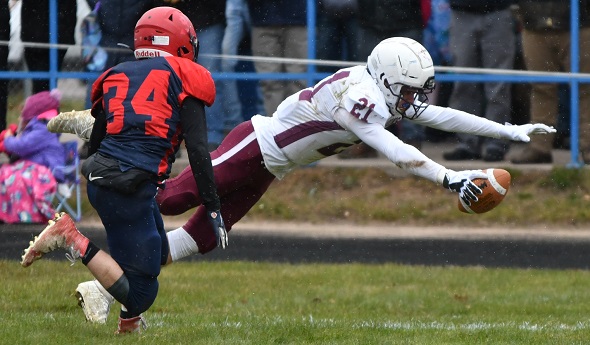
PHOTO: After breaking a couple of tackles and almost getting pushed out of bounds, Menominee's Keagan Moore dives for the end zone and scores. (Photo by Cara Kamps.)