


Heads and Heat
August 16, 2012
We are engaged in very serious discussions. They’re not only complicated, with unintended negative consequences possible from what are thought to be positive actions; they’re also a matter of life and death.
The topic is football – the high school sport under most scrutiny today and suffering from the most criticism it’s seen since the 1970s when catastrophic neck injuries spiked, liability awards soared, many insurers balked, and most helmet manufacturers abandoned the business altogether.
During recent years we have learned about the devastating long-term effects of repeated blows to the head; and we’re trying to reduce such hits. We’ve learned that 70 percent of concussions in football result from helmet-to-helmet contact, and we’re trying to have coaches teach blocking and tackling differently and have officials penalize “high hits” consistently and rigorously.
During the past several years we’ve learned that serious heat illness and heat-related deaths are 100 percent preventable, yet nationwide there were 35 heat-related deaths in high school football alone from 1995 to 2010; and we’re promoting practices that acclimatize athletes more gradually than “old school” traditionalists might advocate.
As we simultaneously address issues of heads and heat in football, some coaches may think we’re being overbearing, while many in medical fields say we’re out of date, citing higher standards of the American Academy of Pediatrics, National Athletic Trainers Association and National Federation of State High School Associations, as well as many of our counterpart organizations across the country.
As we consider in-season changes to improve athlete acclimatization and reduce blows to the head, we should be open to making out-of-season changes that work toward rather than in opposition to those objectives. There can be no sacred cows. The topic is too serious.
Ultimately, if we err in the outcome of this year’s discussions about heads and heat in football, it must be on the side of safety, on minimizing risks for student participants. They deserve it and, once again, the sport of football needs it.
#TBT: Reeths-Puffer Legends Born
November 30, 2017
By Geoff Kimmerly
Second Half editor
The “Legends of the Game” program returned to the MHSAA Football Finals this past weekend, as members of the 1992 Muskegon Reeths-Puffer football team and cheerleaders from that fall were honored at Ford Field.
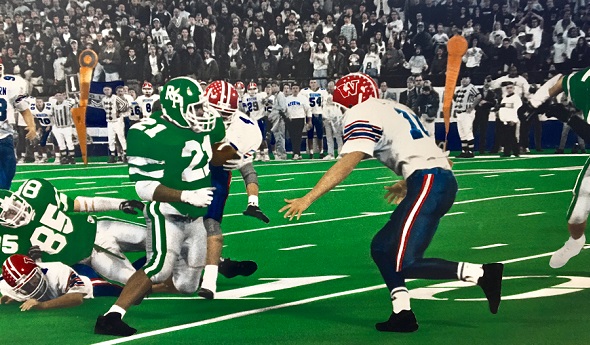
 The Rockets won the Class A championship game that season 21-18 over Walled Lake Western at the Pontiac Silverdome as Stacy Starr plucked a last-ditch downfield throw out of the air and raced into the end zone to finish one of the most well-known highlights in MHSAA Football Finals history.
The play included a pitch, then a handoff, then another pitch back to quarterback Geoff Zietlow, who threw toward the end zone. His pass was deflected and snagged by Starr, who raced the final yards for the 37-yard touchdown with 23 seconds to play.
Below is the video that introduced returning players and cheerleaders.
PHOTOS: (Top) Stacy Starr makes his way around defenders to score the game-winning touchdown at the 1992 Class A Final. (Middle) Members of the 1992 Reeths-Puffer football team and cheerleaders watch the Rockets' famous highlight as they are honored at Ford Field.