

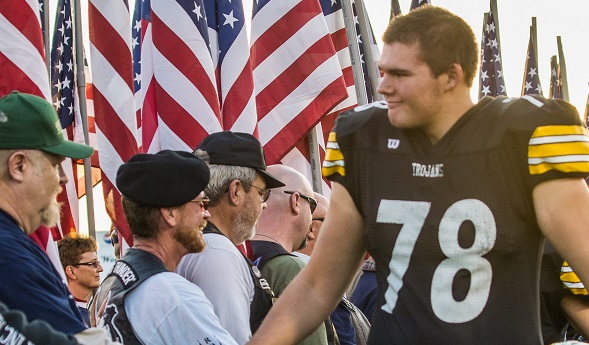
'Patriot Game' Unites Traverse City Rivals
September 9, 2016
By Geoff Kimmerly
Second Half editor
Twenty years ago this fall, Traverse City Central and Traverse City West faced each other in varsity football for the first time as new communities created by the split of the former Traverse City High School.
As was inevitable, the resulting rivalry has become one of the state’s most competitive, with West holding a 12-7 edge in varsity football after winning the first four games of the new series. But an idea five years ago to make the game about more has given an entirely new meaning to the annual neighborly get-together.
The “Patriot Game” was an idea first stoked by West football coach Tim Wooer, who suggested a military salute game in 2012 after the death of U.S. Marine Justin Hansen, who had been serving in Afghanistan and was one of Wooer’s players when the latter formerly coached at Kingsley.
Historic Thirlby Field was packed with 10,000 fans for that first Patriot Game, played Week 6 that fall. And it was just a start.
The Patriot Game has grown to also honor first responders, including police, fire and medical personnel, and for more reasons than football has become the game for the 3,000 students who attend either Central or West.
In their words, two of those students – Central senior Sarah Berry and West senior Dani Priest, the governors of their school’s respective student senates – explain why the Patriot Game has grown to mean so much, and also what it says about their communities.
Both Berry and Priest have attended all four Patriot Games, and of course will be on hand tonight after a full day of festivities at both schools. (Watch the game live with subscription on MHSAA.tv.) The game again is played at Thirlby, which is the shared home of Central and West as well as Traverse City St. Francis and has been hosting football games since 1896.
Priest: “My favorite memory of the Patriot Game was freshman year. Thirlby Field in itself is just a field where not many high school kids get to experience (that kind) of opportunity, because it an incredible thing that we share between the schools. The stands were completely filled, it was my first-ever high school football game, it was under the lights, it was 500+ kids from West, 500+ kids from Central. The whole community (went) back and forth, back and forth, the game was incredibly close and then West ended up winning (17-14). That was the only game since I’ve been in high school that we’ve won. The feeling after that was incredible especially because I was a freshman and it was new; there were no words. … Especially since our community is so intimate and small, that adds another component. No matter what, because we’re in the same conference, we’re going to play each other. But what is so important about the Patriot Game itself is the students are so involved in this game.”
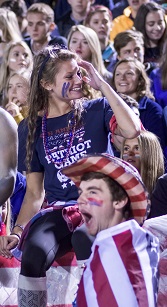
 As has become tradition, the student sections will wear patriotic colors – tonight, West will be a sea of Blue and Central of red. The schools hold various fundraisers, including selling T-shirts leading up to the game. Money raised this year will be donated to Veteran 2 Veteran, a local program that sets up mentors for veterans as they return to civilian life.
Berry: “Last year I helped to build a memorial at our field, so that was really special and really awesome to present that to the veterans who were at the game. This year, something that I think is going to be really special is we’re doing a thing called ‘Bucks for Vets.’ We’re going to bring all the student senators and run through the stands for two minutes and get all the donations from as many people as we can to go toward this organization. The organizations that we support every year are chosen through a council. I’ve been on the council for three years now and meeting with all of the organizations. They’re able to pitch to us why they need the money, where they’re going to use the money so it will affect veterans in the area, and we’re able to choose what organization – they all deserve money – but what organization needs the money. So all of the money from the game is going toward them and not just extra new special things.”
Classes began Tuesday, giving student officers at both schools limited time to drum up enthusiasm for today’s events – although there’s already ample buzz. Both schools will hold assemblies today. At Central, veterans and first responders will be welcomed in to tell some of their stories. At West, student leaders will hold more of a pep rally to make sure the entire student body, especially new classmates, know details for the night and why they should be there.
Berry: “We have an assembly every year right before the game where we honor all of our veterans and all of our first responders, and I think that really explains to (students) why it’s such a big deal. During that assembly, everyone is completely silent. They have so much respect. Our whole school still talks about how astounding that assembly was to thank all of them (last year), and I really think they know how much it means. It’s really hard not to be emotional about it during the assembly because we have families that come in and they lost a loved one in a war, and we have people who came back from combat a few years ago, so it’s really easy to understand how much it means to everyone. Normally, all of our other assemblies, people are rowdy, (but) this one assembly everyone has so much respect. It’s amazing. You always hear, ‘Oh yeah, the veterans are losing their lives in the war. They’re fighting for our country. They’re risking their lives.’ But to actually hear from someone who has experienced the death firsthand, it really opens your eyes.”
 Both teams are 2-0, and this will be the first time they'll match up with perfect records. Both also are expected to contend in the Big North Conference; Central won the league title and West was third a year ago. But those teams make up only a part of what is, of course, an educational event.
Priest: “What we learn from the Patriot Game is there’s so much more than just high school. There’s so much more than just a Central/West rivalry. There are people out there fighting for our country, and we all stand together. Both of our schools are at one place realizing there’s more than just us. We have to be thankful that we have the opportunity to be at this game, cheering on our teams.”
Berry: “People definitely learn a lot about respect. You definitely notice how much respect everyone has during the game, toward other people; it’s amazing. Definitely in past years, I’ve learned how much veterans do for us. And not only veterans, but the responders, police, everyone. It’s astounding. I guess I just wasn’t aware previously how much they really risk and how much they really do. That’s the main thing I learned, and I think a lot of people in the school could say the same thing. And you really learn a lot about your community as well. (The game) is sold out every single year. The student sections are covered in a sea of blue and red, and you just learn how much support can be given to our community.”
Ticket sales at the stadium gate begins at 2 p.m. Veterans, reservists, active military and first responders will be admitted free of charge through special entrances, and later student senators from both schools will camp out at the entrances to make sure no special guests are waiting in line when festivities begin. A motorcade of American Legion Riders, local motorcycle police and North Flight emergency medical transport personnel will ride into the stadium, and colors will be presented by member of the U.S. Coast Guard Color Guard and first responder Honor Guard.
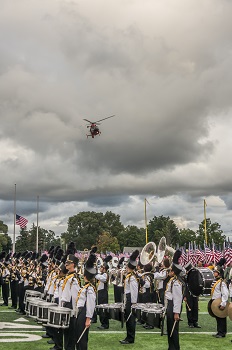 As the West marching band plays, student senators from both schools will form a tunnel for veterans and first responders to walk through as they enter the field and then line up at the 50-yard line, where they will be greeted by both football teams.
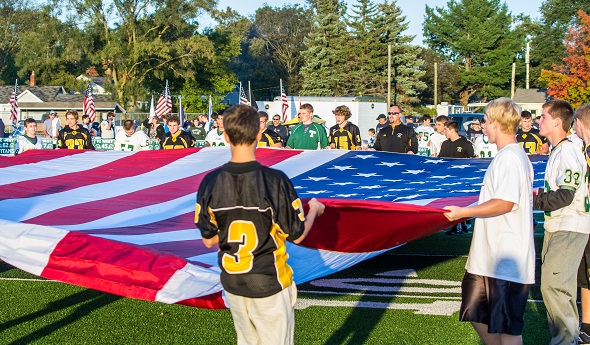
After the playing of taps and a memorial announcement of names, the junior varsity football teams from both schools together will take hold of a giant American flag stretching sideline to sideline as the band plays the national anthem. There will then be a flyover before the coin toss and opening kickoff.
Berry: “I think doing (the Patriot Game) with West makes it extremely special. Because not only do we have friends on the other side, but using the game in this way is extremely smart. We’re able to come together for a common cause, on common ground, in that we want to honor all these people and honor what they’ve done for us, and that really ties it all together. … I’ve been asked if I want more people to be in the student section from Central supporting the veterans or more people from West, but really, we want everyone there. We want everyone to do well. We want everyone to be able to thank everyone, and it’s just an extremely supportive thing. Of course we want to win, but win or lose, it’s a great experience.
Priest: “I think what makes it special with Central is honestly, we know these kids. We see them, we’re friends with them. The only thing that makes us different is we go to different schools. We live in the same town, we do the same things, in our free time we go to the same ski hills, we go to the same beaches, we go to the same restaurants, we see each other around town, we participate in the same social events. Seeing your friends and people that you care about as well, not only as your rival but you care about them, makes it so much better.”
An estimated 100-150 veterans and first responders attended the 2015 Patriot Game, and 150 or more are expected tonight with moderate temperatures and mostly clear skies expected. The schools are preparing for a crowd that could eclipse 8,000 fans total.
 Priest: “I know people who don’t have kids in high school. My neighbors, actually, have elementary school kids, and they’re like, ‘We’re coming to the game. We bought T-shirts.’ Because they just want to help out with the cause. It’s broadcast on the news, it’s on the radio, it’s everywhere. It just shows so much how no matter if it’s your school or if it’s your kids, people just want to get involved and they want to know how they can help.”
Berry: “It explains so much about Traverse City’s personality and just how giving the entire community is, and accepting. Traverse City is such a special place in that everyone comes at you with open arms. Our community is so giving towards veterans. The hearts of everyone grow bigger during this game. Going there can definitely affect the way you view the city.
“There’s so much love in that stadium. And everyone wants to be there. It’s the event of Traverse City for the high schools. If you’re going to go to any of the games, I would tell you, you have to be at the Patriot Game.”
Click for more information from the Patriot Game website.
PHOTOS: (Top) Traverse City Central players shake hands with veterans before the first "Patriot Game" in 2012. (Top middle) Junior varsity players from Central and West hold the giant flag during last season's national anthem. (Middle) West players converge on a Central ball-carrier in front of a packed Thirly Field in 2015. (Below middle) A helicopter provides a fly-over as the Traverse City Central band takes the field. (Below) Students dress in blue and red in support of veterans and first responders saluted during the game. (Photos by Rick Sack/TC Rick Photo.)

2015 Week 6 Football Playoff Listing
September 29, 2015
By Geoff Kimmerly
Second Half editor
Here is a list of Michigan High School Athletic Association football playing schools, displaying their win-loss records and playoff averages through the fifth week of the season.
Schools on this list are in enrollment order for 11-player teams, with 8-player teams ordered by playoff average. An asterisk (*) beside a record indicates a team has eight or fewer games scheduled. A caret (^) beside a school’s name indicates a team is one win away from playoff qualification.
Those schools with 11-player teams with six or more wins playing nine-game schedules, or five or more wins playing eight games or fewer, will qualify for the MHSAA Football Playoffs beginning Oct. 30. Schools with 5-4, 4-3 or 4-4 records may qualify if the number of potential qualifiers by win total does not reach the 256 mark. Schools with six or more wins playing nine-game schedules or five or more wins playing eight games or fewer may be subtracted from the field based on playoff average if the number of potential qualifiers exceeds the 256 mark.
Once the 256 qualifying schools are determined, they will be divided by enrollment groups into eight equal divisions of 32 schools, and then drawn into regions of eight teams each and districts of four teams each. Those schools with 8-player teams will be ranked by playoff average at season’s end, and the top 16 programs will be drawn into regions of eight teams each for the playoff in that division, which also begins Oct. 30.
To review a list of all football playoff schools, individual school playoff point details and to report errors, visit the Football page of the MHSAA Website.
The announcement of the qualifiers and first-round pairings for both the 11 and 8-player playoffs will take place at 7 p.m. Oct. 25 on the Selection Sunday Show on FOX Sports Detroit. The playoff qualifiers and pairings will be posted to the MHSAA Website following the Selection Sunday Show.
11-Player Playoff Listing
1. Macomb Dakota, 2921, 4-1, 82.200
2. Grand Blanc, 2727, 4-1, 76.000
3. Clarkston, 2707, 3-2, 55.800
4. Utica Eisenhower, 2669, 3-2, 62.000
5. Sterling Heights Stevenson, 2634, 4-1, 72.600
6. Clinton Township Chippewa Valley, 2611, 4-1, 85.400
7. East Kentwood, 2581, 4-1, 78.800
8. Howell, 2567, 4-1, 74.200
9. Rockford, 2561, 3-2, 60.800
10. Detroit Cass Tech, 2285, 4-1, 76.000
11. Northville ^, 2281, 5-0, 89.600
12. Brighton ^, 2211, 5-0, 94.400
13. Troy Athens, 2153, 3-2, 55.400
14. Detroit Catholic Central, 2138, 4-1, 64.800
15. Utica Ford, 2080, 4-1, 82.400
16. Canton ^, 2076, 5-0, 91.200
17. Monroe, 2066, 3-2, 55.800
18. Lapeer ^, 2059, 5-0, 86.400
19. Plymouth, 2057, 4-1, 72.400
20. Ann Arbor Pioneer ^, 2025, 5-0, 92.800
21. Hartland, 2017, 3-2, 52.600
22. New Baltimore Anchor Bay, 1946, 3-2, 55.000
23. West Bloomfield ^, 1932, 5-0, 96.000
24. Saline ^, 1879, 5-0, 86.400
25. Livonia Stevenson ^, 1831, 5-0, 96.000
26. Warren Mott, 1810, 4-1, 80.600
27. Utica, 1788, 3-2, 59.000
28. Holt, 1788, 3-2, 55.400
29. Davison, 1765, 3-2, 53.600
30. Hudsonville, 1763, 4-1, 78.800
31. Belleville, 1735, 4-1, 72.200
32. Romeo ^, 1673, 5-0, 99.200
33. Grand Ledge ^, 1663, 5-0, 88.000
34. Grosse Pointe South, 1629, 3-2, 57.200
35. Livonia Churchill, 1620, 3-2, 49.400
36. Walled Lake Northern, 1611, 4-1, 76.000
37. Warren DeLaSalle, 1572, 4-1, 77.600
38. Sterling Heights, 1561, 4-1, 67.800
39. Detroit Martin Luther King ^, 1537, 5-0, 100.800
40. Flint Carman-Ainsworth, 1533, 3-2, 50.600
41. Warren Cousino, 1514, 3-2, 52.200
42. Waterford Kettering, 1512, 3-2, 54.200
43. Detroit U-D Jesuit, 1486, 4-1, 65.000
44. Traverse City Central ^, 1474, 5-0, 94.400
45. Walled Lake Western ^, 1462, 5-0, 99.200
46. Midland ^, 1419, 5-0, 88.000
47. Jenison, 1418, 3-2, 60.000
48. Portage Northern, 1375, 3-2, 53.800
49. Lincoln Park, 1363, 4-1, 72.800
50. Portage Central ^, 1351, 5-0, 94.400
51. Wyandotte Roosevelt, 1346, 4-1, 77.400
52. Battle Creek Lakeview, 1344, 3-2, 58.600
53. Detroit East English, 1338, 4-1, 69.600
54. Southfield-Lathrup, 1320, 3-2, 49.200
55. Grand Rapids Ottawa Hills, 1280, 3-2, 49.000
56. Southfield, 1269, 3-2, 62.000
57. North Farmington, 1267, 3-2, 53.400
58. Port Huron Northern, 1260, 3-2, 50.000
59. Midland Dow, 1256, 4-1, 67.600
60. Birmingham Groves ^, 1248, 5-0, 83.200
61. Berkley, 1248, 4-1, 62.800
62. Royal Oak, 1248, 3-2, 50.200
63. Jackson, 1244, 3-2, 50.600
64. Flushing, 1242, 3-2, 55.400
65. Muskegon Mona Shores ^, 1239, 5-0, 97.600
66. Muskegon Reeths-Puffer, 1222, 3-2, 48.800
67. Farmington Hills Harrison, 1218, 4-1, 75.800
68. Farmington, 1176, 3-2, 75.817
69. Lowell, 1168, 4-1, 82.400
70. Gibraltar Carlson, 1140, 3-2, 52.400
71. Grand Rapids Forest Hills Northern ^, 1124, 5-0, 92.800
72. Muskegon, 1113, 4-1, 82.200
73. Fenton, 1108, 4-1, 75.600
74. Byron Center, 1070, 4-1, 71.200
75. Holly, 1068, 3-2, 60.400
76. Redford Thurston, 1064, 3-2, 58.800
77. Mt. Pleasant, 1061, 3-2, 60.800
78. Ortonville-Brandon, 1060, 3-2, 53.600
79. Allen Park, 1058, 4-1, 74.200
80. St. Johns, 1053, 4-1, 80.600
81. Zeeland East, 1040, 3-2, 64.400
82. Mason, 1033, 3-2, 54.200
83. Orchard Lake St. Mary's *^, 1032, 4-1, 79.267
84. Hamtramck, 984, 3-2, 44.800
85. St. Joseph, 980, 4-1, 77.200
86. East Grand Rapids, 975, 4-1, 79.000
87. Petoskey, 970, 4-1, 64.600
88. DeWitt ^, 960, 5-0, 96.000
89. Romulus, 956, 4-1, 72.800
90. Trenton ^, 953, 5-0, 89.600
91. Linden, 947, 4-1, 77.600
92. Cedar Springs, 943, 3-2, 47.600
93. Gaylord, 940, 4-1, 63.600
94. Sturgis, 926, 4-1, 64.200
95. Riverview, 912, 3-2, 41.400
96. Grand Rapids Christian, 905, 3-2, 52.400
97. Parma Western, 876, 3-2, 47.800
98. Haslett, 875, 3-2, 57.000
99. Stevensville Lakeshore, 874, 3-2, 60.400
100. Fruitport, 865, 3-2, 44.200
101. Coldwater ^, 863, 5-0, 86.400
102. Marshall, 863, 4-1, 74.400
103. Vicksburg, 858, 3-2, 49.400
104. Edwardsburg ^, 851, 5-0, 80.000
105. Sault Ste. Marie, 850, 3-2, 61.600
106. Bay City John Glenn, 847, 3-2, 47.600
107. Chelsea ^, 845, 5-0, 81.600
108. Zeeland West ^, 840, 5-0, 84.800
109. Detroit Mumford, 837, 3-2, 53.800
110. Ada Forest Hills Eastern ^, 828, 5-0, 80.000
111. Milan, 820, 4-1, 67.800
112. Battle Creek Harper Creek, 816, 3-2, 47.200
113. Plainwell, 807, 3-2, 44.000
114. Bloomfield Hills Cranbrook Kingswood ^, 794, 5-0, 67.200
115. Marysville, 783, 3-2, 53.800
116. Holland Christian, 759, 3-2, 47.800
117. North Branch, 758, 3-2, 45.400
118. Goodrich, 754, 3-2, 50.600
119. Pontiac Notre Dame Prep, 728, 4-1, 71.000
120. Detroit Douglass, 718, 3-2, 43.800
121. Harper Woods Chandler Park Academy, 692, 3-2, 49.200
122. Detroit Country Day, 685, 4-1, 64.600
123. Comstock Park, 682, 4-1, 74.400
124. Detroit Cesar Chavez Academy, 681, 4-1, 47.200
125. St. Clair Shores South Lake ^, 668, 5-0, 88.000
126. Croswell-Lexington, 668, 4-1, 53.400
127. Hudsonville Unity Christian, 665, 3-2, 39.400
128. Grand Rapids Catholic Central, 658, 4-1, 77.400
129. Williamston, 657, 4-1, 67.800
130. Corunna, 656, 4-1, 62.800
131. Whitehall, 656, 3-2, 48.000
132. Paw Paw, 653, 3-2, 49.400
133. Alma, 642, 3-2, 47.600
134. Wyoming Kelloggsville, 640, 3-2, 39.600
135. Detroit Collegiate Prep ^, 632, 5-0, 78.400
136. Benton Harbor, 631, 3-2, 57.000
137. Lake Fenton, 625, 4-1, 60.000
138. Lake Odessa Lakewood ^, 624, 5-0, 68.800
139. Saginaw Swan Valley, 613, 3-2, 48.800
140. Dowagiac, 611, 3-2, 44.400
141. Flint Powers Catholic, 610, 3-2, 57.000
142. Big Rapids, 609, 4-1, 56.400
143. Richmond, 605, 4-1, 68.000
144. Wyoming Godwin Heights, 602, 3-2, 36.200
145. Remus Chippewa Hills, 600, 4-1, 59.600
146. River Rouge ^, 593, 5-0, 81.600
147. Clawson, 592, 4-1, 53.000
148. Dearborn Heights Robichaud, 573, 4-1, 64.600
149. Gladwin, 571, 3-2, 42.400
150. Portland ^, 563, 5-0, 84.800
151. Freeland ^, 563, 5-0, 83.200
152. Essexville Garber, 557, 3-2, 47.600
153. Ann Arbor Gabriel Richard, 556, 4-1, 60.200
154. Ida ^, 548, 5-0, 81.600
155. Kingsford, 547, 3-2, 50.000
156. Marine City, 540, 3-2, 44.800
157. Muskegon Oakridge, 538, 4-1, 49.800
158. Algonac ^, 532, 5-0, 70.400
159. Frankenmuth ^, 529, 5-0, 72.000
160. Olivet, 524, 3-2, 41.000
161. Chesaning, 523, 3-2, 46.000
162. Detroit Henry Ford, 523, 3-2, 37.800
163. Lansing Catholic, 517, 4-1, 66.400
164. Almont ^, 513, 5-0, 70.400
165. Onsted, 509, 4-1, 48.800
166. Detroit Central Collegiate, 508, 3-2, 40.800
167. Berrien Springs ^, 495, 5-0, 71.200
168. Stockbridge, 493, 4-1, 61.600
169. Parchment, 493, 4-1, 48.000
170. Reed City ^, 491, 5-0, 61.600
171. Ovid-Elsie, 491, 3-2, 48.000
172. Grayling, 489, 4-1, 59.800
173. Standish-Sterling Central, 489, 3-2, 39.000
174. Dundee, 489, 3-2, 32.600
175. Clinton Township Clintondale, 486, 3-2, 50.600
176. Menominee ^, 480, 5-0, 82.133
177. Harper Woods, 476, 4-1, 47.000
178. Manistee ^, 469, 5-0, 66.000
179. Brooklyn Columbia Central, 463, 4-1, 60.000
180. Buchanan ^, 459, 5-0, 72.000
181. Grand Rapids West Catholic, 442, 3-2, 52.600
182. Kalkaska, 437, 3-2, 37.800
183. Harrison, 430, 4-1, 54.600
184. Hillsdale, 430, 3-2, 43.000
185. Jackson Lumen Christi, 426, 4-1, 67.800
186. Warren Michigan Collegiate, 421, 3-2, 47.800
187. Calumet, 419, 3-2, 44.267
188. Lakeview, 417, 3-2, 39.000
189. Sanford Meridian Early College ^, 408, 5-0, 67.200
190. Michigan Center, 406, 3-2, 34.200
191. Detroit Pershing, 405, 3-2, 37.600
192. Ithaca ^, 402, 5-0, 67.200
193. Byron, 399, 3-2, 39.800
194. Millington, 398, 4-1, 64.800
195. Delton Kellogg, 398, 4-1, 56.400
196. Montague ^, 396, 5-0, 68.800
197. Burton Bendle, 393, 4-1, 50.400
198. Oscoda, 391, 4-1, 40.200
199. Detroit Edison Public School Academy, 390, 3-2, 28.000
200. Monroe St. Mary Catholic Central ^, 389, 5-0, 84.800
201. Morley Stanwood, 386, 3-2, 42.600
202. Negaunee ^, 385, 5-0, 65.600
203. Constantine, 385, 3-2, 43.000
204. Maple City Glen Lake, 384, 4-1, 48.600
205. Boyne City, 383, 4-1, 52.000
206. Niles Brandywine, 380, 3-2, 37.800
207. Adrian Madison, 379, 3-2, 36.600
208. Vassar, 377, 4-1, 47.000
209. Mason County Central, 376, 3-2, 39.600
210. St. Louis, 374, 3-2, 37.800
211. Laingsburg, 373, 4-1, 45.400
212. Watervliet, 372, 4-1, 56.800
213. Madison Heights Madison, 367, 4-1, 68.000
214. Manchester, 365, 4-1, 45.600
215. Schoolcraft ^, 357, 5-0, 65.600
216. Charlevoix, 350, 3-2, 31.600
217. Leroy Pine River, 349, 3-2, 42.800
218. Quincy, 346, 3-2, 34.000
219. Grand Rapids NorthPointe Christian ^, 345, 5-0, 67.200
220. Lawton ^, 342, 5-0, 60.800
221. Vandercook Lake ^, 341, 5-0, 59.200
222. Clinton ^, 335, 5-0, 64.000
223. Traverse City St. Francis ^, 320, 5-0, 75.200
224. Hesperia ^, 310, 5-0, 62.400
225. Sandusky ^, 310, 5-0, 62.400
226. Iron Mountain, 309, 3-2, 36.800
227. McBain, 307, 4-1, 56.800
228. Cass City, 304, 4-1, 46.800
229. Bridgman, 303, 4-1, 52.000
230. Gobles, 301, 3-2, 41.000
231. Union City, 298, 3-2, 34.600
232. Marlette, 298, 3-2, 34.200
233. Elkton-Pigeon-Bay Port Laker, 296, 3-2, 39.400
234. Homer, 294, 4-1, 48.400
235. Pewamo-Westphalia ^, 292, 5-0, 60.800
236. Rochester Hills Lutheran Northwest, 292, 3-2, 36.000
237. Flint Hamady ^, 291, 5-0, 59.200
238. Dansville, 289, 4-1, 47.200
239. Springport, 287, 3-2, 33.200
240. Saginaw Nouvel, 285, 4-1, 58.000
241. Riverview Gabriel Richard ^, 284, 5-0, 64.000
242. Grosse Pointe Woods University Liggett, 282, 3-2, 42.200
243. Harbor Springs, 281, 3-2, 24.800
244. Ishpeming *, 278, 5-0, 64.000
245. Flint Beecher, 278, 4-1, 59.800
246. New Lothrop ^, 276, 5-0, 72.000
247. Detroit Loyola, 276, 4-1, 71.000
248. Saugatuck ^, 271, 5-0, 62.400
249. Ubly, 271, 3-2, 39.800
250. Cassopolis, 270, 3-2, 38.400
251. Concord, 267, 4-1, 51.800
252. Decatur, 266, 3-2, 36.400
253. Lincoln Alcona, 265, 4-1, 33.800
254. Unionville-Sebewaing, 262, 4-1, 48.800
255. Ottawa Lake Whiteford, 255, 4-1, 40.600
256. Indian River Inland Lakes, 251, 4-1, 42.400
257. Onekama, 250, 4-1, 40.600
258. Petersburg-Summerfield, 240, 4-1, 47.000
259. Beal City, 228, 4-1, 53.000
260. Johannesburg-Lewiston, 226, 4-1, 44.000
261. St. Ignace ^, 225, 5-0, 59.200
262. Saginaw Michigan Lutheran Seminary ^, 223, 5-0, 65.600
263. Mayville, 217, 4-1, 40.800
264. L'Anse, 215, 3-2, 42.600
265. Pittsford, 211, 4-1, 40.600
266. Newberry, 211, 3-2, 36.400
267. Marcellus, 209, 3-2, 29.800
268. Vestaburg, 205, 4-1, 39.000
269. Bark River-Harris ^, 194, 5-0, 52.800
270. Morenci, 191, 4-1, 55.200
271. Munising, 191, 4-1, 44.667
272. Central Lake, 189, 3-2, 25.400
273. Fowler, 183, 4-1, 43.800
274. Sterling Heights Parkway Christian, 178, 3-2, 38.200
275. Muskegon Catholic Central *, 177, 3-1, 55.000
276. Adrian Lenawee Christian, 170, 4-1, 34.800
277. Climax-Scotts ^, 163, 5-0, 46.400
278. Crystal Falls Forest Park *, 163, 3-2, 33.467
279. Frankfort, 160, 4-1, 53.400
280. Waterford Our Lady ^, 157, 5-0, 67.200
281. Lake Linden-Hubbell ^, 155, 5-0, 56.800
282. Colon, 153, 3-2, 33.800
283. Hillman, 146, 4-1, 35.400
284. Bay City All Saints, 118, 3-2, 28.200
8-Player Playoff Listing
1. Owendale-Gagetown, 49, 5-0, 50.400
2. Powers North Central, 198, 5-0, 49.600
3. Posen, 84, 5-0, 48.000
4. Waldron, 88, 5-0, 46.400
5. Deckerville, 178, 5-0, 44.800
6. Battle Creek St. Philip, 144, 5-0, 43.200
7. Rapid River, 111, 4-1, 40.400
8. Cedarville, 144, 4-1, 37.400
9. Lawrence, 189, 5-0, 36.800
10. Morrice, 169, 4-1, 36.000
11. New Haven Merritt Academy, 148, 4-1, 33.600
12. Peck, 152, 4-1, 32.600
13. Portland St. Patrick, 87, 4-1, 31.200
14. Webberville, 184, 4-1, 29.600
15. Stephenson, 186, 3-2, 28.400
16. Engadine, 85, 3-2, 28.400
17. Pickford, 164, 3-2, 27.000
18. Onaway, 196, 3-2, 26.800
19. Akron-Fairgrove, 99, 3-2, 25.050
20. Bellaire, 134, 3-2, 24.000
21. Baraga, 164, 3-2, 23.600
22. Marion, 145, 2-3, 20.600
23. Kingston, 187, 2-3, 18.200
24. Kinde-North Huron, 147, 2-3, 17.600
25. Tekonsha, 148, 2-3, 16.400
26. Caseville, 91, 2-3, 15.800
27. Big Rapids Crossroads Academy, 190, 1-4, 12.250
28. Ewen-Trout Creek, 126, 1-4, 10.400
29. Burr Oak, 75, 1-4, 8.800
30. St. Helen Charlton Heston Academy, 108, 1-4, 8.400
31. Eben Junction Superior Central, 123, 1-4, 8.200
32. Ontonagon, 129, 1-4, 8.000
33. Hale, 132, 1-4, 7.850
34. St Joseph Michigan Lutheran, 103, 0-5, 3.600
35. Carsonville-Port Sanilac, 120, 0-5, 2.400
36. Litchfield, 92, 0-5, 2.400
37. Pellston, 170, 0-5, 1.800
38. Flint Michigan School For The Deaf, 47, 0-4, 1.800
39. Covert, 91, 0-3, 1.650
40. Brimley, 142, 0-5, 1.600