

Rally Champs 'Survive' Fun-Filled Forest
August 19, 2013
By Geoff Kimmerly
Second Half editor
As one of Michigan’s top high school swimming sprinters, Fenton senior Gabbi Haaraoja no doubt was in strong shape to start this summer.
But she and her Tigers teammates made sure to prepare for this month’s preseason “survival trip” with plenty of miles running and yards swimming a local lake.
All that training paid off during three days and two nights at Pigeon River Country State Forest near Vanderbilt as the team prepared for last week’s first day of practice and a run at a 10th-consecutive league championship.
And the Tigers have kicked off the title effort by being named winners of the MHSAA’s inaugural Prep Rally, a contest that was part of the MHSAA’s PLAY (Preparation Lasts All Year) initiative to encourage athletes to remain active during the offseason so they are prepared physically and acclimated to warm weather when practice begins in the fall.
“Being out in nature, it’s really pretty there. You appreciate it more,” Haaraoja said, then adding some tongue-in-cheek. “It definitely was fun. But it was a lot more work than what we were used to. I think I’m actually glad I’m a senior.”
 Athletes from Grosse Pointe Woods University Liggett and Beal City also were finalists. Participating athletes from Fenton’s girls swimming and diving team will receive tickets to an MHSAA Final of their choice, where they will be recognized for their achievement.
Fenton has taken similar training trips heading into all 14 seasons under coach Brad Jones. Others have included activities like canoeing and dune climbing, The last four years, the team journeyed to El Cortez Beach Resort in Oscoda for some time on Lake Huron together before practice began.
This season’s seniors asked to do something new. And it was a new experience for many in more ways than one.
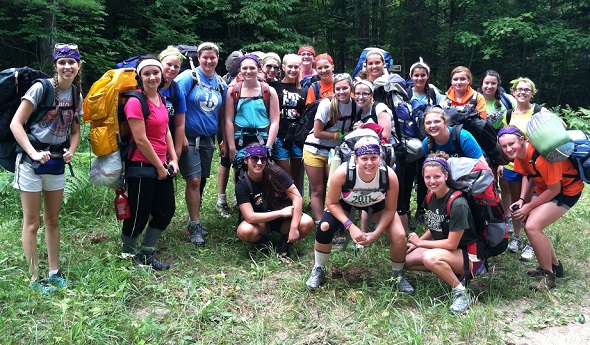
The team left Aug. 11 and returned home two days later in time for the first day of practice. Jones took north 24 athletes, and some had never camped or slept outside. Six seniors made their fourth preseason trip with the team – but for 12 freshmen, this was their first experience as high schoolers.
That team demographic made this summer’s trip especially important for bonding. But it also had a desired effect physically – both heading into this fall and in setting preparation expectations for the future.
Pigeon River Country has 67 miles of trails, and the team hiked four or more miles between camp sites each day – making this the most physically taxing of the trips any of the Tigers had been on to start swimming and diving season.
“We were very up front that in August we’re taking this trip, and you need to be able to go 6-7 miles walking. We put that out there early on,” Jones said. “We have pretty good girls doing what they’re needing to do outside of (swimming) training. (But) we were pretty up front that you don’t put your backpack on and your hiking shoes on for the first time in August.”
Haaraoja said the hikes made it obvious quickly who had prepped during the summer and who needed to catch up. Seniors rotated throughout the line of teammates, so those who began a hike leading the group finished at the back with those working harder to keep in step.
Once in the woods, Jones split his athletes into four teams for a series of challenges that included building their own fires, cooking their own meals (they didn’t receive food until the fire was started) and breaking camp the next day. One trail ran past a small lake, and the athletes swam across it in a relay to earn more points. Another relay-type event involved filling buckets with water.
The challenge champions received ice cream.
“By the time we get home, everybody knows everybody else,” Jones said. “Once we get into training, the top girls are in one lane and the beginners are in another. So there’s not a lot of interaction. But this gives the whole team a chance to get to know each other.”
That’s the part Haaraoja said she’ll remember most fondly, while also appreciating the edge the added physical activity of the summer prep and trip should give the team this fall and in years to come.
“For the underclassmen, they realized where they should be at the beginning of the season next year so they don’t come into it completely out of shape,” Haaraoja said. “It helped our underclassmen learn what our goals were. They know what they’re working for.”
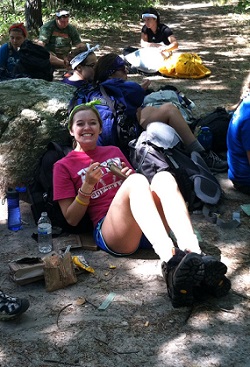
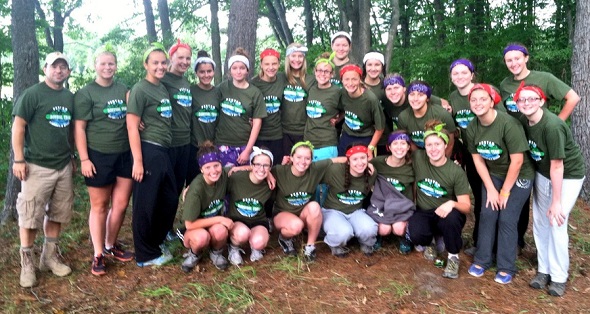
PHOTOS: (Top) Fenton's girls swimming and diving athletes take a moment for a photo during their three-day "survival trip." (Middle) The Tigers take a quick lunch break during a hike at Pigeon River Country State Forest. (Below) The Fenton athletes pose for one more photo wearing their "survivor" T-shirts. (Photos courtesy of Fenton coach Brad Jones.)

Marquette, Saginaw, Ann Arbor & Grand Rapids to Host MHSAA Sportsmanship Summits
By
Geoff Kimmerly
MHSAA.com senior editor
October 13, 2026
The MHSAA’s annual Sportsmanship Summit series will return this November with four stops across the Lower Peninsula, providing training on sportsmanship topics affecting students both on and off the field of play.
The MHSAA has conducted Sportsmanship Summits across Michigan for 30 years. This year’s series kicks off Nov. 9 in Marquette and finishes Nov. 18 in Grand Rapids.
MHSAA staff, with assistance from school administrators and the MHSAA Student Advisory Council, conduct Sportsmanship Summits. Up to 800 students are expected to take part in the four workshops, where they will discuss the line that separates good from bad sportsmanship, both as athletes during competition and while participating in off-field activities including as spectators at sporting events.
Workshop sessions will include discussions and hands-on activities on topics including working with game officials, building appropriate student cheering sections, social media behavior and parent conduct at school sports events. Summits also will feature a session developed and instructed by members of the Student Advisory Council. At the end of the day the delegation from each participating school will meet to develop a school sportsmanship campaign.
Sessions will take place at the following:
• Marquette – Nov. 9 – Northern Center at NMU – 9 a.m. - 1:30 p.m.
• Saginaw – Nov. 12 – The Conference Center at Saginaw Valley State University – 9 a.m. - 1:30 p.m.
• Ann Arbor – Nov. 16 – Sheraton Ann Arbor – 9 a.m. - 1:30 p.m.
• Grand Rapids – Nov. 18 – Sheraton Grand Rapids – 9 a.m. - 1:30 p.m.
The Sportsmanship Summit schedule rotates locations every year. In 2025, MHSAA staff conducted summits in Lansing, Troy, Traverse City and Kalamazoo.
Schools are welcome to bring as many as 10 total representatives, including two administrators. For additional registration information, contact Andy Frushour at the MHSAA office – [email protected] or (517) 332-5046. Registration information also is available on the Sportsmanship Resources page.