

Track Gaining Speed Toward Future with Electronic Starting Devices
By
Steve Vedder
Special for MHSAA.com
May 23, 2023
Aubrey Greenfield thinks it might be the perfect time to reevaluate 130 years of tradition.
For a number of reasons, from technical to personal, the Oxford senior sprinter believes it makes sense for the crack of a starting pistol to be eliminated from high school track meets.
Because track meets would benefit in various ways from lowering costs to easier setup at meets to the human factor of competitors not having to flinch at the crack of a pistol shot, Greenfield believes the sport has a chance to embrace new technology – electronic starting devices (ESD).
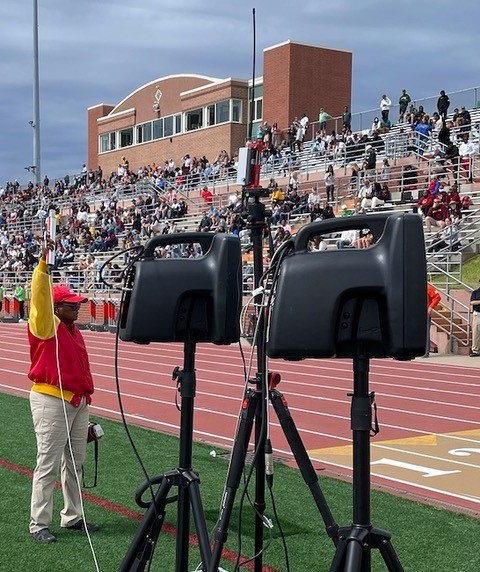
In essence, an ESD replaces the starting pistol with a light flash, tone sound or both to begin a race.
"High school sports should put the athlete first," Greenfield said. "We should promote sports, and eliminating starting pistols promotes health in terms of PTSD or trauma for athletes and spectators and that would be good. I would like to think people would say that's a good idea."
In fact, Greenfield would go as far as to say if there was not an implementation of electronic starting devices, many of her teammates would have considered giving up the sport.
"If it's something that helps us compete safely, we're all for it," she said.
Greenfield's opinion apparently is spreading. Michigan High School Athletic Association senior assistant director Cody Inglis said the use of ESD makes it both affordable for meet starters and sensible for athletes and fans to rethink the use of starting pistols. While the MHSAA is not mandating electronic starting devices, it does promote the use of what Inglis calls "emerging technology." He notes that ESD are becoming the norm for organizations such as USA Track & Field, the NCAA and an increasing number of high schools.
 "I think we have to embrace new technology, and we think this will be something that takes hold," Inglis said.
A key part of embracing ESD is the human element. The tragic Oxford High School shooting Nov. 30, 2021, that took the lives of four students while injuring seven others should not be relived even for a fleeting instance at a high school sporting event. Oxford athletic director Tony DeMare said the school began using ESD at every meet, including the MHSAA Lower Peninsula Division 1 Finals last June. He said that decision was embraced by virtually all schools Oxford encountered.
"We were very convinced that the alternative (of ESD) would promote a healthy attitude," DeMare said. "We were overwhelmed with the positive response. If a school was on the fence about it or might not be for it, I think we've started to see the tide turn in favor of people willing to listen and learn about electronic starting devices."
Inglis said the MHSAA is acutely aware of what the crack of a starting pistol can mean to athletes and fans.
"It's unimaginable what Oxford went through, and this is a small way we can help," he said. "We look at a (starting pistol) and think, ‘Could we do something else?’ It's a way of helping to solve a problem."
Over the last several years, the MHSAA has embraced finding an alternative to starting pistols. Inglis noted the discussion started with the cost and diminishing availability of 32-caliber ammunition that meet starters use. A box of ammunition, if it can be found, is around $75 a box.
In addition to cost, there is potential damage from excessive exposure to 150-plus decibels of sound generated by the traditional 32-caliber blanks. Medical studies show damage to ears caused by decibel levels above 120 dB.
The tragedy at Oxford accelerated the conversation.
Inglis said the cost of ESD can be likened to a school sinking money into artificial surfaces at football fields. Yes, there is a great cost at first, but over time money is ultimately saved. An ESD system itself ranges between $200 and $500. Speakers also may need to be purchased, but with ESD starting events like the 800 and 1,600-meter relays positioned near the outside lanes 8, 7, 6 and 5 would result in improved hearing by athletes at the start of a race.
There is one challenge with ESD that track administrators are working to overcome – lighting conditions that lessen the ability to see the ESD’s LED light or strobe when the button is pressed by a starter to begin a race. But that vision difficulty resulting from clear blue skies and backgrounds of setting suns can be substantially improved by incorporating a black background with an ESD – something as simple as a starter holding up black cardboard behind the lighting mechanism at the start of an event.
Inglis said when all factors are considered, the use of ESD makes sense.
 "With the climate we live in nowadays, no lookalike guns is good," he said. "We're not mandating this. But people are saying this is affordable."
While switching to ESD would break 130 years of tradition, the timing could be a step forward, said Jeff Hollobaugh, co-author of the book "The Fleet Feet of Spring: Michigan's High School State Championships in Track & Field." He said while no definitive answer is possible, it's likely starting pistols were used at the inaugural state meet at the Jackson Fairgounds in 1895. The meet, which included events like tossing a 16-pound shot put, bike races and a 100-meter sprint, was sponsored by the Michigan Interscholastic Athletic Association (a predecessor to the MHSAA) and comprised mostly of the state's larger schools.
Hollobaugh's sentiments echo what many involved in today's high school track & field believe in terms of making a transition from starting pistols to electronic starting devices.
"It's a change, not necessarily good or bad, just different," he said. "It's not a drastic change, but it will take some getting used to. But it is the future. In the end, we'll all be fine."
DeMare believes the future of high school track will definitely include ESD.
"Our desire is that the practicality and sensibility of this will overcome the alternative," he said. "I think we'll see the automation and electronics taking hold of certain elements in track, and people will embrace it."
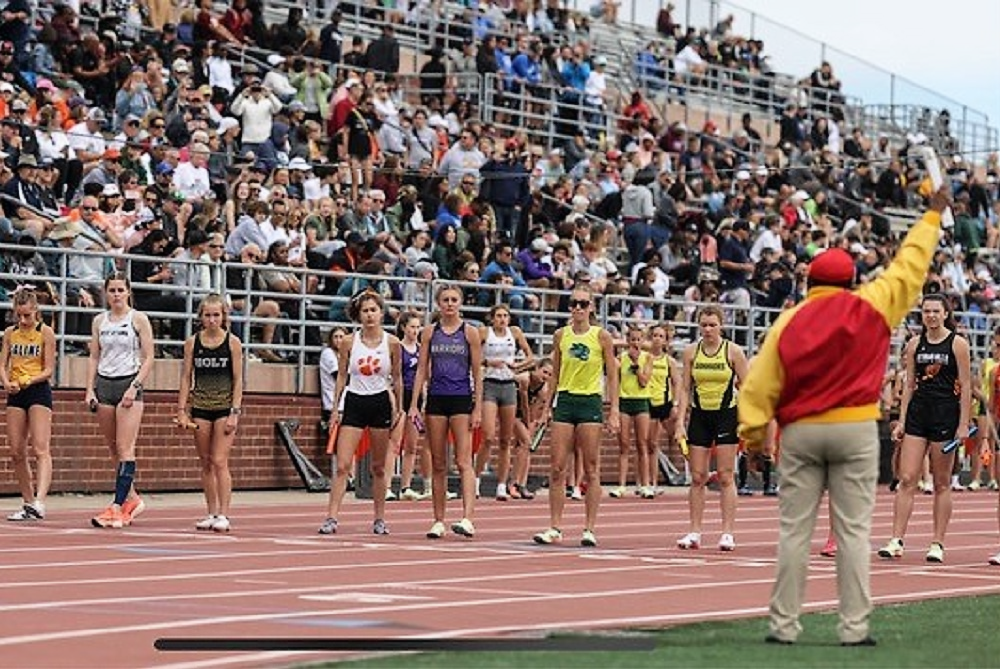
PHOTOS (Top) Runners watch official Bertha Smiley as they prepare to begin a race during last season's Lower Peninsula Division 1 Finals at Rockford. (Middle) An electronic starting device provided by VS Athletics was used to start those races. (Below) Smiley sets to begin an event. (Photos provided by David Kuderka/VS Athletics.)
Thriving with Dual-Sport Athletes, Brandywine Claims 1st Girls Track Regional Title
By
Scott Hassinger
Special for MHSAA.com
June 17, 2026
NILES – Just a few days after the 2025 girls track & field season had ended at Niles Brandywine, Terry Borr and his coaching staff were already looking forward to the start of the 2026 campaign.
 "We had done a really good job at the 2025 Regional meet with the team finishing third. Our only goal that day was simply to qualify as many kids as we could for the state meet," Borr said.
Impressed with the effort put forth at last season’s meet by his Bobcats, Borr and his assistants used that as strong motivation for their athletes to attain high goals this spring.
"As a coaching staff we got together, talked things over and put some things in place with our No. 1 goal this spring being to win a Regional championship," Borr recalled.
Borr knew that wouldn't be an easy task at Brandywine, which like most small schools, must share several athletes with other spring sports teams. Out of 13 athletes on his 2026 track & field roster, eight were dual-sport participants.
Freshman Grace Colbert, junior Lily Gill, senior Karleigh Byrd and sophomore Alison Murray also played tennis.
"I managed to balance both tennis and track by prioritizing both as much as possible,” Byrd said. “Whether that was fitting in both practices and even matches and meets in the same day, that was easy to do because both my coaches are very understanding about each sport and my dedication to both programs.”
Freshman Hailey Smith also competed in softball, and freshmen Laila Wogatzke and Aubrey Burt are soccer players as well.
 "We don't have a lot of practice time with some of these girls. But a lot of them are all just quality athletes and that helped us out a great deal,” Terry Borr said. “Five of these girls have broken over six school records here over the last three years.”
Borr also credits the strong contributions of his assistant coaches Brian McNamara (distance runners), Becky Shafer (throws) and Jeff Miller (hurdles).
"Brian has really worked well with our distance runners. Jeff is our football coach and he worked this spring with some of our hurdlers. Becky does a great job with our throwers too," Borr said.
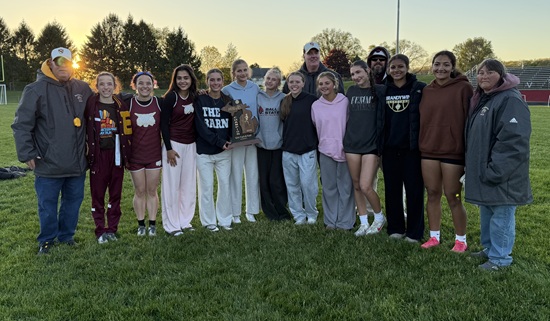
Despite being spread so thin with limited practice time for nearly half the squad, Brandywine accomplished its preseason goal of winning the first Regional championship in girls track. The Bobcats placed first with 97 points to claim the Division 3 Regional at Bangor.
Brandywine scored points in 13 of 17 events to take the top spot and edge Red Arrow (a cooperative of Three Oaks River Valley and New Buffalo) by three points.
"Almost everybody on our team scored for us in the Regional. It really was a team effort,” Borr noted. “A couple weeks before the meet we had the Red Arrow team beating us by three points. So we figured out where we could put kids in different events so we could gain the maximum amount of points.”
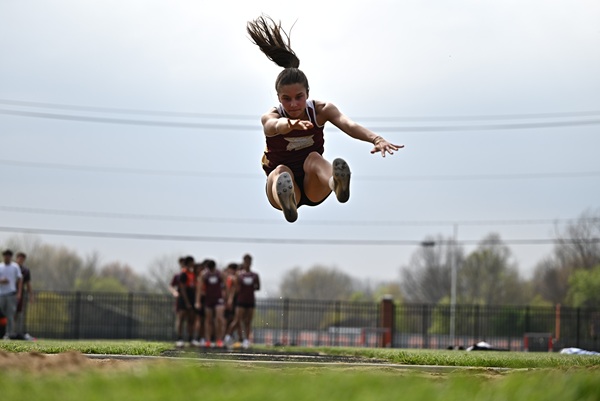
Brandywine junior Mackenna Price was the Regional long jump champion (15-10¼).
"I think what makes me such a good competitor in the long jump is my confidence and ability to set my mind to any distance I believe in. My athleticism helps me by allowing me to push myself to be the best athlete I can be," Price said.
She teamed with Allison Kline, Byrd and freshman Zaya Price for third in the 1,600 relay. She also placed eighth in the 800.
"Makenna's desire to work hard, get better, and improving her speed down the runway all make her a good long jumper. Now she's just working more on the technical aspects to keep improving," Borr said.
 Senior Allison Kline, sophomore Isabella Padron, Burt and freshman Laila Wogatzke took fifth in the 3,200 relay.
Zaya Price earned runner-up in the high jump. Murray placed second for Brandywine in the 1,600 run, fourth in the 3,200 and seventh in the 800.
"This year I succeeded the most in my 1,600. I enjoy that race the most because it takes a lot of mental strength, especially doing multiple events in one day. You really have to push yourself to the limit,” Murray said. “It's fun to watch myself and my mindset as years of running go by. My confidence and positivity are improving.
"I run cross country, and it prepares me well for track because it takes a lot of hard conditioning, like hills, pace workouts, long runs, and more. They are the same kind of workouts that you need to be successful in both sports. Since cross country is a whole 5K, the races in track, like the 800 and 1,600, feel way quicker and easier."
Byrd earned fifth in the 200 and joined Mackenna Price, Zaya Price and junior Lily Gill on the winning 800 relay (1:53.63).
"I think what makes our sprint relays so strong is that we are all so athletic and we have good chemistry. Everyone on our team pushes themselves, and we try our hardest," Zaya Price said.
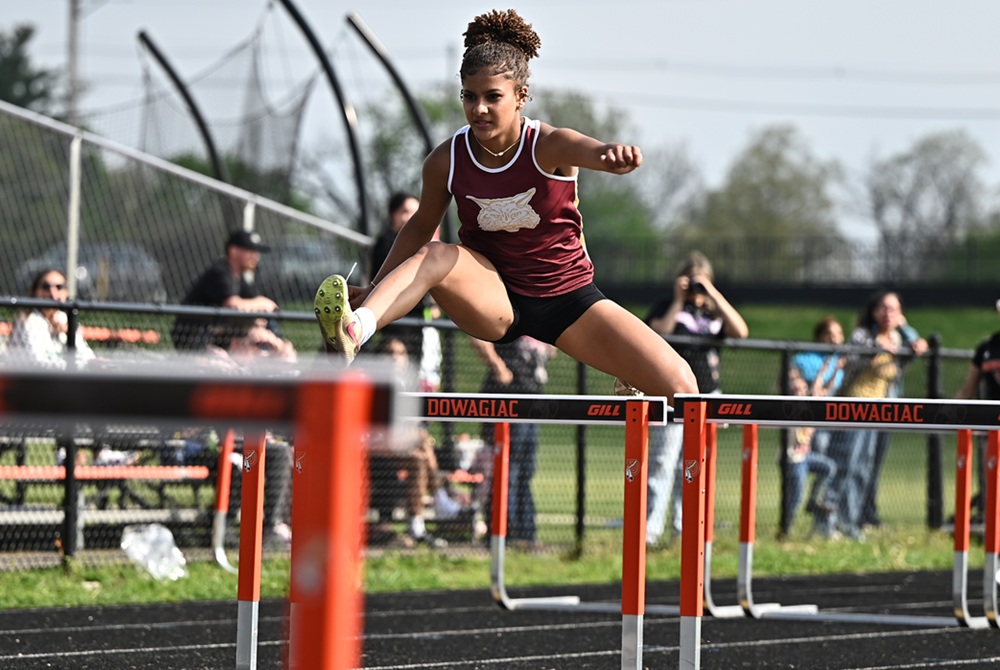
Gill was a Regional champ in the 100-meter hurdles (16.19) and earned second in the 300 hurdles. Colbert took second in the 100 hurdles.
"Lily is a great athlete who has yet to reach her full potential in the hurdles. Her mechanics have improved along with her speed and athleticism. That’s what makes her a great competitor,” Borr said. “We believe that Grace will be an all-stater within the next couple years in the hurdles as well.”
Colbert, Byrd, Zaya Price and Gill swiped second in the 400 relay.
"I enjoy running in the sprint relays because working with a team of really fast girls who work as hard as you is such a fun experience," Byrd said.
Brandywine had two all-state places at the Lower Peninsula Division 3 Finals on May 30 at Kent City. Gill finished sixth in the 100 hurdles, and Zaya Price was sixth in the high jump.
 Scott Hassinger is a contributing sportswriter for Leader Publications and previously served as the sports editor for the Three Rivers Commercial-News from 1994-2022. He can be reached at [email protected] with story ideas for Berrien, Cass, St. Joseph and Branch counties.
PHOTOS (Top) Niles Brandywine junior hurdler Lily Gill attacks a hurdle during one of her races this season. (Middle) Makenna Price sails through the air for Niles Brandywine in the long jump. (Below) The Niles Brandywine girls track & field team and coaching staff pose for a photo with the 2026 Division 3 Regional trophy at Bangor. (Action photos by Tanya Hagen. Team photo provided by the Niles Brandywine athletic department.)