

Be the Referee: Volleyball Replays
By
Sam Davis
MHSAA Director of Officials
September 13, 2022
Be The Referee is a series of short messages designed to help educate people on the rules of different sports, to help them better understand the art of officiating, and to recruit officials.
Below is this week's segment – Volleyball Replays - Listen
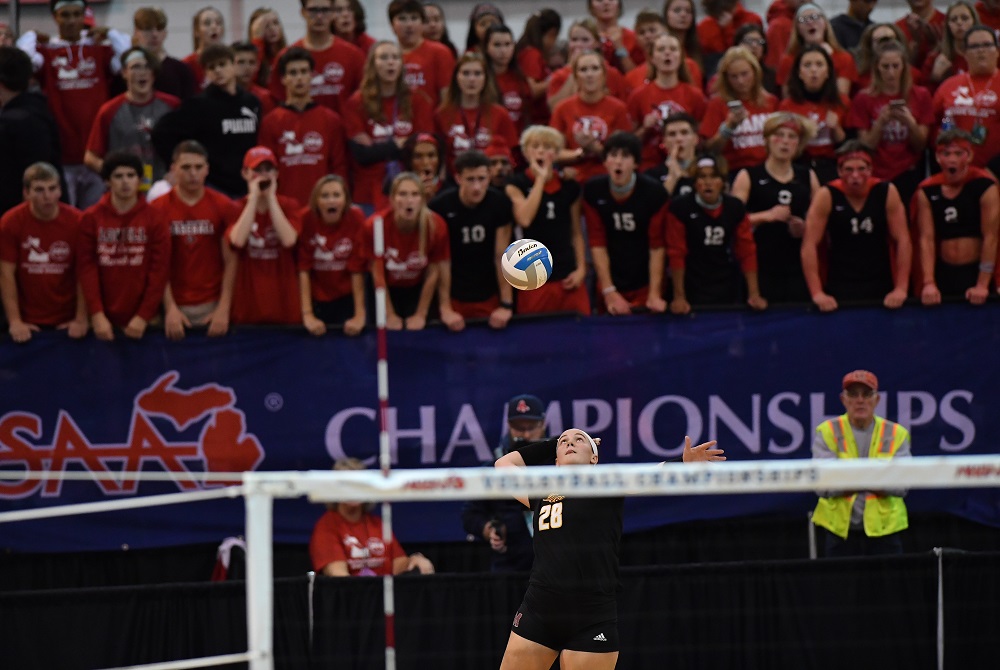
In volleyball, you’ll sometimes see the first referee gives a double thumbs-up signal. That’s not because the referee was impressed with a huge spike. So what does it mean?
A double thumbs-up signal indicates there will be a replay of the rally or point. What causes a do-over for a rally or point?
This most often occurs when something or someone enters the proximity of the playing area, but can also happen when the ball gets lodged in the net or overhead obstruction. When it hits certain objects on the wall short distances from the court, and when a player gets a little anxious and serves before the first ref’s whistle.
And, unlike any other sport, the point will be replayed if the officials just can’t come to an agreement on the call. The point gets wiped off the board, and the whole rally starts anew, like it never happened.
Previous Editions:
Sept. 6: Switching Sides - Listen
Aug. 30: Play Clock - Listen
Aug. 23: Intentional Grounding Change - Listen
What's My Why: Official Stacy Smith
August 3, 2026
Stacy Smith, Caledonia
Smith is registered to officiate her 34th season of competitive cheer this upcoming winter, as she began as a competitive cheer judge with the sport's first season in 1993-94.
The reason I officiate competitive cheer is to give back to a sport that I love so much, that’s given me so much. It’s a point of pride and passion, and it keeps me close to the spirit and the energy of those young, amazing athletes.
“What’s My Why” is a weekly feature telling the stories of MHSAA-registered officials in their own words. If you’re an MHSAA official and would like to share your reason why, please submit a 15 to 45-second video, taken horizontally, to director of officials Sam Davis at [email protected].
What's My Why
July 22: Jason Nickleby, Lake Elmo, Minn. - Watch
July 15: Sam Davis, Lansing - Watch
July 9: Candace Cox, Quincy - Watch
July 1: Robert Williams, Redford - Watch
June 24: Will Godfrey, Jackson - Watch
June 19: Jarrett Skorup, Midland - Watch
June 12: Brady Driver, Sturgis - Watch
June 8: Cindy Tyzo, West Bloomfield - Watch
June 3: Jeff Spedoske, DeWitt - Watch
June 1: Mike Carrier, Commerce Township - Watch
May 27: Stan Wright, Warren - Watch
May 26: Murray Rose, Zeeland - Watch
May 22: Mike VanLaan, Alto - Watch
May 18: Clint Abbott, Newaygo - Watch