


Add, Subtract, Divide, Multiply: MHSAA Not Alone
July 25, 2017
By Rob Kaminski
MHSAA benchmarks editor
This is the third part in a series on MHSAA tournament classification, past and present, that will be published over the next two weeks. This series originally ran in this spring's edition of MHSAA benchmarks.
As the MHSAA faces its most recent classification task with 8-Player Football, and opinions continue to swirl about as to the method, timeframe, location and other procedures, a look around the country provides plenty of company among state association brethren factoring variables into their own equations.
In the Pacific Northwest, the Oregon School Activities Association Football Playoffs are under public scrutiny as leadership ponders a five or six classification format beginning with the 2018-19 school year.
The OSAA has crowned six champions on the gridiron since 2006-07. Many of the state’s smaller schools would like to keep it that way, while larger schools lean toward a five-classification system, citing larger leagues, ease of travel and credibility to state championships as the advantages.
Still others would prefer more than six classes, pointing to safety issues and the opportunity to increase participation numbers as positives.
Moving southeast of Oregon, the Nevada Interscholastic Activities Association recently voted to hold serve on a classification proposal that was volleyed to the membership.
However, changes still could be forthcoming by as early as the 2018-19 season which would add a fifth classification in more populated southern Nevada while allowing northern schools to participate in four classifications. Such divisions could mean no state championship for the fifth class in southern Nevada.
Because of that, the NIAA wants equal numbers of schools in each classification on both ends of the state. Complicating the issue is the fact that the 24 largest schools in the state, by enrollment, are all in Clark County in Southern Nevada.
Across Nevada’s border into Arizona, charter schools are asking the Arizona Interscholastic Association to reconsider classification that was voted upon and approved in September 2015. That agreement called for the largest 33 percent of charter schools by enrollment to be placed in the state’s largest school classification, 3A, the middle 33 percent into 2A, and the smallest 33 percent into 1A.
Less than two years later the charter schools have had a change of heart and have asked to be considered the same as other Arizona public schools and be placed appropriately by enrollment beginning with the 2018-19 school year.
The situation in Arizona further illustrates how the public/private debate that all state associations have faced throughout existence now has the added dynamic of rapidly growing charter schools in today’s educational system, along with virtual school enrollment.
In the nation’s heartland, Nebraska has retooled its football classifications by using enrollment of boys students only in its schools rather than total enrollment. The Nebraska School Activities Association football-playing schools will kick off the 2018 season using this alignment.
Nebraska has three classes of 11-player football, with the smallest class divided in two, Class C-1 and C-2. The state also will have 8-player football for boys enrollments under 47, and the NSAA will sponsor a new 6-player tournament in 2018 for schools with 27 or fewer boys.
“This is a good proposal because some schools have a sizable imbalance between the number of boys and girls, and there’s a large gap (in enrollment) between the largest and smallest schools in Classes A and B,” NSAA executive director Jim Tenopir said. “I think this addresses both of those concerns.”
Swimmers in Georgia, meanwhile, will feel like they are moving with the current, rather than upstream in 2017-18, as the Georgia High School Association recently doubled the number of team championship events from two to four.
Swim enthusiasts can also count on longer days at the finals, as the top 30 finishers from the prelims will advance to the finals instead of 20, and all championship events will have three heats versus two.
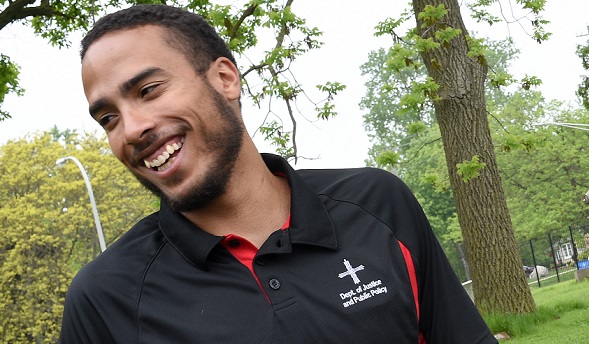
3-Sport Standout Back as Airport Coach
September 9, 2020
By Doug Donnelly
Special for Second Half
CARLETON – Dakota Bostic started his high school cross country career because he wanted to get into shape for his freshman year of basketball for Carleton Airport High School.
 A decade later, Bostic is about to launch his coaching career as the varsity cross country coach for the Jets.
“Cross country teaches you a lot,” said Bostic, 22. “It’s a tough sport. There’s no one to battle but yourself. There’s plenty to learn from the sport. I didn’t learn it until I looked back a bit. When you stop, you kind of realize what you put yourself through. It makes you mentally tough.”
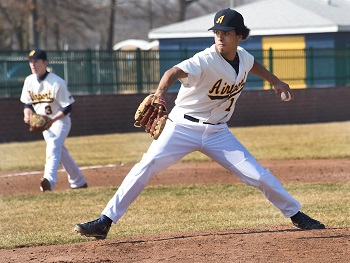
Bostic was a three-sport athlete at Airport before graduating in 2015. He ran varsity cross country for all four years, was moved up to the Jets varsity basketball team as a freshman and played baseball four years.
“I think sports are an integral part of a person’s school experience,” he said.
Bostic played basketball for four years at Concordia University in Ann Arbor, going from a little-used freshman to starting his junior and senior seasons. He was also an outstanding student at Concordia, being named the Justice and Public Policy Student of the year in 2019 and graduating with a bachelor’s degree. The award came in part because of his work on a class project that involved investigating a 2013 cold case murder of a mother of two from Taylor. He was named to the Wolverine-Hoosier Athletic Conference All-Academic Team multiple times, maintaining a cumulative GPA of 3.25.
Airport athletic director Tim Duffy said when he heard Bostic was available this fall to be a coach, he called him up. He at first thought Bostic might be interested in being an assistant with the cross country team. But after talking to him, Duffy thought he would be a candidate for head coach.
 “He was a very well-rounded athlete here,” Duffy said. “I can’t tell you how many times I saw him run or ride his bike to and from school to get into the gym. Everything he does, he puts everything he’s got into it. Everybody you talk to here speaks highly of him.”
After Bostic was hired, he had to go through the MHSAA certifications and complete a lot of paperwork to be eligible to coach.
“The morning after he was hired, he was in my office trying to figure out everything he had to do,” Duffy said. “He knocked it all out within a week. And, he did it all while juggling a job. That’s the type of kid he is.”
Bostic has enjoyed his first few weeks coaching the Jets runners.
“The kids have been great,” he said. “My little brother just graduated from Airport, so some of them know me. They are a receptive group. They all want to get better. They are learning what it takes.”
While basketball was his favorite sport in high school, cross country holds a special place in Bostic’s heart. Now, he gets to pass that on to a new group of student athletes.
“In any sport, there is something you can do to get better every day,” Bostic said.
Bostic grew up about three miles from Airport High School and remembers attending Jets sporting events from a young age.
“I remember looking up to the older guys, watching them play basketball and football,” he said.
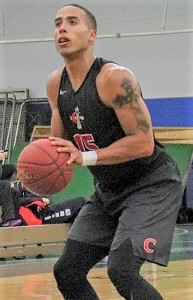 He exceled in basketball, earning some looks from colleges while being an all-region player in Monroe County.
“I always knew I wanted to play basketball in college,” he said. “It was a process once I got there. I had to adjust. My freshman and sophomore seasons, I didn’t play very much. I had to make my name in practice.
“By my junior year I started playing a little bit, then I got to start a game and stayed there from then on. It carried over into my senior year. In four years of playing basketball, I learned there are plenty of aches and pains.”
After Concordia, Bostic joined the Marines. He was in officer school when a back injury forced him to be honorably discharged. When Duffy found out Bostic had returned to the Airport area, he jumped at the chance to add Bostic to his coaching lineup.
“He’s a great guy, and we are happy to have him coaching with us,” Duffy said. “He’s a great pick-up for us.”
Bostic said his message to his cross country athletes will be to treat every practice and every meet as if it might be their last.
“Given the current situation of the world, I’ll try and remind them that no opportunity is guaranteed,” Bostic said. “You owe it to yourself and the kids who aren’t getting to participate to go out and not take it for granted.”
Bostic coming home to coach Airport is not necessarily what he previously pictured doing at this point in his life, but he’s happy to be doing it.
As Bostic said, "I hope to always be a Jet.”
 Doug Donnelly has served as a sports and news reporter and city editor over 25 years, writing for the Daily Chief-Union in Upper Sandusky, Ohio from 1992-1995, the Monroe Evening News from 1995-2012 and the Adrian Daily Telegram since 2013. He's also written a book on high school basketball in Monroe County and compiles record books for various schools in southeast Michigan. E-mail him at [email protected] with story ideas for Jackson, Washtenaw, Hillsdale, Lenawee and Monroe counties.
PHOTOS: (Top) Dakota Bostic this fall is beginning his first season as Carlton Airport’s cross country coach. (Middle) Bostic makes his move toward the plate while pitching for Airport. (Below) Bostic lines up to shoot a free throw while playing at Concordia-Ann Arbor. (Top and middle photos courtesy of Monroe News; below photo courtesy of Concordia-Ann Arbor.)