

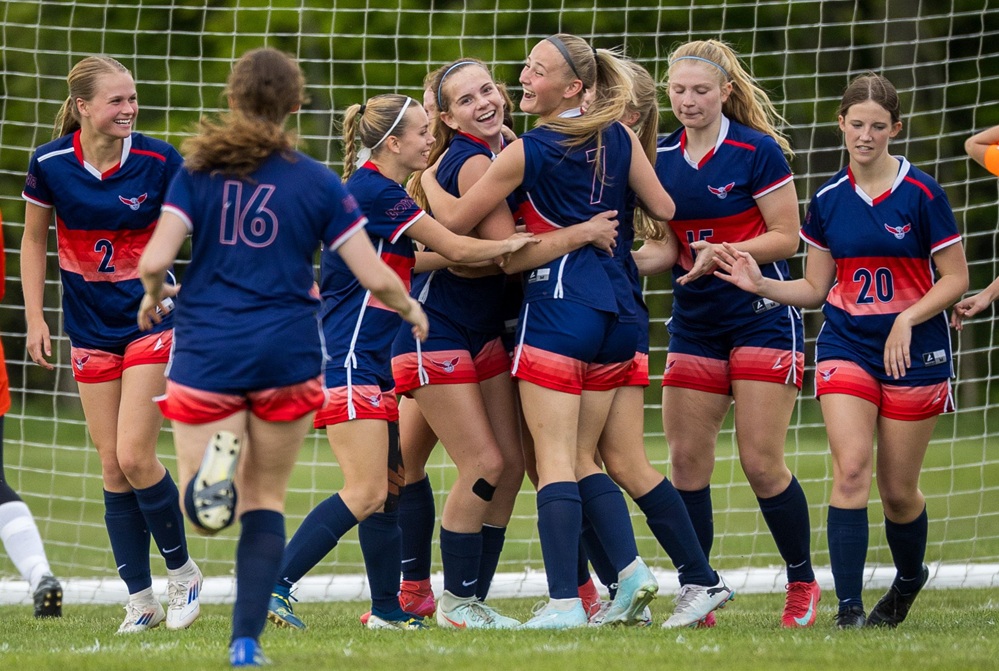
Boyne City Public Schools Receives MIAAA's Exemplary Athletic Program Award
February 3, 2026
The Michigan Interscholastic Athletic Administrators Association (MIAAA) has named Boyne City Public Schools as a recipient of the 2026 MIAAA Exemplary Athletic Program Award.
The award will be formally presented to Boyne City athletic director Matt Windle on March 15 during the MIAAA Annual Business Meeting at the Grand Traverse Resort and Spa.
Established in 1998, the MIAAA Exemplary Athletic Program Award recognizes high school athletic programs across Michigan that model excellence, equity, and educationally sound practices. The program was created to identify and publicly recognize outstanding athletic programs, provide a framework for voluntary self-assessment, promote the sharing of best practices statewide, and encourage continued improvement in Michigan’s high school athletic programs.
Boyne City Public Schools becomes the 24th athletic program recognized over the past 25 years and only the 14th program honored during the last two decades, underscoring the selectivity and prestige of the Exemplary Athletic Program Award.
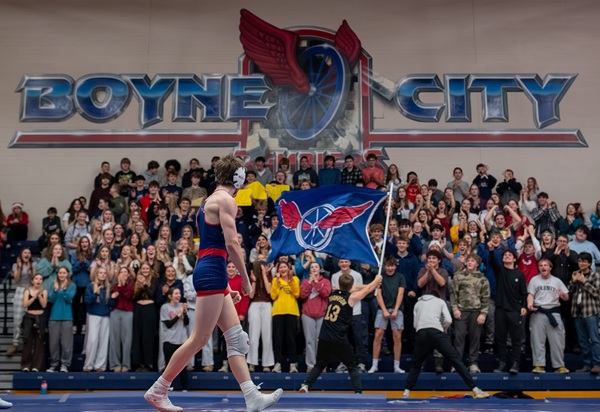 As part of the evaluation process, the MIAAA Exemplary Athletic Program Committee conducted a three-day on-site visit in the fall, meeting with district administrators, coaches, student-athletes, parents, and support staff. The visit provided committee members with the opportunity to review and share Boyne City’s vision, goals, and systems supporting a comprehensive, equitable, and education-based athletic program.
Boyne City athletics was selected following a thorough assessment and review process examining program structure, leadership practices, equity initiatives, sportsmanship, and the ways in which the athletic program serves its various constituents. Exemplary programs demonstrate sustained success in advancing the emotional, social, moral, and physical growth of all participants while reinforcing the core values of interscholastic athletics.
The 2026 recognition places Boyne City Public Schools among a distinguished group of athletic programs statewide that have demonstrated consistent excellence since the award’s inception.
Boyne City athletic director Matt Windle said of the award: “This recognition reflects the collective effort of so many people who care deeply about providing meaningful opportunities for our student-athletes. Our coaches, staff, administrators, families, and community consistently put students first and work together to create an environment rooted in growth, accountability, and support.
“We are proud of the culture that exists within Boyne City athletics and grateful for the opportunity to serve students through education-based athletics.”
(Photos by Kishba Media.)
Multi-Sport Experience 'Special' for Bronson
By
Wes Morgan
Special for MHSAA.com
February 2, 2016
An increasing number of high-profile athletes and coaches are becoming more vocal about the importance of a well-rounded adolescent athletic experience. More and more parents and athletes, so it seems, are heeding that advice.
 That’s the case in Bronson, a town of fewer than 2,500 residents that manages to keep rolling out successful varsity sports programs. Or perhaps it’s that athletes in Bronson never bought into sports specialization as much as other communities in the first place.
Bronson athletic director and Vikings varsity volleyball coach Jean LaClair, who received the Michigan High School Athletic Association’s 2015 Women in Sports Leadership Award, said it’s critical at a smaller school such as Bronson to emphasize participation in more than one sport.
But, through decades of coaching, she’s seen the effects of athletes choosing a narrow focus.
“I think for most schools and most sports, we’re seeing our numbers dwindle,” she said. “I believe that a lot of parents take their kids to travel ball, and it’s taking them out of high school sports. I think club sports are kind of hindering our high school athletics.”
The National Collegiate Athletic Association reports that six percent of high school athletes go on to play in NCAA programs, and as of 2012 fewer than two percent of high school athletes earned an NCAA Division I scholarship (of any amount), according to a CBS MoneyWatch report. Fewer than eight percent ever play a varsity sport at any collegiate level, according to a study by ScholarshipStats.com.
It’s an admirable dream, but an unlikely one. And along with that gamble comes the great possibility of burnout. Some studies have also suggested that young athletes competing in only one sport year-round are at a higher risk of injury. On top of that, specialization doesn’t seem to improve those odds.
“If you want a (college) coach to know about you, just do some work and they’ll know about you,” LaClair said. “That’s how I look at it. If you’re good enough, a coach is going to see you. You don’t have to go to a club tournament to be seen.”
Though participation in multiple sports is commonplace amongst both genders at Bronson, girls sports in particular have reaped the rewards of such commitment.
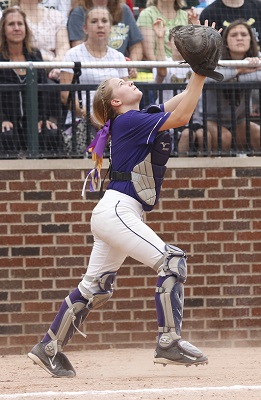 Look no further than the Vikings’ Division 3 runner-up performance in softball last spring (they lost to Monroe St. Mary Catholic Central in the Final), which seemed to fire up the volleyball squad this past fall.
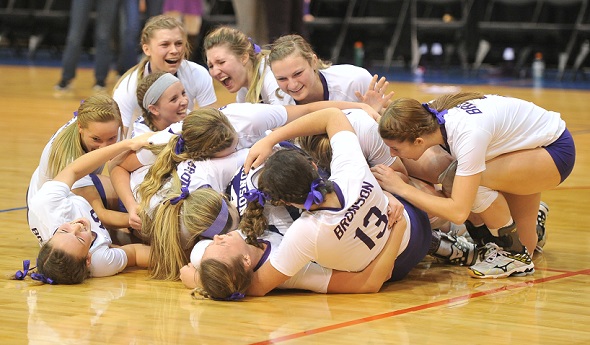
Bronson’s netters tore through the postseason en route to a Class C volleyball championship, earning some revenge by beating Monroe St. Mary Catholic Central in three games.
It was the Vikings second MHSAA title since 2009.
Four athletes who competed on both teams are currently playing basketball: senior Kelsey Robinson, sophomore Adyson Lasky, sophomore Kiana Mayer, and sophomore Payton Robinson. Senior Alexa Ratkowski, an all-state selection in volleyball, also is on the basketball team.
Of the 13 volleyball players who hoisted a trophy at Kellogg Arena in November, six are two-sport athletes and seven are three-sport athletes.
And of the 11 varsity basketball players currently on the Vikings’ girls roster, eight played volleyball and a total of 10 participated in a fall sport.
As Kelsey Robinson’s prep career winds down, she believes playing several sports has made her better at each one. Not to mention she and her classmates find joy in the memories created through a variety of competitive situations.
“It’s just really fun to do different things,” said Robinson, a defensive specialist in volleyball, a former cross country runner, a guard in basketball and a third baseman and centerfielder in softball. “We don’t have a lot of the numbers, but we have the people who are willing to put in the hard work, even if it’s not their best sport. Each season is only three to four months at the most. So it keeps things exciting.”
Some do take part in the club scene on a smaller, more local level. Most take advantage of the coaches at Bronson who are generous with their time.
“I’ll get into the gym with any kid any time they want to,” LaClair said.
 Wes Morgan has reported for the Kalamazoo Gazette, ESPN and ESPNChicago.com, 247Sports and Blue & Gold Illustrated over the last 12 years and is the publisher of JoeInsider.com. He can be reached at [email protected] with story ideas for Berrien, Cass, St. Joseph and Branch counties.
PHOTOS: (Top) Bronson volleyball players celebrate clinching the Class C championship at Kellogg Arena in the fall. (Middle) Then-freshman catcher Payton Robinson prepares to catch a pop fly during last season's Softball Finals weekend at Secchia Stadium.