

Health & Safety: A Look Back, Gallop Ahead
By
John E. (Jack) Roberts
MHSAA Executive Director, 1986-2018
August 7, 2015
We are just completing year six of eight during which we have been addressing the four important health and safety issues that, for ease of conversation, we call the “Four Hs.”
During the 2009-10 and 2010-11 school years, our focus was on Health Histories. We made enhancements in the pre-participation physical examination form, stressing the student’s health history, which we believe was and is the essential first step to participant health and safety.
During the 2011-12 and 2012-13 school years, our focus was on Heads. We were an early adopter of removal-from-play and return-to-play protocols, and our preseason rules/risk management meetings for coaches included information on concussion prevention, recognition and aftercare.
Without leaving that behind, during the 2013-14 and 2014-15 school years, our focus was on Heat – acclimatization. We adopted a policy to manage heat and humidity – it is recommended for regular season and it’s a requirement for MHSAA tournaments. The rules/risk management meetings for coaches during these years focused on heat and humidity management.
At the mid-point of this two-year period, the MHSAA adopted policies to enhance acclimatization at early season practices and to reduce head contact at football practices all season long.
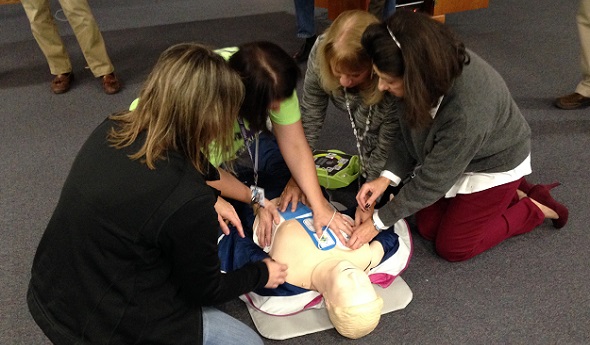
Without leaving any of the three previous health and safety “H’s” behind, during the 2015-16 and 2016-17 school years, our focus will be on Hearts – sudden cardiac arrest and sudden cardiac death.
Coinciding with this emphasis is the requirement that all high school level, varsity level head coaches be CPR certified starting this fall. Our emphasis will be on AEDs and emergency action plans – having them and rehearsing them.
On Feb. 10, bills were introduced into both the U.S. Senate and House of Representatives, together called the “Safe Play Act (see below),” which addressed three of the four health and safety “H’s” just described: Heat, Hearts and Heads.
For each of these topics, the federal legislation would mandate that the director of the Centers for Disease Control develop educational material and that each state disseminate that material.
For the heat and humidity management topic, the legislation states that schools will be required to adopt policies very much like the “MHSAA Model Policy to Manage Heat and Humidity” which the MHSAA adopted in March of 2013.
For both the heart and heat topics, schools will be required to have and to practice emergency action plans like we have been promoting in the past and distributed to schools this summer.
For the head section, the legislation would amend Title IX of the 1972 Education Amendments and eliminate federal funding to states and schools which fail to educate their constituents or fail to support students who are recovering from concussions. This support would require multi-disciplinary concussion management teams that would include medical personnel, parents and others to provide academic accommodations for students recovering from concussions that are similar to the accommodations that are already required of schools for students with disabilities or handicaps.
This legislation would require return-to-play protocols similar to what we have in Michigan, and the legislation would also require reporting and recordkeeping that is beyond what occurs in most places.
This proposed federal legislation demonstrates two things. First, that we have been on target in Michigan with our four Hs – it’s like they read our playbook of priorities before drafting this federal legislation.
This proposed federal legislation also demonstrates that we still have some work to do.
And what will the following two years – 2017-18 and 2018-19 – bring? Here are some aspirations – some predictions, but not quite promises – of where we will be.
First, we will have circled back to the first “H” – Health Histories – and be well on our way to universal use of paperless pre-participation physical examination forms and records.
Second, we will have made the immediate reporting and permanent recordkeeping of all head injury events routine business in Michigan school sports, for both practices and contests, in all sports and at all levels.
Third, we will have added objectivity and backbone to removal from play decisions for suspected concussions at both practices and events where medical personnel are not present; and we could be a part of pioneering “telemedicine” technology to make trained medical personnel available at every venue for every sport where it is missing today.
Fourth, we will have provided a safety net for families who are unable to afford no-deductible, no exclusion concussion care insurance that insists upon and pays for complete recovery from head injury symptoms before return to activity is permitted.
We should be able to do this, and more, without judicial threat or legislative mandate. We won’t wait for others to set the standards or appropriate the funds, but be there to welcome the requirements and resources when they finally arrive.
Safe Play Act — H.R.829
114th Congress (2015-2016) Introduced in House (02/10/2015)
Supporting Athletes, Families and Educators to Protect the Lives of Athletic Youth Act or the SAFE PLAY Act
Amends the Public Health Service Act to require the Centers for Disease Control and Prevention (CDC) to develop public education and awareness materials and resources concerning cardiac health, including:
- information to increase education and awareness of high risk cardiac conditions and genetic heart rhythm abnormalities that may cause sudden cardiac arrest in children, adolescents, and young adults;
- sudden cardiac arrest and cardiomyopathy risk assessment worksheets to increase awareness of warning signs of, and increase the likelihood of early detection and treatment of, life-threatening cardiac conditions;
- training materials for emergency interventions and use of life-saving emergency equipment; and
- recommendations for how schools, childcare centers, and local youth athletic organizations can develop and implement cardiac emergency response plans.
Requires the CDC to: (1) provide for dissemination of such information to school personnel, coaches, and families; and (2) develop data collection methods to determine the degree to which such persons have an understanding of cardiac issues.
Directs the Department of Health and Human Services to award grants to enable eligible local educational agencies (LEAs) and schools served by such LEAs to purchase AEDs and implement nationally recognized CPR and AED training courses.
Amends the Elementary and Secondary Education Act of 1965 to require a state, as a condition of receiving funds under such Act, to certify that it requires: (1) LEAs to implement a standard plan for concussion safety and management for public schools; (2) public schools to post information on the symptoms of, the risks posed by, and the actions a student should take in response to, a concussion; (3) public school personnel who suspect a student has sustained a concussion in a school-sponsored activity to notify the parents and prohibit the student from participating in such activity until they receive a written release from a health care professional; and (4) a public school's concussion management team to ensure that a student who has sustained a concussion is receiving appropriate academic supports.
Directs the National Oceanic and Atmospheric Administration to develop public education and awareness materials and resources to be disseminated to schools regarding risks from exposure to excessive heat and humidity and recommendations for how to avoid heat-related illness. Requires public schools to develop excessive heat action plans for school-sponsored athletic activities.
Requires the CDC to develop guidelines for the development of emergency action plans for youth athletics.
Authorizes the Food and Drug Administration to develop information about the ingredients used in energy drinks and their potential side effects, and recommend guidelines for the safe use of such drinks by youth, for dissemination to public schools.
Requires the CDC to: (1) expand, intensify, and coordinate its activities regarding cardiac conditions, concussions, and heat-related illnesses among youth athletes; and (2) report on fatalities and catastrophic injuries among youths participating in athletic activities.
Neighbors, Friends & Coaching Legends
April 26, 2018
By Doug Donnelly
Special for Second Half
When Kris Hubbard was asked to coach the fledgling Ottawa Lake Whiteford softball team in the late 1970s, the first person she went to for advice was her neighbor, Kay Johnson.
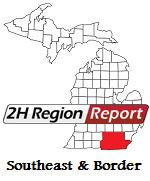 Johnson, who already had been coaching the Morenci softball team for about five years, wrote down a couple of pages worth of tips, from offensive situations for practice to drills for outfielders. Those golden rules given from one friend to another helped build the foundation for Hubbard’s career that has spanned 40 years, more than 800 wins and three MHSAA Finals championships.
“I wanted to start a softball program and I said to her, ‘Okay, what do I need to do?’” Hubbard recalls. “I think I still have it. It was a pretty good list.”
“I got her started,” Johnson said. “I don’t know that I taught her a lot.”
Johnson graduated from Whitmer High School in Toledo in 1968 and Adrian College in 1972. She lived in Sylvania, Ohio, only a couple of miles from Whiteford High School, and accepted a teaching and coaching job at Morenci. She coached volleyball, basketball, softball and track. Her 1976 Bulldogs track & field team won the Lower Peninsula Class D championship.
Hubbard grew up in Blissfield and played college basketball at Western Michigan University, graduating in 1973. After college she accepted a teaching job at Whiteford and early on was coaching track, volleyball and basketball for the Bobcats. After the 1978 track season, Hubbard stepped down as head coach for that team. It was then that some of the Whiteford girls came to her and asked if she would be interested in coaching them in a new sport at the school – softball.
“I had played fast-pitch softball, but I didn’t know all of the little things kids needed to know,” Hubbard said. “That’s why I went to her.”
Johnson and Hubbard had met a few years earlier when Johnson was playing on a Toledo city league recreation basketball team. Her team needed more players and her uncle told her about Hubbard, who, come to find out, was a distant relative. The two didn’t know each other, but they lived about a long fly ball from each other at the Michigan-Ohio border.
“My mom’s brother was married to her grandma’s sister,” Johnson said. “We didn’t know each other. I was at Thanksgiving and my uncle said I should call her for the basketball team.”
“So, I talked with her and I thought maybe we could ride together,” Hubbard recalls. “I asked where she lived. Turns out, she lived on the first street into Ohio (across the state line) and I lived on the first street in Michigan. … We have a lot in common. Both of us like sports and have similar interests. We’ve been friends ever since.”
They’ve been more than just rivals in different dugouts. When Hubbard was getting married in the 1980s, she moved in with Johnson after her house sold. For years they have traveled to softball coaching clinics together, even making a presentation on softball drills at least once. This past winter they vacationed together.
“She’s been a good friend,” Hubbard said.
Hubbard had never coached softball but was a fast learner. Her first three Bobcats teams won Tri-County Conference championships from 1979-81. In 1984, the Bobcats won their first of three Class D championships over the next four years.
Ironically, only one of those state title teams won a league championship. That’s because Tri-County Conference opponent Summerfield won the Class C title in 1984 and Johnson’s Morenci team won Class C titles in 1985 and 1986.
The league has been a softball powerhouse from the start. Since 1984, Summerfield and Whiteford have three MHSAA Finals titles each and Morenci and Clinton two apiece. Numerous TCC teams have reached the Semifinals or played in championship games. Whiteford, for example, played in the 2017 Division 4 Final and Morenci in the 2016 Semifinals.
“There have been some good coaches in the TCC, and I’m not talking about us,” Hubbard said.
Hubbard has 11 TCC titles to her credit, including the 2017 win. Robert Taylor (Summerfield) has eight league titles, Johnson seven and Al Roberts (Clinton) five.
The league has also been home to some tremendous talent. Summerfield’s Michelle Bolster played at Indiana University. Whiteford’s Leigh Ross was an All-American at the University of Toledo, later coached at Syracuse and is now a softball analyst for ESPN and the Big Ten Network. Morenci pitcher Renae Merillat was an All-American at Hillsdale College. Summerfield’s Melissa Taylor claimed the statewide Miss Softball Award as the top position player in 1997.
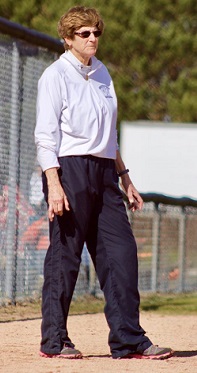 Johnson entered 2018 with 889 career victories, Hubbard with 813, putting them both near the top of the MHSAA softball coaching wins list. Johnson has more than any softball coach in Lenawee County history, while Hubbard passed Monroe’s Vince Rossi last year to become the winningest softball coach in Monroe County history. This year, both teams are in a loaded Division 4 District that includes Britton Deerfield, Summerfield and Sand Creek.
“There have been times where the District is tougher than Regional,” Hubbard said.
Johnson said both she and Hubbard have the same philosophy when it comes to the regular season – throw out the records and build a team that can contend for an MHSAA championship.
“Our league prepares us for the District tournament,” she said. “We both put teams on our schedule that are going to challenge us. I’d rather lose 3-1 then win 15-0. Winning 15-0 does nothing. It doesn’t teach anything.”
Morenci was a member of the Lenawee County Athletic Association before joining the TCC in the early 1980s. That meant the two friends would be coaching against each other at least twice a year.
“We’ve done it enough now that it’s just another league game,” Johnson said.
It’s no accident the two have similar coaching styles and strategy when it comes to developing pitchers, bunting at key situations in a game and advancing runners.
“We talk about softball a lot, just not about playing each other. That’s not exactly fun,” Hubbard said. “I think we are both pretty laid back. To coach as long as we have, you have to be.”
The game has changed over the years – the ball itself is much different than it was in the 1970s and 1980s. The home run was rare 20 years ago but is now part of the game, something Johnson isn’t thrilled about.
“I hate the home run in fast-pitch,” she said. “I want doubles, triples and relays from the outfield. I want action. You work your defense. I want them to be able to show off. The bats have really livened up the game.”
Hubbard wants to coach the Bobcats at least one more year after this season. This spring her team has seven players back, including its top pitcher, from last year’s runner-up finish. Most are only juniors. She smiles easily when talking about ex-players and their after-school successes.
“I love Facebook for one reason – you get to follow a lot of your former athletes,” she said. “There’s a whole lot of them who are really successful in life. That’s what it is all about. It’s a game. Softball is just a game. It’s (a small part) of your life. If you turn out all right, that’s what it is about.”
Johnson used to identify pitching prospects while teaching physical education at Morenci. She was later a principal and now is athletic director at Morenci along with softball coach.
“It’s sustained over the years,” Johnson said of the program. “We’ve had our low years. One year we only won five games. But, program-wise, year-in and year-out, we bring out the quality kids. They know the expectations. They have a high grade-point average. When you are getting those quality kids out, you know they are going to give you a good effort.”
Johnson and Hubbard will square off this season May 22 in a doubleheader at Whiteford. Before the game, which will be the 106th and 107th meetings between the two all-time, Hubbard will put a Snapple in the dugout for Johnson. Neither coach is interested in knowing who has the upper hand when it comes to the head-to-head series.
“You don’t get real fired up about it,” Hubbard said. “For those two hours I want to kick her butt and she wants to kick mine. We are going to be friends no matter what.”
 Doug Donnelly has served as a sports and news reporter and city editor over 25 years, writing for the Daily Chief-Union in Upper Sandusky, Ohio from 1992-1995, the Monroe Evening News from 1995-2012 and the Adrian Daily Telegram since 2013. He's also written a book on high school basketball in Monroe County and compiles record books for various schools in southeast Michigan. E-mail him at [email protected] with story ideas for Jackson, Washtenaw, Hillsdale, Lenawee and Monroe counties.
PHOTOS: (Top) Morenci’s Kay Johnson encourages her next hitter as a runner reaches third base. (Middle) Ottawa Lake Whiteford’s Kris Hubbard surveys the field during Wednesday’s sweep of Petersburg Summerfield. (Photos by Mike Dickie and Angela Link, respectively.)