

Calumet Invite Produces Northern Stars
September 18, 2013
By Geoff Kimmerly
Second Half editor
The Calumet Invitational dates back roughly 30 years as an annual staple of the cross country schedule for schools at the northernmost tip of Michigan's Upper Peninsula.
A creative move by the Copper Kings last year added some statewide prestige to the event.
 Last week, for the second season, Calumet ran the series of races at Keweenaw Mountain Lodge, a resort near Copper Harbor and the northern bank of the Keweenaw Peninsula.
Calumet is the northernmost high school in Michigan. And moving this race another 35 miles northeast more or less guaranteed it's the northernmost event run in the state.
"We figured it was pretty safe. We're the northernmost school in the state, and you can only go four more miles and you're in Lake Superior," Calumet athletic director Sean Jacques said. "Nobody else is going to do anything more north than that."
A total of 10 schools were represented this fall in the races for boys and girls varsity, junior varsity and middle schoolers.
Jacques said the event formerly was run at a golf course in Calumet. But a few years ago, Calumet graduate and former Copper Kings cross country runner Dan Harri moved home from Florida to become general manager at the Mountain Lodge (he's also a renowned chef and has owned restaurants in Miami with Hall of Fame Dolphins coach Don Shula).
Harri had asked a few times about bringing a cross country or golf event to the lodge. Jacques told him last year they'd give it a try, so Harri set up a course that includes golf course, a couple of bridges, trails and finishes with a climb on the No. 1 fairway. It also provides various points for fans to watch runners go by, not always available on other courses.
"We were looking for a little bit of a change, and it's a beautiful course," Jacques said. "We thought if people were willing to make the extra drive, it would be really nice."
Calumet won the boys race this season, just ahead of runner-up Houghton. Houghton's girls were victorious, followed by the host Copper Kings.
Click to read more about this year's event from the Houghton Mining Gazette.
Michigan's claim to an NFL evolution
As part of its NFL preview this month, Sports Illustrated reported on one of the most significant developments for offenses over the last few decades – the silent snap count, which is used regularly by visiting teams because offensive linemen can’t hear the quarterback calling for the ball over the clamor of the home crowd.
And the article explained that the silent snap count might’ve gotten its start at one of Michigan’s smallest high schools – Flint’s Michigan School for the Deaf.
Offensive linemen during the 1980s were feasted on by pass rushers like Lawrence Taylor and Bruce Smith, who built record sack totals by blasting past blockers who seemed a step slow. Turns out, that was true. Defensive players were getting an edge by attacking as soon as they saw the ball move. But blockers (especially offensive tackles), focused instead on the defensive ends and linebackers lined up across from them, and didn’t have the luxury of watching the ball – and since they also couldn’t hear the snap count, started each play a step behind.
Enter the silent count. The quarterback signals to the center that he is ready to receive the ball (with a pat on the back, by raising a foot, etc.). The center then raises his head, and after a predetermined count of at least one second snaps the ball without a sound. This means an offensive tackle doesn’t have to listen for a snap count – he just counts after seeing the center get set.
The SI report recognized longtime offensive line coach Howard Mudd as the guru of the silent snap count. But Mudd recalled a conversation he’d had while working for the Seattle Seahawks with another coach, the late Andy MacDonald, who also had coached early in his career at a school for the deaf in Michigan.
The article doesn’t mention Michigan School for the Deaf by name. But it seems to make sense that the Tartars were the first to use the now-revolutionary count. MacDonald – who played at Central Michigan University and went on to coach at Michigan State and four other colleges and also for the Buffalo Bills – grew up in Flint and attended Flint Northern before playing for the Chippewas from 1950-53. The historical web site Michigan-football.com has results for Flint’s Michigan School for the Deaf dating to 1950, making it a decent assumption that MacDonald might’ve gotten in a little early coaching experience at the school down the road from his home.
Click for the SI story and go to page 4 for the mention of Michigan’s school.
Michigan mourns trooper, running standout
The law enforcement community is mourning the death of Michigan State Police trooper Paul Butterfield, who was shot Sept. 9 during a traffic stop in Mason County. He also was a well-known distance runner during the 1980s and the MHSAA Class A cross country champion running for Bridgeport in 1987.
According to a Ludington Daily News report, Butterfield continued running after high school at the University of Tennessee, and also competed at the 1989 Pan American Junior Games in Argentina.
Butterfield was stationed in Hart after previously serving in Manistee, and lived in Mason County. He also had served in the U.S. Army. Click to read more from the Ludington Daily News.
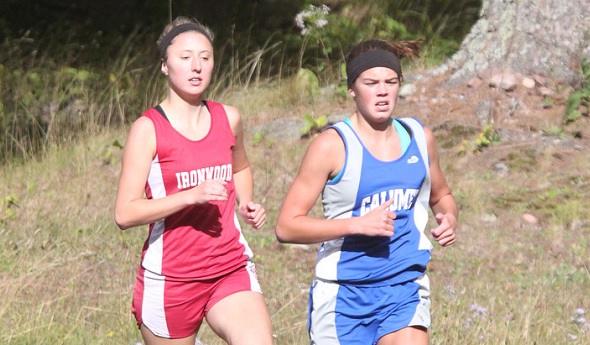
PHOTO: Calumet's Chelsea Jacques (right) won this season's Calumet Invitational with a time of 21:08.06, just ahead of Ironwood's Jessica Gering at 21:46.16. (Photo courtesy of Calumet athletic department.)
Sailor Nation Works Together to Save Life
December 12, 2019
By Tom Kendra
Special for Second Half
Bob Mirkle calls it a miracle that he’s still alive.
 The 74-year-old Norton Shores resident had a brush with death Oct. 18 in front of 7,000 fans packed into Sailor Stadium for the blockbuster Muskegon at Mona Shores football game.
Just as the huge crowd stood for the national anthem, Mirkle was slumping back onto the bleachers from cardiac arrest, later identified as the failure of a heart stent which had been implanted 18 years ago.
“Something’s wrong with grandpa!” screamed his grandson, causing a ruckus in the Mona Shores reserved section, about 10 rows below the press box.
What transpired over the next 30 minutes was an incredible performance by the Mona Shores fans, coaches, media and entire community to save Mirkle’s life. It was a textbook reaction which was lauded by Norton Shores public safety officials – and the Mirkle family.
“We live in a great community,” said Cheryl Mirkle, Bob’s wife, who stayed home that night to babysit two of her grandchildren. “In a lot of other places, he wouldn’t have made it. We were told that 1 out of 9 people who have that situation happen don’t make it. So we believe it was nothing short of a miracle.”
The immediate family surrounding Mirkle – many of whom were at the game to support Shores starting junior linebacker Karsen Marihugh, Bob’s great-nephew, and two other family members who are cheerleaders – helped clear a small area in the packed stands and get Mirkle down flat on his back.
A woman sitting four rows back, who was well trained in cardio-pulmonary resuscitation, was able to clear Mirkle’s airway and immediately start chest compressions.
Mark Konecny, a Mona Shores assistant coach and part-time Norton Shores fireman, recognized what was going on and grabbed the automated external defibrillator (AED) on the sidelines and headed up into the stands. Konecny, who was an all-state quarterback for Shores in 1980 and went on to play two years in the NFL with Miami and Philadelphia, was able to connect the defibrillator and shock Mirkle’s heart back into action.
 Joe Kinnucan, who was in the press box about to go on the air with a Sailor Nation Sports Network broadcast of the game, threw down his headset and made a beeline for Mirkle, leaving his son Noah to make his unplanned broadcasting debut.
“There was no second thought,” explained Kinnucan, whose full-time job is Deputy Fire Chief for the Norton Shores Fire Department. “You ask any first responder who is truly vested in their work, and they will tell you that they are always on call. I was just happy to be able to help out.”
The huge crowd and both teams, who were wired for one of the state’s biggest regular-season prep football games of the year, briefly put aside the intense rivalry and went dead quiet out of respect. Shores public address announcer Dan Vandermyde even asked those in attendance to say a prayer as Mirkle was carried underneath the bleachers, where Konecny and Kinnucan and others continued working on him as the game began.
Cheryl Mirkle, meanwhile, who was at home and receiving cryptic, panicked phone calls and texts from friends and family, believed that her husband had died. That is until she got a call from her niece, screaming: “He’s breathing! He’s alive!”
Cheryl first saw her husband at Mercy Hospital in Muskegon where, like a true fan, the first words out of his mouth were: “What’s the score?”
The score of that night’s game was surprisingly one-sided: Muskegon 53, Mona Shores 0. Since that shocking night, both Mirkle and the Sailors have been on the recovery trail.
Mirkle underwent heart bypass surgery Oct. 23, five days after the game, and ended up spending 11 days in the hospital. He is back home and even mowed the lawn one day, and will start his therapy sessions this week.
“I’m doing great,” said Mirkle, a retired truck driver and devout fisherman. “I’m getting better and getting ready to start going to therapy. My story has a happy ending.”
As Mirkle was recovering, the Sailors and Big Reds were putting together long playoff runs, with both culminating Thanksgiving weekend in MHSAA Finals appearances at Ford Field in Detroit.
Muskegon’s run came to a disappointing end in a 30-7 loss to River Rouge in the Division 3 championship game.
Mona Shores, meanwhile, continued its magic run under diminutive junior quarterback Brady Rose, upsetting Detroit Martin Luther King, 35-26, in the Division 2 title game.
It capped an amazing rags-to-riches story for Mona Shores, which until recently had become synonymous with losing on the football field. Shores had only one winning season during a 14-year stretch from 1998 to 2012, but ended its playoff drought in 2013 and then made it all the way to the Division 2 championship game in both 2014 and 2018, before taking it all this time.
“We have waited all of these years for Shores to win some football games, and now it’s happening,” said Cheryl, who has been going to games with her husband since the late 1980s when their nephew, Sam Wakefield, was playing for the Sailors. “It really has been an amazing season in so many ways.”
At the community celebration at the school’s gym on Dec. 1, Mona Shores athletic director Todd Conrad praised the community for its support of the team and for rising up and raising funds to help defray the cost of travel en route to the championship.
It was actually the second time this season that the Mona Shores community responded quickly in a time of need.
“The saving of that man’s life was a textbook example of an entire community responding in the right way,” said Kinnucan. “People responded in a split-second with training which they had acquired somewhere along the line.
“Sure, we went on to win a state championship, which is incredible, but it still doesn’t top that moment and how everyone worked together to save his life.”
 Tom Kendra worked 23 years at The Muskegon Chronicle, including five as assistant sports editor and the final six as sports editor through 2011. E-mail him at [email protected] with story ideas for Muskegon, Oceana, Mason, Lake, Oceola, Mecosta and Newaygo counties.
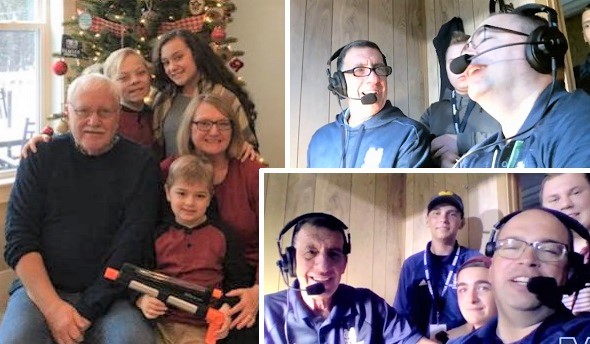
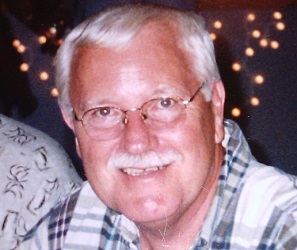
PHOTOS: (Top left) Bob and Cheryl Mirkle sit for a photo with their three grandchildren during Christmas 2017. (Top right) Joe Kinnucan, far right, returns to the press box Oct. 18 to share with play-by-play partner Nick Davros and their viewers that a man in the stands who was experiencing a cardiac event was “breathing and had a pulse.” (Top below) The Sailor Nation Sports Network crew, from left: Nick Davros, Noah Kinnucan, Connor Fritz, Joe Kinnucan and John Hall (with videographer Kimon Kotos on the roof). (Middle) Bob Mirkle. (Photos courtesy of Joe Kinnucan and Bob Mirkle, respectively.)