

Casting Lines for Future Tournaments
August 12, 2016
By Jack Roberts
MHSAA Executive Director
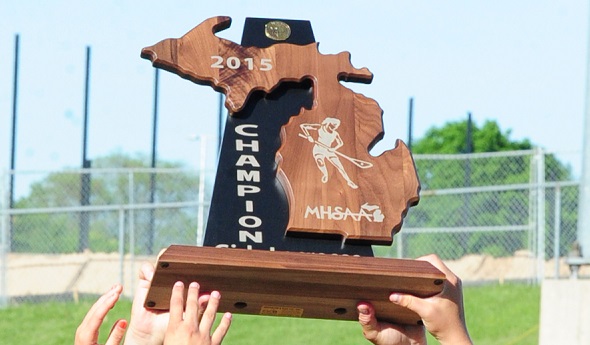
The MHSAA is best known to the public for the tournaments it conducts to conclude the fall, winter and spring seasons each school year.
These tournaments, the first and largest program of the MHSAA, have survived the Vietnam War, the Korean conflict and two World Wars. They have survived the technology bubble, the housing collapse, the energy crisis and the Great Depression.
MHSAA tournaments existed at the dawn of aviation and at the time of our nation’s lunar landing. Popes, presidents and governors have changed and changed again and again, and MHSAA tournaments roll on year after year.
But the sense of tradition and permanence and inevitability of MHSAA tournaments doesn’t dissuade us from asking questions about our tournaments, even some of the most basic questions. Here are two.
Question #1
I have long been and will always be an advocate for a Ryder Cup format for the MHSAA Golf Finals, and a team tennis approach to the MHSAA Tennis Finals; but 90 years of tradition is hard to overcome. Might this be a more exciting format? Could it be co-ed? Could it reverse the decline in boys tennis participation, and increase girls golf participation? Wouldn’t it be fun to try?
Periodically, the International Olympic Committee requires each of the designated Olympic sports to defend its status, to state its case why the sport should remain a part of the Olympic program. Then, after a series or votes that retain one sport at a time, the IOC drops the sport that makes the weakest case. It does so to make room for one of the previously unlisted sports that makes the best case for inclusion.
This would appear to keep the existing Olympic sports on their toes, and to keep the Olympic movement fresh and reflective of modern trends in sports.
While I would not enjoy the controversy, I can see the potential for some positive results if the MHSAA were to invoke the same policy for determining the 14 tournaments it will provide for girls and the 14 for boys.
This might cause us to consider more deeply what a high school sport should look like, or at least what an MHSAA tournament sport should stand for.
On the one hand, we might be inclined to drop tournaments for those sports that involve mostly non-faculty coaches and non-school venues, or require cooperative programs to generate enough participants to support a team, or resort almost entirely to non-school funding, or cater to individuals more than teams.
Or perhaps this process would cause policymakers to forget traditional thinking and ask: “In this day and age, should we shake off traditional notions of sport and consider more where modern kids are coming from?” That might mean fewer team sports and more individual sports, more “extreme” sports like snowboarding and skateboarding, and more lifetime sports, meaning not just golf and tennis and running sports, but also fishing and even shooting sports.
Currently, MHSAA policy states that the MHSAA will consider sponsorship of a tournament series for any sport which 64 member schools conduct on an interscholastic basis as a result of action by the governing boards of those schools.
Should the only question be how many schools sponsor a sport, or must an activity also have certain qualities and/or avoid certain “defects?” What should an MHSAA tournament sport look like and stand for?
Question #2
Bristling from criticism that his association is a money-grabbing exploiter of children, my counterpart in another state said, “If we were running our programs just to make money, we would do very many things very differently.” I knew exactly what he meant.
Because we care about the health and welfare of students, because we mean what we say that the athletic program needs to maximize the ways it enhances the school experience while minimizing academic conflicts, and because we try to model our claim that no sport is a minor sport when it comes to its potential to teach young people life lessons, we operate our programs in ways that make promoters, marketers and business entrepreneurs laugh, cry or cringe.
If money were the only object, we would seed and select sites to assure the teams that attracted the most spectators had the best chance to advance in our tournaments, regardless of the travel for any team or its fan base. If money were the only object, we would never schedule two tournaments to overlap and compete for public attention, much less tolerate three or four overlapping events. If money were the only object, we would allow signage like NASCAR events and promotions like minor league baseball games.
Those approaches to event sponsorship may not be all wrong; they’re just not all right for us. And we will live with the consequences of our belief system.
During a typical school year, more than 20 percent of the MHSAA’s 2,097 District, Regional and Final tournaments lose money. Not a single site in golf, skiing or tennis makes a single penny. In no sport did every District, Regional and Final site have revenue in excess of direct expenses.
In fact, in only three sports – boys and girls basketball and football – is revenue so much greater than direct expenses overall that it helps to pay for all the other tournaments in which the MHSAA invests.
That’s right: invests. When we present our budget to our board, we talk about the MHSAA’s investment in providing tournament opportunities in all those sports and all those places that cannot sustain the cost of those events on their own. How much is this investment worth to students, schools and society?
These two are core questions that require our focus far in advance of talk about scheduling, site selection, seeding and the myriad matters that too often hijack our time and attention.
2026 Scholar-Athlete Award Recipients Announced in Class A
By
Geoff Kimmerly
MHSAA.com senior editor
February 17, 2026
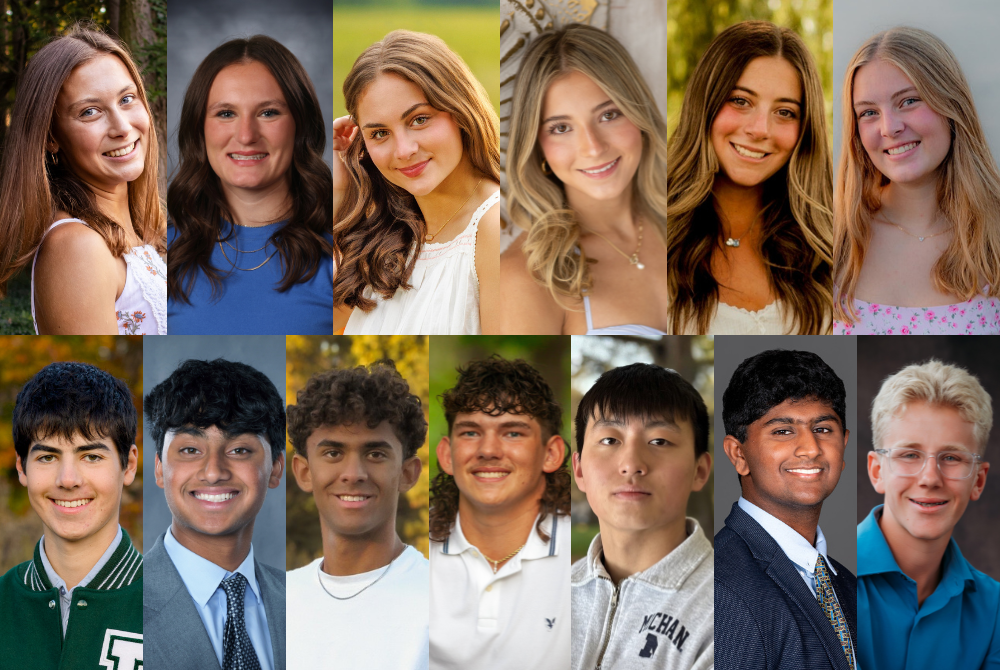
The Michigan High School Athletic Association has selected 13 student-athletes from Class A member schools to receive scholarships through the MHSAA/Farm Bureau Insurance Scholar-Athlete Award program.
 Farm Bureau Insurance, in its 37th year of sponsoring the award, will give $2,000 college scholarships to 32 individuals who represent their member schools in at least one sport in which the Association sponsors a postseason tournament. The first 30 scholarships are awarded proportionately by school classification and the number of student-athletes involved in those classes; also, there are two at-large honorees who can come from any classification.
Students applying for the Scholar-Athlete Award must be carrying at least a 3.5 (on a 4.0 scale) grade-point average and have previously won a letter in a varsity sport in which the Michigan High School Athletic Association sponsors a postseason tournament. Other requirements for the applicants were to show active participation in other school and community activities and produce an essay on the importance of sportsmanship in educational athletics.
The 32 scholarship recipients will be recognized March 14 during the MHSAA Boys Basketball Finals at the Breslin Student Events Center in East Lansing.
The Class A Scholar-Athlete Award honorees are Lydia Binelli, Berkley; Brynn Corrion, Bay City Central; Lilamae Frank, Battle Creek Lakeview; Ava Mac Donald, Rochester Adams; Maggie Rothstein, Holland West Ottawa; Maggie Telgenhof, Holland; Ari Blank, Birmingham Groves; Sajan Doshi, Bloomfield Hills; Omar Elghawy, Portage Northern; Trevor Griffith, Flint Kearsley; Benjamin Hu, Northville; Amogh Mavatoor, Northville; and Ian Morgan, Okemos.
Overviews of the scholarship recipients of the Class A Scholar-Athlete Award follow. A quote from each recipient's essay also is included:
 Lydia Binelli, Berkley
Ran four seasons of cross country, is competing in her third of gymnastics and will compete in her fourth of track & field this spring. Has qualified for Regional competition in 11 events across her three sports and earned league medals in cross country and gymnastics. Served as captain of all three teams. Earned AP Scholar with Distinction and College Board national recognition. Participating in third year of National Honor Society and fourth of Science National Honor Society, and as president of the latter this school year. Serving fourth year on superintendent’s student advisory board. Created Bravery Bears project to serve children in post-anesthesia care units and participated in Focus: HOPE’s Generation of Promise leadership program. Will attend University of Michigan and study biology, health and society.
Essay Quote: “I started struggling with feeling not good enough because I constantly compared myself to (my teammate). … Our friendship was as strong as ever, but nevertheless, I felt inferior. After a late-summer run, our coaches called us over. We were going to be the only two junior captains for the girls side. I realized then that we were the leaders, and no longer just part of the team. We had the opportunity to build our girls team up. Together.”
 Brynn Corrion, Bay City Central
Played two seasons of varsity volleyball, is playing her first of varsity basketball, and will play her fourth of varsity soccer and compete in her fourth of track & field this spring. Earned all-league recognition in volleyball and soccer and qualified for Regionals in track. Earned league all-academic honors the last three years and served as co-captain in volleyball, soccer and basketball. Expects to enter college with 42 credits earned by dual enrollment, and participating in third year of National Honor Society. Participated in DECA and with regional Child Abuse and Neglect Council as a junior and Great Lakes Bay Region Youth Leadership Institute as a senior. Will attend Delta College and then transfer to Northwood University, and study marking and management.
Essay Quote: “Our team lacked effort and respect, disregarding the spirit of competing with pride. Yet that year became one of the most important learning experiences of my athletic career. It taught me critical life skills and the responsibility of carrying good sportsmanship through all my varsity athletics. Equally important is how I transfer these lessons into the classroom, working respectfully and collaboratively with teachers and peers. In the end, character, teamwork, and integrity matter far more than stats or scoring.”
 Lilamae Frank, Battle Creek Lakeview
Ran four season of cross country, is playing her third of varsity basketball, and will play her fourth of varsity soccer and compete in her fourth of track & field this spring. Qualified multiple seasons for MHSAA Finals in cross country, earned all-state recognition in soccer and was a city champion in track and cross country. Served as cross country and basketball junior varsity team captain. Participated in DECA throughout high school, earning a state championship as a junior and serving as president of promotions as a senior. Participating in second year of National Honor Society and fourth of show choir, as a section leader this school year. Participated in theater club throughout high school and contributed to school television network all four years and earned state awards for production. Will attend Ball State University (Ind.) and study sports media and broadcasting.
Essay Quote: “High school sports have taught me how to be a great teammate and competitor, but the true takeaway is the better person I’ve become. Character is worth way more than any medal or trophy in my bedroom. I will pay it forward and will forever be the person who reaches out their hand to help lift others up.”
 Ava Mac Donald, Rochester Adams
Competing in third season of competitive cheer and will play her third season of varsity lacrosse in the spring. Helped cheer team to MHSAA Finals runner-up finish and lacrosse team to league title, earning academic all-state in both sports while contributing to team academic all-state awards in both. Served as captain of both teams. Participating in third years of National Honor Society and Spanish National Honors Society. Serving on student council and as president of Interact Club, and has participated in Key Club and UNICEF club throughout high school. Founded Tiny Steps dance collective. Participated for two years in Michigan Medachieve program and two as part of Health Occupations Students of America. Is finalizing where she will attend college and her course of study.
Essay Quote: “In a sport where lifting each other up is a physical requirement, it becomes a moral obligation as well, reflecting the honor and integrity within each athlete. At the end of the day, success or failure, each cheerleader and athlete makes the decision to show up to practice, play the game, perform the routine, and give it their all.”
 Maggie Rothstein, Holland West Ottawa
Played three seasons of varsity golf and will play her fourth of varsity tennis this spring. Earned all-state honorable mention and helped team to Regional championship in tennis. Earned all-area and academic all-state in golf, and helped both teams to academic all-state team awards. Served as captain of both teams. Earned AP Scholar award and certified nursing assistant certification. Participating in second year of National Honor Society and as chapter vice president, and serving fourth year on student government and second year as class vice president. Serving third year on Holland Youth Advisory Committee and participating in second year of West Ottawa Equality Now club. Will attend University of Michigan and study nursing.
Essay Quote: “It is the quiet choice to stay cool when something feels unfair, to respect the call even if it hurts, to play for the joy instead of the win. On the court or in the program, it is all the same. I play for the kids who cannot, and I am thankful I get to compete when some kids never will. So instead of getting mad over a silly point, I am grateful for being out there.”
 Maggie Telgenhof, Holland
Competed four seasons of swimming & diving, completing third of varsity basketball and will play her fourth of varsity softball this spring. Earned all-conference recognition in softball and academic all-state in basketball, and qualified for Diving Regionals all four years. Served as captain of all three teams. Serving fourth year on student senate and as president. Participating in fourth year of Youth in Government and third of National Honor Society, the latter as chapter secretary. Participating in second years of Holland Youth Advisory Council and school’s athletic leadership committee, and co-founded the latter. Played two years in school marching band. Participated in Students Helping Our Remarkable Environment club throughout high school. Will attend University of Michigan and study kinesiology, pre-athletic training and movement science.
Essay Quote: “Sportsmanship is also a choice you make in your hardest moments. I’ve had games where I wanted to throw something out of frustration, but sportsmanship pushes you to rise above that instinct. It’s learning to pause and not take the impulsive path. It’s walking away from trash talk instead of joining. Choosing to be the steady teammate when the pressure rises shows commitment to the game and respect for everyone involved.”
 Ari Blank, Birmingham Groves
Played three years of varsity tennis and will play his second of varsity golf this spring. Earned all-state in tennis as a senior and earned league scholar athlete awards in both sports multiple seasons. Served as tennis team captain as a senior. Participating in second year of National Honor Society. Played in school’s concert and symphony orchestras throughout high school and earned “1” orchestra ratings from the Michigan School Band and Orchestra Association. Served as campus captain for his school’s mental health awareness program and a mentor as part of Big Brothers Big Sisters. Serving third year as student ambassador to the school district superintendent. Will attend University of Michigan and is finalizing his course of study.
Essay Quote: “(Sportsmanship is) not about following the rules when the coach is watching. It's the conscious decision to uphold the honor of the game, even when it costs you greatly. In high school tennis and golf, this integrity is our greatest strength and the most profound lesson we can take away from the golf course or tennis court into life. It teaches us that true success is measured by the character we show when the only referee is ourselves.”
 Sajan Doshi, Bloomfield Hills
Played four seasons of varsity tennis, earning all-state recognition and finishing with a 72-2 career record. Contributed to MHSAA Finals team championships his first three years of high school and was part of the No. 3 doubles flight champion as a junior. Served as team captain as a senior. Participating in third year of Spanish National Honors Society and fourth of student government. Competed as part of Future Business Leaders of America throughout high school, making state finals and qualifying for national competition. Competed in forensics throughout high school, winning two state championships. Served as co-president of FBLA team and president for forensics. Founded Downsize with Dignity decluttering service and co-founded Lil Aces Tennis Academy, which has served more than 250 youth players and raised more than $12,000 for charity. Served on boards of investing club and Indian-American Student Association. Will attend University of Michigan and study finance.
Essay Quote: “We had a true respect for one another, and an understanding that the wins and losses ultimately mean less than the experience, wisdom, and memories gained from giving everything you have and lifting each other up. Motivation, preparation, effort, struggle, strategy, maximum effort, fair ethical play, and treating your opponents with respect ... sportsmanship truly represents a microcosm of life.”
 Omar Elghawy, Portage Northern
Played four seasons of varsity tennis, will play his second of varsity lacrosse this spring and competed in track & field as a freshman. Earned all-conference and academic all-state recognition in tennis and served as team captain as a senior. Participating in second year of National Honor Society and fourth as part of student senate, this year as student body president. Competed two years as part of DECA and forensics teams. Participated in Kalamazoo Nonviolent Opponents of War group throughout high school, earning Martin Luther King Youth Social Justice Award from the Kalamazoo city commission. Helped lead school’s student cheering section. Participated in community service work that included helping raise money for C.S. Mott Children’s Hospital. Is undecided where he will attend college and is finalizing his course of study but considering a pre-law track.
Essay Quote: “As captains, we worked with our coach to dedicate a few practices to mental toughness and good sportsmanship. Even in mistakes, we saw how sportsmanship is a necessary part of learning. … In a world with unfavorable circumstances, it is vital to purify what's already there to crystallize into a diamond rather than become a lump of coal.”
 Trevor Griffith, Flint Kearsley
Played three seasons of varsity football, is playing his second of varsity basketball and will compete in his fourth season of track & field this spring. Earned all-conference and league scholar-athlete recognition in football and qualified for Regional competition in shot put. Served as captain of football and basketball teams and field event captain for track. Participating in second year of National Honor Society and served on school’s athletic leadership council. Attended Genesee Career Institute for two years for welding and advanced welding and earned several certifications. Volunteered as part of school’s summer learning program and has participated as a youth basketball and football mentor and referee throughout high school. Is undecided where he will attend college, but intends to study aerospace engineering.
Essay Quote: “This year, my senior year, we decided we didn’t want to be the storm, we wanted to be the spark. We leaned into competitiveness with respect. We stopped responding to negativity with negativity. We started showing up for each other, celebrating the right things, and reminding the younger players that being an athlete is about more than winning, it’s about how you win, how you lose, and how you treat the people standing across from you. Here’s what I’ve learned: sportsmanship is contagious.”
 Benjamin Hu, Northville
Competed on boys swimming & diving team all four years of high school. Swam on MHSAA Finals championship relay as a junior and has earned all-state five times over his first three seasons. Has qualified for USA Swimming futures and national competitions. Served as team captain. Earned AP Scholar with Distinction recognition. Played in University of Michigan Youth Symphonic Band throughout high school and solo & ensemble his first three years and earned MSBOA “1” rating; also won Michigan Open classical piano competition. Attended Michigan New Century Chinese School throughout high school and served as lifeguard and swim instructor also all four years. Will attend University of Michigan and study biomedical engineering.
Essay Quote: “… (My teammate) knew I wasn't drowning in the water, but in my own thoughts. For the remainder of that practice, I focused on the steady kick in front of me, a lifeline that I didn't know I needed. That moment, in the red-tinted gloom of a 5 a.m. practice, is what true sportsmanship is. It's not the polished handshake after a buzzer. It's the unobserved investments in the person next to you when they're at their worst. It's the team coming together to say, ‘Your struggle is our struggle.’”
 Amogh Mavatoor, Northville
Played four years of varsity tennis, competed two in track & field and one on the junior varsity bowling team. Earned an MHSAA Finals No. 4 singles championship in 2023 and twice earned all-state recognition in that sport. Also named academic all-state all four years and served as tennis team captain. Earned AP Scholar with Distinction recognition and named National Merit Scholarship Commended Student. Participated in National Honor Society and Spanish National Honor Society. Participated in DECA throughout high school, serving on executive board and winning two state championships. Served as president and program director of ACEing Autism chapter and serving second year on Wayne County Civic Youth Council and as part of its executive board. Serving on VT SEVA Detroit executive board working to assist underprivileged and visually-impaired children in India. Co-founded and serves as co-president of Hope for Dignity providing for underprivileged communities in Michigan and India. Earned state and national community service awards. Will attend University of Michigan and study business administration.
Essay Quote: “ … Sportsmanship isn’t the absence of competition; it’s the way we choose to compete. It’s choosing integrity when no one would blame you for doing the opposite. It’s understanding that the respect you earn matters more than the result you achieve.”
 Ian Morgan, Okemos
Ran four seasons of cross country and will compete in his fourth of track & field this spring. Earned all-state in cross country the last two seasons and all-conference in both sports; also earned academic all-state the last three years. Served as cross country team captain as a senior. Participated in National Honor Society the last two years. Played the last three years in school’s symphonic wind ensemble and philharmonic orchestra, and competed three years in MSBOA solo & ensemble events, earning multiple “1” ratings. Served as school camp counselor and Vacation Bible School teen leader, and participated throughout high school as part of community service and student orientation teams. Will attend College of Holy Cross in Massachusetts and is finalizing his course of study.
Essay Quote: “My experience of sportsmanship extended to athletes I once saw only as rivals. I race runners in my league about five times each season. I always wish the guys beside me good luck on the line. Over time, the pre-race small talk grew into friendship. … I learned that treating competitors with respect opens the door to friendships I never expected.”
Other Class A girls finalists for the Scholar-Athlete Award were Reese Beauleaux, Adrian; Sydney Behnke, Bloomfield Hills Cranbrook Kingswood; Justine Casey, Bloomfield Hills Cranbrook Kingswood; Laurin M. Edwards, Detroit Cass Tech; Arabella Glass, Waterford Kettering; Ella Griffin, Bloomfield Hills; Jillian Hayes, Saline; Veda Keshavamurthy, Plymouth; Grace Kim, Farmington Hills Mercy; Anna Linen, White Lake Lakeland; Bella Matthews, Bay City Central; Gracelynn Olson, Fruitport; Meredith Peterson, White Lake Lakeland; Jade Queen, Grand Ledge; Jacey Roy, Birmingham Groves; Asia Shi, Ann Arbor Huron; Mattie Thompson, Okemos; and Julia Yoder, Birmingham Groves.
Other Class A boys finalists for the Scholar-Athlete Award were Sami Anwar, Plymouth; Luke Desnoyer, Royal Oak; Ian Deters, Grand Ledge; Ryan Dye, Detroit Catholic Central; Caleb Garrett, Birmingham Seaholm; Matthew Huang, Midland Dow; Andrew Legg, Holland; Eli Macauley, Grand Rapids Forest Hills Northern; Nicholas Maeso, Royal Oak; Matthew McGaugh, Midland Dow; Eamon Murray, Midland; Wesley Rogers, Mason; Drew Rothstein, Holland West Ottawa; Carson Soltis, DeWitt; Marcel Stork, Mattawan; Kazutaka Suzuki, Canton; and Owen Wohlfert, Traverse City West.
The Class C and D scholarship award recipients were announced Feb. 3, and the Class B honorees were announced Feb. 10.
Farm Bureau Insurance of Michigan was founded in 1949 by Michigan farmers who wanted an insurance company that worked as hard as they did. Those values still guide the company today and are a big reason why it is known as Michigan’s Insurance Company, dedicated to protecting the farms, families, and businesses of this great state. Farm Bureau Insurance agents across Michigan provide a full range of insurance services — life, home, auto, farm, business, retirement, Lake Estate®, and more — protecting nearly 500,000 Michigan policyholders.
The MHSAA is a private, not-for-profit corporation of voluntary membership by more than 1,500 public and private senior high schools and junior high/middle schools which exists to develop common rules for athletic eligibility and competition. No government funds or tax dollars support the MHSAA, which was the first such association nationally to not accept membership dues or tournament entry fees from schools. Member schools which enforce these rules are permitted to participate in MHSAA tournaments, which attract more than 1.4 million spectators each year.