


Classes Still Create Hoosier Hysteria
July 27, 2017
By Rob Kaminski
MHSAA benchmarks editor
This is the fourth part in a series on MHSAA tournament classification, past and present, that will be published over the next two weeks. This series originally ran in this spring's edition of MHSAA benchmarks.
Twenty years ago, Bloomington North High School won the Indiana High School Athletic Association boys basketball championship, defeating Delta 75-54 at the RCA Dome in Indianapolis.
The date, March 22, 1997, is at the same time revered and disdained by traditionalists in the state who saw it as the last schoolboy championship game the state would ever host.
That’s how devout the game of basketball, particularly interscholastic basketball, had become in the Hoosier state during the 87 years a state champion – one state champion, to be precise – was crowned.
Following that 1997 season, the IHSAA moved to a four-class system for its roundball tournaments, like so many of its state association counterparts had done years earlier.
It would be shocking to find more than a small percentage of current high school basketball players around the country unfamiliar with the iconic movie Hoosiers, even though the film is now more than 30 years old.
And, the storyline for that blockbuster unfolded more than 30 years prior to its release, when small-town, undermanned Milan High School defeated Muncie Central High School 32-30 in the 1954 IHSAA title game.
Perhaps it’s because of the David vs Goliath notion, or the fame of the movie that replaced Milan with the fictional Hickory and real-life star Bobby Plump with Hollywood hero Jimmy Chitwood, or the simple fact that Indiana had something other states didn’t.
Whatever the reason, plenty of opposition remains to this day to basketball classification in the state.
The fact is, the small rural schools were regularly being beaten handily by the much larger suburban and city schools as the tournament progressed each season.
Small schools also were closing at a rapid rate following the state’s School Reorganization Act in 1959, as students converged on larger, centralized county schools. From 1960 to 2000, the number of schools entering the tournament dropped from 694 to 381, and in 1997 a total of 382 schools and 4,584 athletes began competition at the Sectional level (the first level of the IHSAA Basketball Tournament).
It was at the entry level of the tournament where school administrators felt the pain of the new class system, but not necessarily for the same nostalgic reasons as the fans who either attended or boycotted the tournament.
At the Sectional round of the tournament, the IHSAA was culling just 2 percent of the revenue, with the participating schools splitting the balance. So, when Sectional attendance dropped by 14 percent in that first year of class basketball, many schools realized a financial loss. It was money they had grown to count on in prior years to help fund various aspects of the department.
Schools cumulatively received more than $900,000 from Sectional competition in 1998, but that total was down from more than $1 million in the last year of the single-class tournament.
Yet, the current format provides a great deal more opportunity and realistic chances at championship runs for schools of all enrollments.
To date, 60 additional teams have championship or runner-up trophies on display in school trophy cases around Indiana.
That was the mission in front of then-IHSAA commissioner Bob Gardner (now National Federation executive director) once the board made its decision: to give thousands more student-athletes the opportunity for once-in-a-lifetime experiences.
As any statistician knows, figures can be manipulated to tell any side of a story. Declining attendance in year one of class basketball is such a number.
The truth is tournament attendance had been on a steady downward spiral since its peak of just over 1.5 million in 1962. By the last single-class event in 1997, the total attendance was half that.
The challenge then and today, as it is for all state associations, is to find that delicate balance for those holding onto tradition, those holding onto trophies, and the number of trophies to hand out.
Editor’s Note: Stories from the Fort Wayne Journal Gazette in 1998 and from a 2007 issue of Indianapolis Monthly provided facts in this article.
1st & Goal: 2025 Playoffs Week 3 Review
By
Geoff Kimmerly
MHSAA.com senior editor
November 18, 2025
The third weekend of these MHSAA Football Playoffs saw plenty of headlining moments.
 A pair of walk-off wins.
Three first-time Regional champions and a team advancing to a Final for the first time.
Three statewide stunners – including two in Division 4 alone.
One team accomplishing something from all of the above on what had to be the most unforgettable night in that program’s history.
Add in the usual high-level matchups to be found this time of year, and it was a wild 48 hours across both peninsulas. See below for notes on all 36 games.
8-Player Division 1
HEADLINER Blanchard Montabella 32, Norway 28 Montabella (11-1) came back from a 28-8 halftime deficit to earn its first trip to an MHSAA championship game in this sport. The defeat was the only one this season for Norway (11-1), which was playing in its first Semifinal since 2006. Click for more from the Greenville Daily News.
HEADLINER Martin 20, Kingston 8 The Clippers (12-0) also trailed at halftime before scoring 20 unanswered points to earn their third Finals trip over the last four seasons. Kingston ended 10-2, with its highest win total since 1996. Click for more from the Kalamazoo Gazette.
8-Player Division 2
HEADLINER Felch North Dickinson 44, Onekama 28 The Nordics (12-0) will play for a Finals championship for the first time since 1998 after finding their stride against an Onekama defense that otherwise gave up only 11.5 points per game this season. The Portagers finished 11-1, setting a school record for victories. Click for more from the Iron Mountain Daily News.
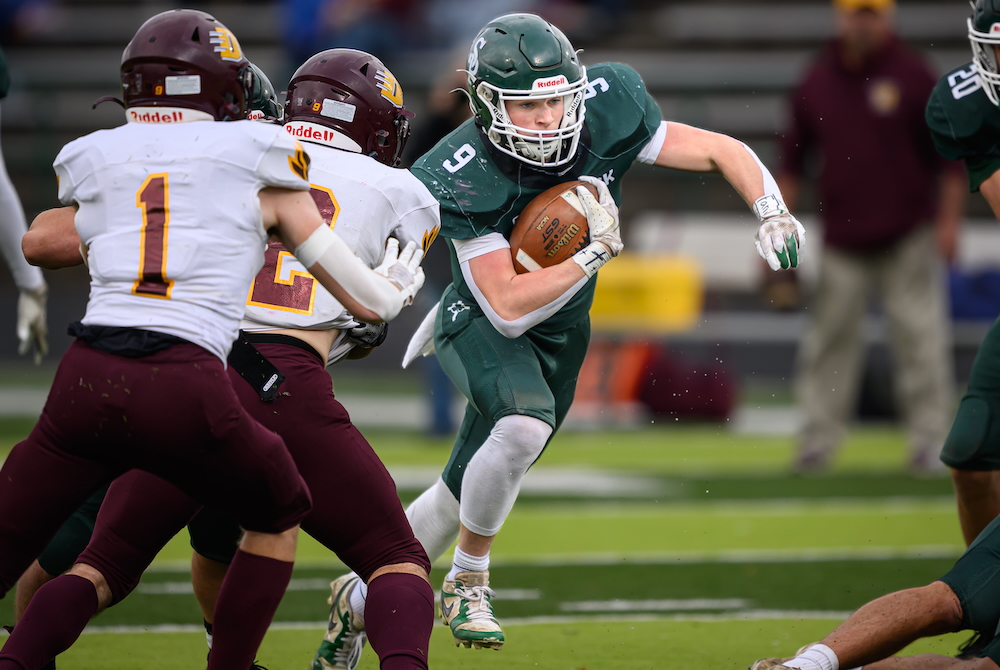
HEADLINER Portland St. Patrick 36, Deckerville 15 St. Patrick denied Deckerville (10-2) a return trip to Superior Dome as the Eagles sought to add to their Division 1 title won a year ago. Instead, the Shamrocks (12-0) will play in their first Final since 2020, and after holding Deckerville to its fewest points since also scoring 15 in Week 1. Click for more from WLNS.
11-Player Division 1
HEADLINER East Kentwood 52, Hudsonville 28 The Falcons (10-2) avenged a 43-42 Week 7 loss to eventual Ottawa-Kent Conference Red champion Hudsonville, in doing so handing the 2024 Division 1 runner-up Eagles (11-1) their only defeat this fall. The Regional title was East Kentwood’s first since 2014 and came in part thanks to three rushing touchdowns and two passing scores from quarterback Kayd Coffman. Click for more from the Grand Rapids Press.
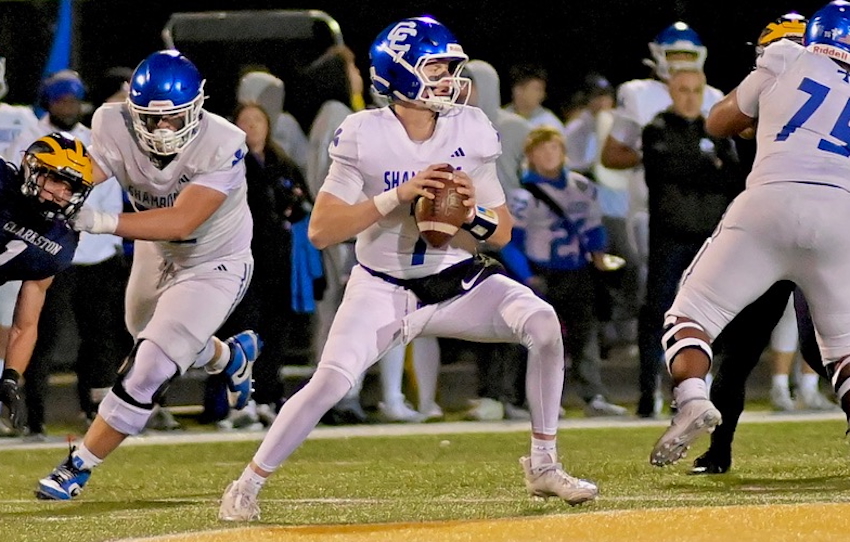
Regional Roundup Detroit Cass Tech 42, Saline 28 The reigning Division 1 champion Technicians (12-0) ran their winning streak to 23 as C.J. Sadler scored four touchdowns to help end Saline’s run at 10-2. Detroit Catholic Central 42, Clarkston 13 The Shamrocks (12-0) clinched a second-straight Regional title, opening a 28-7 lead by halftime and holding Clarkston (10-2) to its fewest points this fall. Rochester Adams 29, Romeo 13 The Highlanders (10-2) also won a second-straight Regional title, adding to a 39-7 win over Romeo (8-4) in their season opener.
11-Player Division 2
HEADLINER Dexter 56, Gibraltar Carlson 42 The Dreadnaughts (11-1) won their second Regional title in four years and this time by scoring their second-most points in a game this fall. Carlson (11-1) – which set a school record for wins this season – had opened up a two-score lead during the third quarter before Dexter stormed back. Quarterback Cooper Arnedt threw for 590 yards and eight touchdowns. Click for more from the Ann Arbor News.
Regional Roundup Portage Central 24, Traverse City Central 20 A lot of Portage Central headlines have gone to the defense this fall, but the offense earned this one as the Mustangs (12-0) took the lead in the fourth quarter and held onto the ball late to deny the Trojans (7-5) one more comeback attempt. Orchard Lake St. Mary’s 42, Midland Dow 7 The reigning Division 2 champion Eaglets (9-2) hit the road and scored their most points since Week 6, while also holding Dow (10-2) to its season low. Birmingham Groves 37, St. Clair Shores Lakeview 14 After starting this season 2-3, Groves (9-3) hasn’t lost since September and added a second-straight Regional title while ending a record-setting run for Lakeview (9-3) – which made an awesome jump from 3-6 a year ago,
11-Player Division 3
HEADLINER Warren De La Salle Collegiate 38, Detroit Martin Luther King 20 The Pilots opened up a 24-6 lead by halftime and kept King (7-5) – the reigning Division 3 runner-up – from reaching the Semifinals for the first time since 2020. De La Salle (6-6) has won five of its last seven games, and this was its fifth Regional title in six seasons after last year’s run ended in this round. Click for more from the Macomb Daily.
Regional Roundup Lowell 36, Zeeland West 34 The Red Arrows (10-2) moved past the reigning Division 3 champion Dux (8-4) late, earning their first Regional title since 2016. DeWitt 70, Fenton 26 The Panthers (12-0) reached 70 points for the second time this playoffs to advance to the Semifinals for the seventh time over the last eight seasons, ending Fenton’s longest run since 2016 at 8-4. Mount Pleasant 28, East Grand Rapids 14 The Oilers (12-0) earned their first trip to the Semifinals since 2011 and ended East Grand Rapids’ winning streak at seven games and season at 9-3.
11-Player Division 4
HEADLINER Dearborn Divine Child 10, Harper Woods 6 Divine Child is 11-1, so deciding a degree of upset here is difficult – but Harper Woods (11-1) had defeated Division 1 Saline and Clarkston among others this season and was ranked No. 1 in the final coaches poll, so this made a pretty big statewide wave. The Pioneers were seeking a third-straight Regional title, and Divine Child claimed its first since 2016. Click for more from the Detroit Free Press.
Regional Roundup Vicksburg 42, Portland 41 The Bulldogs (8-4) pulled off another of the stunners of these playoffs, clinching their first Regional title in this sport with a walk-off touchdown catch to hand Portland (11-1) its only defeat of the season. Hudsonville Unity Christian 52, Big Rapids 14 Unity Christian (11-1) won its first Regional title since 2021 with its sixth 50-point game this season, and also held Big Rapids (10-2) to the Cardinals’ season low. Goodrich 41, Williamston 33 The reigning Division 4 champion Martians (12-0) won this matchup of undefeated contenders, ending the Hornets’ longest run since 2020 at 11-1.
11-Player Division 5
HEADLINER Pontiac Notre Dame Prep 42, Frankenmuth 28 This rematch of last season’s Division 5 Final was much closer, but Notre Dame Prep prevailed again as quarterback Sam Stowe through three touchdowns passes and the Fighting Irish (10-2) also returned a blocked punt for a score. Frankenmuth finished 10-2, its only other loss to still-undefeated Goodrich during Week 1. Click for more from the Oakland Press.
Regional Roundup Ogemaw Heights 34, Saginaw Swan Valley 14 Ogemaw Heights (11-1) clinched its first Regional title since 2009, holding Swan Valley (10-2) to its fewest points since also scoring 14 in its only other loss this fall in Week 2. Grand Rapids West Catholic 27, Kalamazoo United 0 The Falcons (11-1) posted their first shutout since Week 2, and scored the most points the Titans (9-3) gave up in a game this fall. Monroe Jefferson 71, Michigan Center 45 This one will make the highest-scoring games list for this season, as Jefferson (11-1) scored its most since 2010 and Michigan Center (10-2) went over 40 for the eighth time this season.
11-Player Division 6
HEADLINER Kent City 50, Montrose 20 Kent City (12-0) added a first Regional title to its first District championship won the weekend before, reaching 50 points for the third time this season and after Montrose had given up only 62 points combined over its first 11 games. The Rams completed their winningest season since 2013 at 11-1. Click for more from the Muskegon Chronicle.
Regional Roundup Almont 44, Detroit Edison 8 After edging Edison 53-46 in Week 9, Almont (12-0) pulled away this time to claim a second Regional title in three seasons. The Pioneers set a program record for wins in finishing 9-3. Jackson Lumen Christi 21, Ida 7 The reigning champion Titans (9-3) turned away their strongest challenge since the start of October, and after defeating Ida (9-3) by 21 in a District Final a year ago. Kingsley 18, Reed City 14 The Coyotes (9-3) cut the margin after Kingsley (10-2) won their season-opening meeting 24-6, but the Stags prevailed scoring the go-ahead points on a fourth-down pass.
11-Player Division 7
HEADLINER Clinton 20, Millington 18 This was another classic decided during the final minute, as Clinton (10-2) went ahead on a scoring pass to end Millington’s repeat Division 7 championship hope and season at 9-3. The Regional title was Clinton’s first since 2022. Click for more from the Adrian Daily Telegram.
Regional Roundup Menominee 43, Shelby 0 The Maroons (12-0) have been tough on defense all season, allowing just 10 points per game on average, but they threw their first shutout in ending Shelby’s longest run since 2013 at 7-5. Pewamo-Westphalia 42, Ithaca 21 The Pirates clinched their first Regional title since 2021 and improved to 11-0, running their playoff record against Ithaca (8-4) to 3-0 over the last five seasons. Schoolcraft 22, Hanover-Horton 14 Schoolcraft (10-2) scored the only points of the fourth quarter to claim a second-straight Regional title. Hanover-Horton finished 9-3, setting a program record for wins.
11-Player Division 8
HEADLINER Harbor Beach 26, Beal City 15 The Pirates (12-0) won their first Regional title since 2018 and ended the season for reigning Division 8 champion Beal City (11-1). Harbor Beach continued its impressive defensive run, with the Aggies’ 15 points the most the Pirates have given up – and with Beal City averaging nearly 46 per game entering the weekend. Click for more from the Huron Daily Tribune.
Regional Roundup Hudson 68, Springport 22 The Tigers (12-0) continued their perfect run, scoring their second-most points this fall in handing Springport (11-1) the only loss of its winningest season. Bark River-Harris 22, Maple City Glen Lake 21 The Broncos (10-1) secured their first Regional title since 2003 with a kickoff return touchdown and 2-point conversion on the final plays of the game. Glen Lake (9-2) had scored just seconds earlier to break a 14-14 tie. Allen Park Cabrini 34, Madison Heights Madison 32 The Monarchs’ first Regional title came with a go-ahead touchdown during the fourth quarter, sending Cabrini to 11-1 and ending Madison’s season at 10-2 – an incredible turnaround after the Eagles had won a combined six games over the previous five seasons.
MHSAA.com's weekly “1st & Goal” previews and reviews are powered by MI Student Aid, a division within the Department of Lifelong Education, Advancement, and Potential (MiLEAP). MI Student Aid encourages students to pursue postsecondary education by providing access to student financial resources and information. MI Student Aid administers the state’s scholarship and grant programs that help make college Accessible, Affordable and Attainable for you. Click to connect with MI Student Aid and find more information on Facebook and Twitter @mistudentaid.
PHOTOS (Top) Portland St. Patrick running back Brady Leonard (9) accelerates through a hole during the first quarter of his team’s 8-Player Semifinal win Saturday over Deckerville. (Middle) Detroit Catholic Central quarterback Duke Banta targets a receiver during his team’s Division 1 Regional Final win Friday over Clarkston. (St. Patrick/Deckerville photo by Kolleth Photo. DCC/Clarkston photo by Terry Lyons.)