


Teaching ABC's of Pressure Situations
October 30, 2013
 By Eric Martin
MSU Institute for the Study of Youth Sports
Coaches have seen the signs: Athletes having too much or not enough energy prior to a game, quickening breathing, sweating more than usual, being unable to focus on important details, and having their minds wander from the present to “what if” scenarios and past mistakes.
Athletes deal with pressure in many ways. Although some handle it well, many do not have the tools to perform to their full abilities in these situations. Most athletes place a high importance on succeeding in sport, and when athletes reach regional, district, or state championships, the pressure they feel may become overwhelming.
How athletes handle this increased pressure can often mean the difference between winning and losing. Therefore, helping athletes deal with it is something coaches should consider prior to athletes encountering these high-stakes situations.
Unfortunately, there is no magic elixir for helping your athletes work under pressure. But if these ABC’s of pressure situations are followed, your athletes will be much better equipped to cope, and the chances of their performance levels dropping significantly will be reduced.
1. Act the Part
How you as coaches act influences your athletes. For better or worse, athletes notice your emotions in response to these situations and take cues from how you handle pressure.
You are a demand on your players’ attention – you can add or reduce your players’ perceived stress by how you act. Understanding the demand you place on players requires self-awareness. How do you respond when a key call goes against you? Do you have nervous habits that athletes may notice? What messages are you providing to your athletes – both verbally and non-verbally? Athletes pick up on these non-verbal cues, so you must be aware of how you respond to these situations.
It is important to remember emotions are not always negative – rather acting differently than normal can be a signal to your athletes that you are stressed. Strive to be consistent in your actions – whether you are coaching during a preseason match or championship contest. These situations are stressful for you too, but you need to be the constant your athletes look to for stability.
2. Breathing – Remember to do it
It seems like a simple thing, but when athletes’ emotions are running high, they forget how to breathe – or, at least, forget how to breathe properly. Worse, they often think they are breathing normally but don’t notice breaths are becoming shorter and shallower. Teaching athletes to breathe properly when not in pressure situations will help them have the tools to rely on when they encounter more intense scenarios.
For proper breathing, athletes need to do so from the belly and not the chest. The pace of this breathing should be 6-2-7; that is, have athletes take a deep breath from the abdomen for six seconds, hold for two seconds, and then finally slowly exhale completely for seven seconds. This breathing strategy is ideal for pregame situations to quiet nerves and help athletes get ready to play, but a condensed version (3-2-3) can also be used for quick breaks in the action like a timeout or court change.
3. Control the controllables
During times of high pressure, athletes sometimes feel they do not have control over their own performances. It is important to help athletes focus on things they can control and not worry about those that cannot be changed or are outside their influence.
Instead of athletes dwelling on aspects that are out of their control like unusual game times for championship finals or a referee’s bad call, help them focus on completing their warm-up preparations and how they can respond to poor calls. Helping focus athletes’ attention on things they can control will help them better handle pressure situations and leave them feeling less helpless
Athletes’ emotions are typically out of their control, but how they view them and respond to these emotions are under their control. Author and preacher Charles R. Swindoll said, “Life is 10 percent what happens to you and 90 percent how you react to it!” Be sure your athletes know how to respond when difficult situations arise.
Conclusion: Fearlessness is an assembly
Not all athletes react to pressure situations in the same manner, but all athletes can benefit from these simple suggestions. Remember to ACT THE PART of how you want your athletes to act, teach your athletes proper BREATHING techniques, and help athletes focus on CONTROLLING THE CONTROLLABLES.
Good preparation is the key to performance. Increase self-monitoring and give athletes the tools to succeed in pressure situations; they, in turn, can be in a better position to succeed. However, like any skills, they must be practiced accordingly, and one session will not solve all issues. Devote the time to train athletes in these skills, and when the need arises they will have them ready to use.
Good luck this season!
Martin is a third-year doctoral student in the Institute for the Study of Youth Sports at Michigan State University. His research interests include athlete motivation and development of passion in youth, sport specialization, and coaches’ perspectives on working with the millennial athlete. He has led many sessions of the MHSAA Captains Leadership Clinic and consulted with junior high, high school, and collegiate athletes. If you have questions or comments, contact him at [email protected].
'Retired' Periard Still Finding Ways to Serve Suttons Bay
By
Tom Spencer
Special for MHSAA.com
May 28, 2021
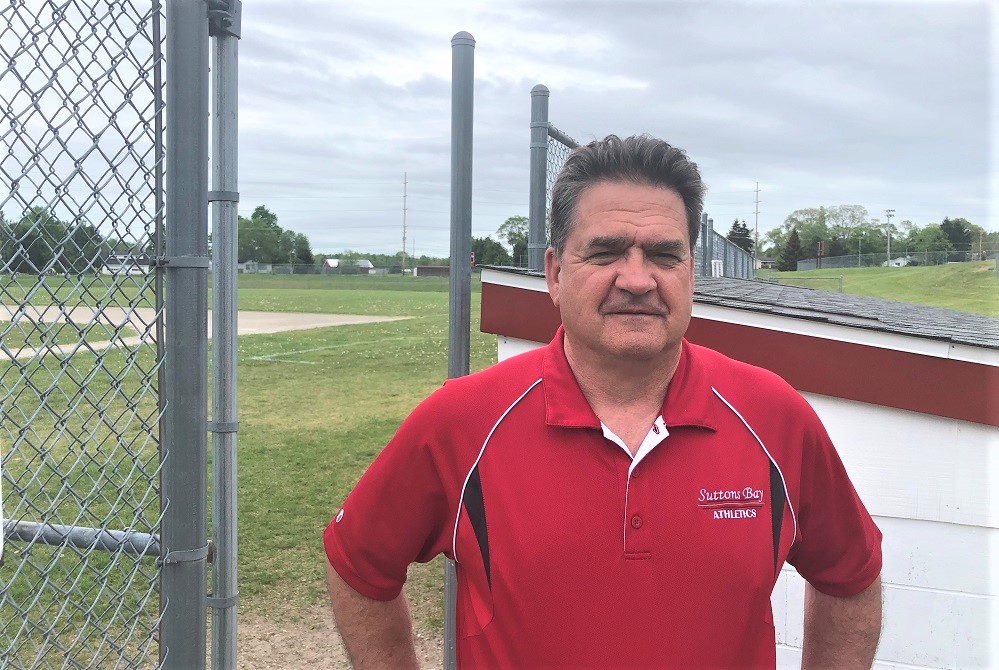
When Doug Periard retired in August, some thought he had done it all as a teacher, coach, mentor and athletic director for Suttons Bay Schools.
 Retirement has proven many wrong.
He did intend to stay on as the baseball coach at least thru the 2022 season. He also thought he’d help out some with the bus driver shortage using the CDL (Commercial Drivers License) he’d recently obtained. Substitute teaching sounded good to him too.
So he came back in October. He immediately took on an emergency assignment, coaching the school’s 8-player football team to a win over Manistee Catholic Central. He also drove the bus to the game.
“Doug is that kind of guy ... when there is a need to filled, Doug will fill it for you,” said Andy Melius, principal at Suttons Bay. “The community means a lot to him, and the school means a lot to him. He bleeds red and white.”
Also since returning, he’s served as a K-1 gym teacher, filled in at the school’s front desk and headed up the district’s COVID-19 testing as the Quarantine Officer.
On Tuesday, Periard will coach baseball after driving the bus transporting the Norsemen to Buckley to begin postseason play. It’s no different than what he’s been doing all spring.
However, some questioned if Periard could handle bus driving and coaching on the same day.
 “It’s been interesting,” Periard said with a little laugh. “I was a champion at taking a nap (on the bus as coach).
“I would be asleep before we got to the split in the road and wake up when we got there,” he continued. “So, there was some real skeptics out there wondering if I’d be able to both drive and coach when I got there.”
Periard has hopes of hitting the 400-win mark before giving up baseball. He’s compiled a 379-280-18 record since taking over the Norseman baseball program on a “temporary” basis in 1998. It was supposed to be only until another coach was found. He had coached the JV squad the year prior.
And, there’s something else about Periard very few people know. Someone who does is Christine Mikesell, Suttons Bay’s assistant athletic director. Mikesell’s five boys at one time or another played sports coached by Periard.
“Every kid is important to Doug,” noted Mikesell, who is stepping down in June. “He really has a big heart for those that are struggling, and he makes a pathway for a kid to achieve if they take it.
“He is one of those kind of guys you want on your side because he is a team player ... a real team player when it comes to the school and athletics and coaching.”
Mikesell has seen him help lots of high schoolers who end up graduating perhaps without knowing how much help Periard provided. He often made sure kids had a white dress shirt so no one was left out on the school’s game day dress-up tradition. He’s also paid for lunches and arranged transportation for students coming from hard-life circumstances.
“I have seen him go well out of his way,” said Mikesell. “I know a lot of it is his own pocket.
“He has eyes, and he watches,” she continued. “He finds the one that is struggling, and he goes and brings them as part of the team.”
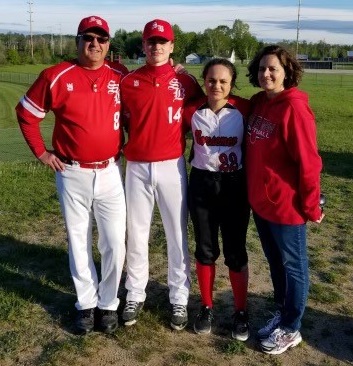
Periard became AD in 2008, a year he will never forget. It was marked by the stock market crash and he, along with his wife Anne, was dealing with his daughter Grace’s new diabetes diagnosis. The economic circumstances also threatened his continued employment as a teacher.
The job loss did not materialize. Grace is now in college. And, she was the 2020 recipient of the Suttons Bay High School Berserker Award presented to Norse athletes who have competed in three sports every year of high school.
The award was created several years back by Periard. Now he hopes his son Hugh, a junior pitcher and three-sport athlete, will follow his sister’s footsteps and be similarly recognized next spring.
“I stole the (Berserker) idea from my little brother who was the AD at Birch Run,” he admitted. “I am proud to have gotten the thing rolling.
“I think playing three sports is vital to a small school and development of young people.”
Periard’s legacy also will include strong co-op developments, including the establishment of NorthBay, and keeping a great football tradition alive while the school struggled with declining enrollment. The co-ops are established for all sports with Northport and include Leelanau St. Mary’s in boys and girls track & field and soccer.
 Periard guided the Norsemen’s move to 8-player football in 2017. The previous season, Suttons Bay had to forfeit the majority of its games because it did not have enough players to compete in 11-player.
Mikesell’s son Baylor was one of seniors who missed out as part of that 2016 team. Another son, Lucas, was a star player in the school’s run to back-to-back 8-player Division 2 runner-up finishes the last two seasons.
“My son lost his senior year because we were still 11-man, and we couldn’t field a team,” she said. “Doug is a problem solver and comes up with solutions outside the box.
“He did tons of research on it to get us in a place (where) we could participate in football because he saw that the risk of losing football here at the school, what a damaging thing it would be.”
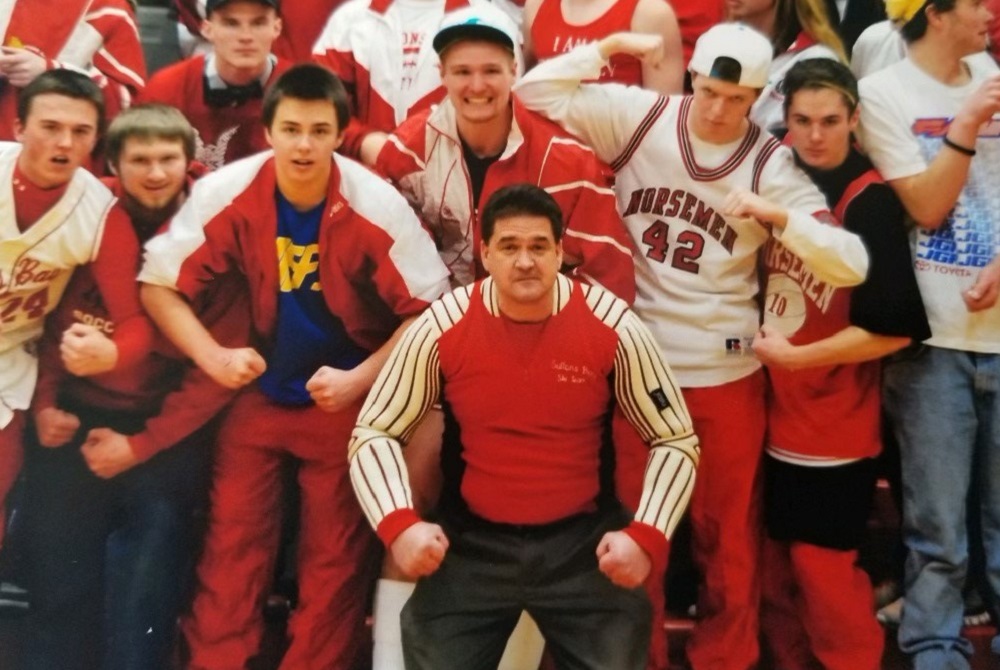
Periard is most proud, however, of the behavior of the student body during athletic contests. His game management included a “bristle” – a knowing look – passed on from his grandfather to his mother and ultimately to he and his brothers.
With his simple bristle he was able to instantly, and non-verbally, communicate to the students they’d better stop what they’re doing.
“They bought into my stern look when they were in any way at all not cheering for their team,” he said. “They knew they should be cheering for their teams and not being disparaging against their opponent, and only treating opponents with class.”
 Tom Spencer is a longtime MHSAA-registered basketball and soccer official, and former softball and baseball official, and he also has coached in the northern Lower Peninsula area. He previously has written for the Saginaw News, Bay County Sports Page and Midland Daily News. He can be reached at [email protected] with story ideas for Manistee, Wexford, Missaukee, Roscommon, Ogemaw, Iosco, Alcona, Oscoda, Crawford, Kalkaska, Grand Traverse, Benzie, Leelanau, Antrim, Otsego, Montmorency, Alpena, Presque Isle, Cheboygan, Charlevoix and Emmet counties.
PHOTOS: (Top) Doug Periard enjoys a moment surrounded by enthusiastic Suttons Bay student fans during his tenure. (Middle) Periard, also the baseball coach, with son Hugh, daughter Grace and wife Anne a few years ago. (Below) Even in retirement, Periard remains a mainstay in Suttons Bay. (Top and middle photos courtesy of Doug Periard; bottom photo by Tom Spencer.)