


Teaching ABC's of Pressure Situations
October 30, 2013
 By Eric Martin
MSU Institute for the Study of Youth Sports
Coaches have seen the signs: Athletes having too much or not enough energy prior to a game, quickening breathing, sweating more than usual, being unable to focus on important details, and having their minds wander from the present to “what if” scenarios and past mistakes.
Athletes deal with pressure in many ways. Although some handle it well, many do not have the tools to perform to their full abilities in these situations. Most athletes place a high importance on succeeding in sport, and when athletes reach regional, district, or state championships, the pressure they feel may become overwhelming.
How athletes handle this increased pressure can often mean the difference between winning and losing. Therefore, helping athletes deal with it is something coaches should consider prior to athletes encountering these high-stakes situations.
Unfortunately, there is no magic elixir for helping your athletes work under pressure. But if these ABC’s of pressure situations are followed, your athletes will be much better equipped to cope, and the chances of their performance levels dropping significantly will be reduced.
1. Act the Part
How you as coaches act influences your athletes. For better or worse, athletes notice your emotions in response to these situations and take cues from how you handle pressure.
You are a demand on your players’ attention – you can add or reduce your players’ perceived stress by how you act. Understanding the demand you place on players requires self-awareness. How do you respond when a key call goes against you? Do you have nervous habits that athletes may notice? What messages are you providing to your athletes – both verbally and non-verbally? Athletes pick up on these non-verbal cues, so you must be aware of how you respond to these situations.
It is important to remember emotions are not always negative – rather acting differently than normal can be a signal to your athletes that you are stressed. Strive to be consistent in your actions – whether you are coaching during a preseason match or championship contest. These situations are stressful for you too, but you need to be the constant your athletes look to for stability.
2. Breathing – Remember to do it
It seems like a simple thing, but when athletes’ emotions are running high, they forget how to breathe – or, at least, forget how to breathe properly. Worse, they often think they are breathing normally but don’t notice breaths are becoming shorter and shallower. Teaching athletes to breathe properly when not in pressure situations will help them have the tools to rely on when they encounter more intense scenarios.
For proper breathing, athletes need to do so from the belly and not the chest. The pace of this breathing should be 6-2-7; that is, have athletes take a deep breath from the abdomen for six seconds, hold for two seconds, and then finally slowly exhale completely for seven seconds. This breathing strategy is ideal for pregame situations to quiet nerves and help athletes get ready to play, but a condensed version (3-2-3) can also be used for quick breaks in the action like a timeout or court change.
3. Control the controllables
During times of high pressure, athletes sometimes feel they do not have control over their own performances. It is important to help athletes focus on things they can control and not worry about those that cannot be changed or are outside their influence.
Instead of athletes dwelling on aspects that are out of their control like unusual game times for championship finals or a referee’s bad call, help them focus on completing their warm-up preparations and how they can respond to poor calls. Helping focus athletes’ attention on things they can control will help them better handle pressure situations and leave them feeling less helpless
Athletes’ emotions are typically out of their control, but how they view them and respond to these emotions are under their control. Author and preacher Charles R. Swindoll said, “Life is 10 percent what happens to you and 90 percent how you react to it!” Be sure your athletes know how to respond when difficult situations arise.
Conclusion: Fearlessness is an assembly
Not all athletes react to pressure situations in the same manner, but all athletes can benefit from these simple suggestions. Remember to ACT THE PART of how you want your athletes to act, teach your athletes proper BREATHING techniques, and help athletes focus on CONTROLLING THE CONTROLLABLES.
Good preparation is the key to performance. Increase self-monitoring and give athletes the tools to succeed in pressure situations; they, in turn, can be in a better position to succeed. However, like any skills, they must be practiced accordingly, and one session will not solve all issues. Devote the time to train athletes in these skills, and when the need arises they will have them ready to use.
Good luck this season!
Martin is a third-year doctoral student in the Institute for the Study of Youth Sports at Michigan State University. His research interests include athlete motivation and development of passion in youth, sport specialization, and coaches’ perspectives on working with the millennial athlete. He has led many sessions of the MHSAA Captains Leadership Clinic and consulted with junior high, high school, and collegiate athletes. If you have questions or comments, contact him at [email protected].
In 'Turn & Burn,' Kent III Gives Voice Again to Father's Life Lessons, Coaching Wisdom
By
Geoff Kimmerly
MHSAA.com senior editor
August 29, 2025
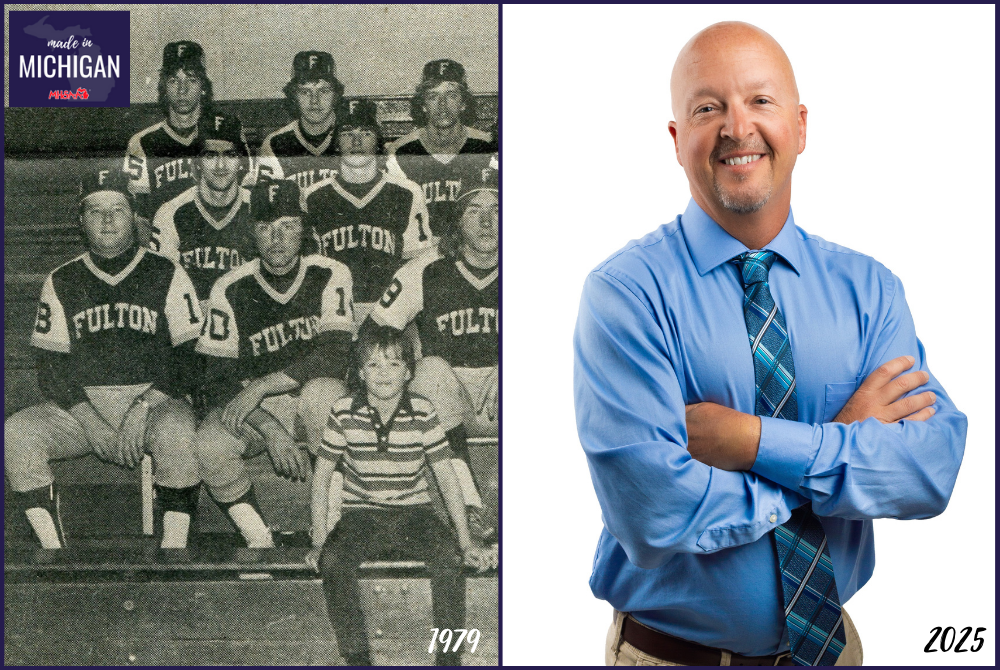
As his son, his player and during their time coaching together, Warren Kent III was front row for the words of wisdom often shared by his father Warren Kent Jr., who coached a multitude of sports at seven schools over more than three decades.
 But as the years have rolled on after his father’s death in 2017, Kent III began to realize something most disheartening – he’d forgotten the sound of his dad’s voice.
In an attempt to regain that memory, Kent III has given us all an opportunity to listen.
His book – “Turn & Burn” – is the story of a son growing to love baseball under the tutelage of his father, a teacher and coach of the local varsity. The seeds for that love of the game are planted during the summer of 1984 – coinciding with the Detroit Tigers’ most recent World Series championship season.
Technically, the story is fiction. But it’s set in Fulton Township, which lies just west of US-127 between St. Johns and Ithaca, where Kent Jr. was indeed a coach and Kent III grew up and attended Fulton High School. And all of the information on the Tigers’ historic run that season – including game-by-game synopses of all 162 plus eight in the playoffs – is true as well and easily will connect with fans who, like Kent III, grew up during that unforgettable summer.
“That was my thing. I wanted people to get the feelings I had with the ’84 Tigers and sharing that with my dad as I was growing up,” he said. “My outlet is writing, so this is really a catharsis, just to get this out there, to let other people know the love of the Tigers but more the love of my father and things we went through together.”
Kent III was five months old when the Tigers won their 1968 World Series championship, but 16 in 1984. He said his book is about 70 percent factual, but even the imagined is rooted in reality.
The main character in “Turn & Burn” – EJ – is 12 years old because that seemed a more reasonable age to fall in love with the sport, and by 16 Kent III was well into his baseball fandom. The father in the book is a teacher and coach. Kent Jr. was a special education teacher for more than four decades and his son’s baseball coach at Fulton High School but just for freshman year before moving into the stands for the remainder of Kent III’s four-year varsity career.
 Kent III began coaching baseball himself when he was 18 and served as North Muskegon’s varsity coach for 15 years, including 11 with Kent Jr. as his assistant. At one point in “Turn & Burn” players write EJ’s dad’s initials on their hands because he had been hospitalized after a heart attack; North Muskegon players did the same when Kent Jr. had a heart attack prior to a Pre-District game in 2005.
“Some of it’s been changed. Some of it’s been realistic,” Kent III said. “(But the dad) is definitely my dad’s voice.
“I put him in charge of the outfielders at North Muskegon, and that was his one motto – ‘Turn and burn.’ The kids could probably tell you that over and over, (that’s) the one thing Coach Kent would always say.”
A source of many of the fatherly pearls of wisdom found in “Turn & Burn” came from a journal-style “father’s legacy” book Kent III had purchased for his dad years before and asked him to fill out. Kent Jr. passed those on not only to his children but during a coaching run that took him to Hudsonville, Ashley, Fulton, Vestaburg, Blanchard Montabella and Greenville, where notably he led the football program to its first playoff appearance in 2000.
Writing has long been a love for Kent III, who taught English and journalism for 32 years – and served as a yearbook advisor for three decades – while at Battle Creek Central and then the final 27 years at Muskegon Mona Shores. Prior to becoming a teacher, Kent III was “Journalist of the Year” at Ferris State while sports editor of the student newspaper and then moved on to study and serve as sports editor of the paper at Michigan State.
He has written for the Big Rapids Pioneer, Lansing State Journal and Battle Creek Enquirer, among others over the years, and after retiring from teaching at Mona Shores this spring took a position with Walsworth Yearbooks helping schools all over the state with their yearbook programs.
 Kent III also is in his 34th year as an MHSAA registered official. He wrote a piece once for Referee Magazine about his experience officiating the 2011 Class D Girls Basketball Final at Breslin Center, home of his beloved Spartans. He’s more recently officiated Basketball Semifinals at Breslin during the 2023 and 2024 seasons and has returned to the baseball diamond as an umpire as well after umping baseball and softball earlier in his career.
Writing a book came to Kent III during the COVID-19 pandemic, as he like many searched for something to occupy spare time. “Turn & Burn” is available exclusively via Amazon; click for details.
The venture was never about making money, but he’s sold 152 books – well above his goal of 100. And while Kent III still has not come across any recordings or voicemails of his father’s voice, “Turn & Burn” has given him a chance to hear Kent Jr.’s words once again.
“The sound, no. But the things and the ways he would say them, yes,” Kent III said. “Everybody else says they can picture his voice. I think it’s because, I’m assuming being his son, my voice probably sounds familiar to his to other people, but I can hear the things he’s saying. And in that book, the way he’s saying them.”
2025 Made In Michigan
Aug. 5: After Answering Call, MCC's Caughey Finds Football Lessons Pay Off in Priesthood - Report
July 31: After Enjoying Pro Golf Stardom, Flynn Relishing Roles as Instructor, Sports Mom - Report
July 29: Marckel Supplies Marketing Magic to Hunter's Heisman-Winning Campaign - Report
July 28: Union City to Omaha: Skirka Takes Murray State Baseball to 1st College World Series - Report
July 22: TC West's Wheelock Still 'Living My Dreams' as CMU Assistant Soccer Coach - Report
July 17: Stevenson's Travels Following Lake Orion Success Include Space Force, Penn, NYC - Report
July 15: 'Who Will Cheer for the Nimrods?' Peterson IV, Watersmeet Found Fans Worldwide - Report
July 10: Feeding 'Drive to Win,' Loy Norrix Grad Morgan Impresses with Strong USBC Showing - Report
July 9: After Blazing Multiple Volleyball Trails, Bastianelli Charting Next Career Path - Report
PHOTOS (Top) At left, Warren Kent III sits in the front row of a team photo as manager for dad Warren Kent Jr.'s 1979 Fulton baseball team; Kent Jr. is sitting far left of second row from bottom. At right, Kent III today. (Middle) "Turn & Burn" is Kent III's first published book. (Below) The Kents anchor a photo with North Muskegon players and their District championship trophy in 2009. (Photos provided by Warren Kent III.)