

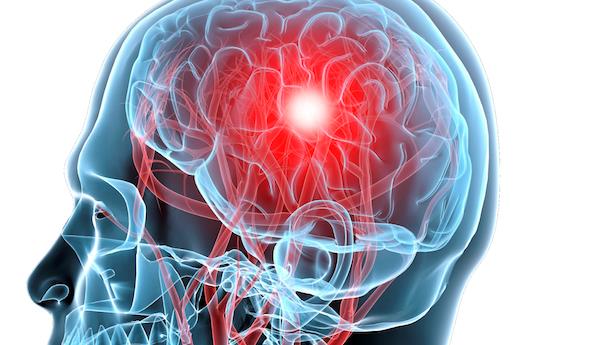
2017-18 Report Shows Fewer Concussions
August 8, 2018
By Geoff Kimmerly
Second Half editor
Concussions are down, according to data compiled by the Michigan High School Athletic Association during its third year of collecting head injury reports from member high schools.
The work is not done – but this year’s data reinforces trends that emerged during the first two years of reporting and will assist the MHSAA as it explores solutions to continue reducing the incidence of head injuries in school sports.
The 2017-18 concussion report found a 9.6-percent decrease in the number of confirmed concussions from the previous year. Student-athletes at MHSAA member high schools encountered during 2017-18 a total of 3,580 head injuries – or 4.8 per member school, compared to the 2016-17 average of 5.2. Total participation in MHSAA sports for 2017-18 was 284,920 – with students counted once for each sport he or she played – and only 1.3 percent of participants experienced a head injury, down from 1.4 in 2016-17 and 1.6 percent the first year of the study.
As first mandated in 2015-16, member schools are required to report head injuries to the MHSAA identifying the sport that each student-athlete was participating in and whether the injury was sustained during practice or competition. Schools also are required to designate at which level – varsity, junior varsity or freshman – the injury occurred.
The full report of all head injuries experienced during 2017-18 by student-athletes at MHSAA member high schools – including percentages by sport (per 1,000 participants), gender and team level, as well as data tracking when athletes returned to play – is available by clicking here.
Consistent with the first two years of the study, the MHSAA received data from more than 99 percent of its member high schools after the fall, winter and spring seasons and continued to track each injury report through its conclusion this summer. Member junior high and middle schools also were allowed, although not mandated, to report their potential head injuries; and those findings are not part of the published report.
The decrease in overall head injury reports collected for 2017-18 follows a similar reduction from 2015-16 to 2016-17 – and brings the total decrease to 19.6 percent fewer reports since the first year of the study.
MHSAA Executive Director John E. “Jack” Roberts noted that the decreases in reports, both year to year and since the first year of the survey, likely have some relation to year-to-year fluctuation, refinement of the follow-up reporting process and a better understanding by schools of what is not to be included for the survey – including head injuries not diagnosed as concussions and head injuries that did not take place during MHSAA-sponsored activities.
However, the findings of this year’s study – and their similarities to the findings from the first two surveys – has begun to clarify the identification and understanding of trends. Continuing to emerge perhaps most prominently is the higher incidence of concussion reports from girls sports – and pertinent questions about physiological and social causes behind those results.
“With three years of reporting by virtually 100 percent of our high schools, what we’re learning is no longer anecdotal; the results are beginning to identify valid trends and genuine issues that need to be addressed,” Roberts said. “For example, it’s even clearer than before that girls are reporting three times the number of concussions as boys when comparing similar sports – soccer, basketball and baseball versus softball. As a result, we’ve already begun to incorporate these gender differences into our coaches education, and the writers of high school playing rules are obligated to focus on these gender differences as well.”
Although the total number of confirmed concussions was significantly lower again in 2017-18, a number of findings detailing those injuries fell in line with results of the first two surveys.
Boys experienced 2,373– or 66 percent – of those injuries, the same ratio as 2016-17, and not surprisingly as boys have a much higher participation in contact sports. More than half of head injuries – 56 percent – were experienced by varsity athletes, which for the second year also fell within a percent difference of the previous year’s findings.
A total of 2,330 head injuries – or 65 percent – came in competition as opposed to practice. More than half took place during either the middle of practice or middle of competition as opposed to the start or end, and 52 percent of injuries were a result of person-to-person contact. The MHSAA also asked schools to report the number of days between the head injury and the athlete’s return to activity – and the two largest groups, both at 24 percent, returned to activity after either 6 to 10 days of rest or 11 to 15. All of these findings were within 1-3 percent of those discovered from the 2016-17 data.
Contact sports again revealed the most head injuries. Ranking first was football, 11 and 8-player combined, with 41 head injuries per 1,000 participants – a decrease for the second straight year, this time from 44 head injuries per 1,000 participants in 2016-17 and down from 49 head injuries per 1,000 football participants shown by the first study in 2015-16.
Ice hockey repeated with the second-most injuries per 1,000, with 32 (down from 36 injuries per 1,000 from 2016-17 and 38 per 1,000 in 2015-16), and girls soccer and wrestling tied for third with 25 head injuries per 1,000 participants – girls soccer down from 28 head injuries per 1,000 participants and wrestling down from 26 per 1,000 in 2016-17.
Also consistent with 2016-17, the next five sports (after football and hockey) to show the highest incidences of head injuries were girls sports – girls soccer followed by girls basketball (22 per 1,000), girls competitive cheer (20) and girls lacrosse (20). Boys lacrosse (17), girls gymnastics (16) and boys soccer (12) were the only other sports to show double-digit head injuries per 1,000 participants.
Females again reported significantly more concussions than males playing the same or similar sports – soccer, basketball and baseball/softball. Female soccer players reported more than double the concussions per 1,000 participants as male soccer players (25 to 12), while female basketball players also reported more than double the number of concussions per 1,000 participants (22 to 9). Softball players reported seven concussions per 1,000 participants, and baseball players reported three per 1,000. Although the percentage differences vary from year to year, the results of all three comparisons remained consistent with what the survey found in 2015-16 and 2016-17.
The MHSAA in 2018-19 is directing its sport committees to focus on a pair of questions – how to increase participation and how to make their specific sports safer – the latter aiming to put some of what has been learned from concussion reporting into practice. The MHSAA also is continuing to invite Michigan’s universities, health care systems and the National Federation of State High School Associations (NFHS) to take part in analyzing the data and resulting questions that have arisen during the past three years.
“Regrettably, I do not see a nationwide head injury reporting effort likely,” Roberts said. “First, it’s hard to coordinate 50 states’ efforts. And second, if left to medical professionals, the survey tool might become so cumbersome that schools would be reluctant to participate – and certainly, it would not get the 99.9 percent cooperation that we’ve enjoyed from schools over these three years.”
Schools report possible concussions online via the MHSAA Website. Reports are then examined by members of the MHSAA staff, who follow up with school administrators as those student-athletes continue to receive care and eventually return to play. Student privacy is protected.
The reporting of possible concussions is part of a three-pronged advance by the MHSAA in concussion care begun during the 2015-16 school year. The MHSAA completed in spring 2017 the largest-ever state high school association sideline concussion testing pilot program, with a sample of schools from across the state over two years using one of two screening tests designed to detect concussions. The MHSAA also was the first state association to provide all participants at every member high school and junior high/middle school with insurance intended to pay accident medical expense benefits – covering deductibles and co-pays left unpaid by other policies – resulting from head injuries sustained during school practices or competitions and at no cost to either schools or families.
Previously, the MHSAA also was among the first state associations to adopt a return-to-play protocol that keeps an athlete out of activity until at least the next day after a suspected concussion, and allows that athlete to return to play only after he or she has been cleared unconditionally for activity by a doctor (M.D. or D.O.), physician’s assistant or nurse practitioner.
In addition, the MHSAA’s Coaches Advancement Program – which includes courses that must be completed by all varsity head coaches hired for the first time at a member school – provides substantial instruction on concussion care. Separately, rules meetings that are required viewing for high school varsity and subvarsity head and assistant coaches at the start of each season include detailed training on caring for athletes with possible head injuries.

Scholar-Athlete Finalists Announced
By
Geoff Kimmerly
MHSAA.com senior editor
January 23, 2015
By Geoff Kimmerly
Second Half editor
The 120 finalists for the Michigan High School Athletic Association's Scholar-Athlete Awards for the 2014-15 school year have been announced, with 18 schools having multiple candidates for the 32 awards.
The program, celebrating its 26th anniversary, has recognized student-athletes since the 1989-90 school year and again this winter will honor 32 individuals from MHSAA member schools who participate in at least one sport in which the Association sponsors a postseason tournament.

Farm Bureau Insurance underwrites the Scholar-Athlete Awards and will present a $1,000 scholarship to each recipient. Since the beginning of the program, 640 scholarships have been awarded.
Scholarships will be presented proportionately by school classification, with 12 scholarships to be awarded to Class A student-athletes, six female and six male; eight scholarships will be awarded to Class B student-athletes, four female and four male; six scholarships will be awarded to Class C student-athletes, three female and three male; and four scholarships will be awarded to Class D student-athletes, two female and two male. In addition, the final two scholarships will be awarded at-large to minority recipients, regardless of school size.
Every MHSAA member high school could submit as many applications as there are scholarships available in its classification, and could have more than one finalist. Beal City has three finalists this year. Seventeen schools each have two finalists: Ann Arbor Pioneer, Berkley, Bloomfield Hills Cranbrook Kingswood, Cheboygan, Dearborn Divine Child, East Grand Rapids, Grandville, Hartland, Holland, Iron Mountain, Plainwell, Roscommon, Springport, Traverse City Central, Traverse City West, Utica Ford and White Lake Lakeland.
Multiple-sport participation remains the norm among applicants. The average sport participation rate of the finalists is 2.63, while the average of the application pool was 2.16. There are 65 three-plus sport participants in the finalist field, and all but two of the 28 sports in which the MHSAA sponsors postseason tournaments are represented.
Of 406 schools which submitted applicants, 45 submitted the maximum allowed. This year, 1,584 applications were received. All applicants will be presented with certificates commemorating their achievement. Click for additional Scholar-Athlete information, including a complete list of scholarship nominees.
The applications were judged by a 58-member committee of school coaches, counselors, faculty members, administrators and board members from MHSAA member schools. Selection of the 32 scholarship recipients will take place in early February. Class C and D scholarship recipients will be announced Feb. 3; Class B scholarship recipients will be announced Feb. 10, and Class A scholarship recipients will be announced Feb. 17. All announcements will be made on the MHSAA Website.
To honor the 32 Scholar-Athlete Award recipients, a ceremony will take place during halftime of the Class C Boys Basketball Final, March 28, at the Breslin Student Events Center in East Lansing.
To be eligible for the award, students must have a cumulative grade point average of 3.50 (on a 4.0 scale), and previously have won a varsity letter in at least one sport in which the MHSAA sponsors a postseason tournament. Students also were asked to respond to a series of short essay questions, submit two letters of recommendation and a 500-word essay on the importance of sportsmanship in educational athletics.
Farm Bureau Insurance, one of Michigan's major insurers, has a statewide force of 450 agents serving nearly 500,000 Michigan policyholders. Besides providing life, home, auto, farm, business and retirement insurance, the company also sponsors life-saving, real-time Doppler weather tracking systems in several Michigan communities.
The MHSAA is a private, not-for-profit corporation of voluntary membership by more than 1,400 public and private senior high schools and junior high/middle schools which exists to develop common rules for athletic eligibility and competition. No government funds or tax dollars support the MHSAA, which was the first such association nationally to not accept membership dues or tournament entry fees from schools. Member schools which enforce these rules are permitted to participate in MHSAA tournaments, which attract more than 1.4 million spectators each year.
2014-15 Scholar-Athlete Award Finalists
BOYS CLASS A
Stone Mathers, Ann Arbor Pioneer
Matthew J. Orringer, Ann Arbor Skyline
Jacob W. Herbers, Battle Creek Lakeview
Eric Braun, Berkley
Justin Boogaart, Byron Center
David A. Posawatz, Clarkston
Michael Kenney, Detroit U-D Jesuit
Sean Lang, East Grand Rapids
Mikey Roth, East Grand Rapids
Joseph Pummill, Garden City
Miles Kuperus, Grand Rapids Christian
Andrew James Fox, Grand Rapids Forest Hills Central
Kyler Beal, Holland
Raymond Surya, Holland
Collin DeShaw, Holland West Ottawa
Andrew Bennett, Linden
Ryan Susterich, Muskegon Mona Shores
Shunhe Wang, Northville
Mark Luoma, Okemos
Ravin Randall, Port Huron
Benjamin Hill, Royal Oak
Alex Scott, Traverse City West
Blake McComas, White Lake Lakeland
Matthew Carter, Ypsilanti Lincoln
GIRLS CLASS A
Kara N. Gehrke, Alpena
Rachel Menge, Ann Arbor Pioneer
Eliza Laramee, Berkley
Rachel DaDamio, Birmingham Seaholm
Diane Reed, Bloomfield Hills
Sheridan Skopczynski, Gibraltar Carlson
Isabella Buck, Grandville
Allison Utting, Grandville
Allegra Lanae Berry, Greenville
Sara Condra, Hartland
Carson Vestergaard, Hartland
Kirsten Smith, Lansing Eastern
Caycee Turczyn, Lapeer
Meg Darmofal, Mason
Cydney Martell, Richland Gull Lake
Hayley Rogers, Salem
Emily Diehl, Saline
Courtney Rooker, St. Joseph
Ashley Ko, Traverse City Central
Ellie Lauren Taylor, Traverse City Central
Mikenna Ray, Traverse City West
Danielle Maxwell, Utica Ford
Alex Sorgi, Utica Ford
Jessica Erickson, White Lake Lakeland
BOYS CLASS B
Stephen Luckoff, Bloomfield Hills Cranbrook Kingswood
Francis Misra, Bloomfield Hills Cranbrook Kingswood
Samuel Swem, Buchanan
T.J. Baker, Cadillac
Derek Sturvist, Cheboygan
Dane Miller, Dearborn Divine Child
Tyler James Burkhardt, Fowlerville
Andrew Olesak, Gladstone
Bradley Madsen, Manistee
Tyler Horn, Marshall
Chandler Biggs, Midland Bullock Creek
Jonathan Krug, New Boston Huron
Jacob Almeda, Plainwell
Trenton L. Monroe, Plainwell
Mark Williamson, Spring Lake
Garrett Bondy, Yale
GIRLS CLASS B
Kendall Latshaw, Battle Creek Harper Creek
Kalabrya LeBrae Gondrezick, Benton Harbor
Kelsey Cushway, Big Rapids
Kirstin Anderson, Charlotte
Amanda Paull, Cheboygan
Shelby Bowers, Coldwater
Riley Blair, Dearborn Divine Child
Rebecca Piron, Escanaba
Raven Jefferson-Brinkley, Ferndale
Morgan Ketola, Freeland
Rachel Money, Grayling
Courtney Vande Vorde, Hamilton
Kikel Sekoni, Haslett
Kristen Marsman, Holland Christian
Jenna Davids, Portland
Kelsey Metzger, Sturgis
BOYS CLASS C
Deontay Walker, Bath
Nicholas Pung, Beal City
Ryan Karapas, Clinton
Blaine Michael Stowe, East Jackson
Pierce Vreeland, Gobles
Cole Rossato, Iron Mountain
Mark Holmgren, Ishpeming
Connor Thomas, Marlette
Jason Bell, Negaunee
Jacob Dibbet, Roscommon
Daniel Brown, Springport
Aaron J. Watson, Union City
GIRLS CLASS C
Nicole Gross, Beal City
Emily Elizabeth Steffke, Beal City
Skyler Sobeski, Bronson
Marti Ann Pirkola, Iron Mountain
Mary Grace Fries, Jackson Lumen Christi
Lauren M. Skidmore, Oscoda
Jami Hubbard, Reading
Katie Burmester, Roscommon
Maggie Belcher, Springport
Mallory Munderloh, St Louis
Erica Treiber, Unionville-Sebewaing
Bridget Dewan, Wixom St Catherine
BOYS CLASS D
Kevin Greenman, Battle Creek St. Philip
Chantz Owens, Burr Oak
James Thibodeau, Clarkston Everest Collegiate
Gideon Rea Mulka, Hillman
Aaron Van Horn, Kingston
Travis McCormick, Mason County Eastern
Thomas Gallagher, Peck
Connor Patrick Cappaert, Stephenson
GIRLS CLASS D
Danielle Piggott, Fowler
Taylor Richards, Fruitport Calvary Christian
Rachelle Trafford, Lansing Christian
Anissa Keeler, Marion
Kelsey Rambo, Pickford
Hunter Branstrom, Rock Mid Peninsula
Margo Brown, St. Ignace
Jane Hursey, Suttons Bay