


Study: Single-Sport Athletes Injured More
November 3, 2016
A study conducted by the University of Wisconsin School of Medicine and Public Health and funded by the National Federation of State High School Associations (NFHS) Foundation revealed that high school athletes who specialize in a single sport sustain lower-extremity injuries at significantly higher rates than athletes who do not specialize in one sport.
The study was conducted throughout the 2015-16 school year at 29 high schools in Wisconsin involving more than 1,500 student-athletes equally divided between male and female participants. The schools involved in the study represented a mixture of rural (14), suburban (12) and urban (3) areas, and enrollments were equally diverse with 10 small schools (less than 500 students), 10 medium schools (501-1,000 students) and nine large schools (more than 1,000 students).
Athletes who specialized in one sport were twice as likely to report previously sustaining a lower-extremity injury while participating in sports (46%) than athletes who did not specialize (24%). In addition, specialized athletes sustained 60 percent more new lower-extremity injuries during the study than athletes who did not specialize. Lower-extremity injuries were defined as any acute, gradual, recurrent or repetitive-use injury to the lower musculoskeletal system.
“While we have long believed that sport specialization by high school athletes leads to an increased risk of overuse injury, this study confirms those beliefs about the potential risks of sport specialization,” said Bob Gardner, NFHS executive director. “Coaches, parents and student-athletes need to be aware of the injury risks involved with an overemphasis in a single sport.”
Among those who reported previously sustaining a lower-extremity injury, the areas of the body injured most often were the ankle (43%) and knee (23%). The most common types of previous injuries were ligament sprains (51%) and muscle/tendon strains (20%).
New injuries during the year-long study occurred most often to the ankle (34%), knee (25%) and upper leg (13%), with the most common injuries being ligament sprains (41%), muscle/tendon strains (25%) and tendonitis (20%).
In addition, specialized athletes were twice as likely to sustain a gradual onset/repetitive-use injury than athletes who did not specialize, and those who specialized were more likely to sustain an injury even when controlling for gender, grade, previous injury status and sport.
Thirty-four (34) percent of the student-athletes involved in the Wisconsin study specialized in one sport, with females (41%) more likely to specialize than males (28%). Soccer had the highest level of specialization for both males (45%) and females (49%). After soccer, the rate of specialization for females was highest for softball (45%), volleyball (43%) and basketball (37%). The top specialization sports for males after soccer were basketball (37%), tennis (33%) and wrestling (29%).
The study, which was directed by Timothy McGuine, Ph.D., ATC, of the University of Wisconsin, also documented the effects of concurrent sport participation (participating in an interscholastic sport while simultaneously participating in an out-of-school club sport), which indicated further risk of athletes sustaining lower-extremity injuries.
Almost 50 percent of the student-athletes involved in the survey indicated they participated on a club team outside the school setting, and 15 percent of those individuals did so while simultaneously competing in a different sport within the school. Seventeen (17) percent of the student-athletes indicated that they took part in 60 or more primary sport competitions (school and club) in a single year. Among those student-athletes in this group who sustained new lower-extremity injuries during the year, 27 percent were athletes who specialized in one sport.
The student-athletes involved in the study were deemed “specialized” if they answered “yes” to at least four of the following six questions: 1) Do you train more than 75 percent of the time in your primary sport?; 2) Do you train to improve skill and miss time with friends as a result?; 3) Have you quit another sport to focus on one sport?; 4) Do you consider your primary sport more important than your other sports?; 5) Do you regularly travel out of state for your primary sport?; 6) Do you train more than eight months a year in your primary sport?
Although some sports (field hockey, lacrosse) are not offered in Wisconsin and were not included in the study, the study concluded that since specialization increased the risk of lower-extremity injuries in sports involved in the survey it would also likely increase the risk of injuries in sports that were not a part of the study.
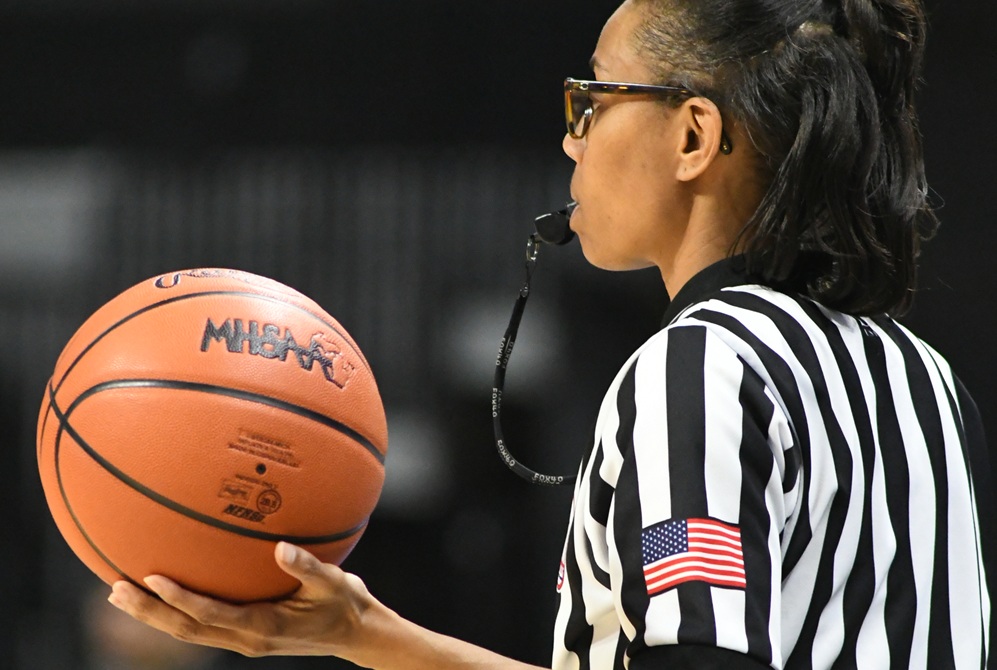
2026-27 MHSAA Officials Registration Underway
By
Geoff Kimmerly
MHSAA.com senior editor
June 15, 2026
The Michigan High School Athletic Association is accepting registrations online for game officials for the 2026-27 school year.
The MHSAA registered 9,330 officials for the 2025-26 school year, an increase of 4.9 percent from the previous year’s total.
All officials who register may sign up for up to two sports as part of their registration. Officials also will receive membership in the National Association of Sports Officials (NASO), which comes with a variety of educational and training resources and the NASO’s Shield liability insurance that will provide $6 million in coverage for officials while they are working both MHSAA and non-MHSAA events.
For new and returning officials, a $70 fee covers registration for up to two sports. Officials may register for additional sports at $16 per sport.
To avoid a $30 late fee, all fall sport registration applications must be received by Aug. 17, 2026. Winter sports registrations must be received by Nov. 16 to avoid the late fee, and spring sports registrations must be received by March 24, 2027.
Online registration can be accessed on the Officials page. More information about officials registration may be obtained by contacting the MHSAA by phone at (517) 332-5046 or by e-mail at [email protected].
New officials and those who didn’t officiate during 2025-26 must complete an officials' registration test, derived from the MHSAA Officials Guidebook, and the online MHSAA Principles of Officiating course. Additional exams must be taken by those registering for football or basketball for the first time or those who were not registered for those sports during the previous school year. Links to the Officials Guidebook, Principles of Officiating presentation and the football and basketball mechanics manuals can be found by following the “New Officials” link on the Officials page of the MHSAA Website and completing the registration process.
There also are opportunities to officiate for students at least 14 years old and in grades 9-12 through the MHSAA Legacy Program. Juniors and seniors may officiate subvarsity contests, while freshmen and sophomores may officiate contests at the middle school/junior high levels. Mentor officials will work events with Legacy participants to provide guidance and support. Find information on the Legacy Program by clicking “Officials Registration” on the Officials page of the MHSAA Website and reading under “Student Legacy Program Requirements.”
While on MHSAA.com to register for the upcoming school year, officials also can register for Officiate Michigan Day 2026, set for July 25 in Grand Rapids.
Doors open at 7:30 a.m., with the first session at 9 a.m. at DeVos Place. The day-long event will feature dynamic speakers and presenters providing knowledge in several sports and all levels including collegiate and professional.
Cost is $45 if officials register by the end of June, and $50 beginning July 1. More information is on the way; keep posted at MHSAA.com/OMD.