


Study: Single-Sport Athletes Injured More
November 3, 2016
A study conducted by the University of Wisconsin School of Medicine and Public Health and funded by the National Federation of State High School Associations (NFHS) Foundation revealed that high school athletes who specialize in a single sport sustain lower-extremity injuries at significantly higher rates than athletes who do not specialize in one sport.
The study was conducted throughout the 2015-16 school year at 29 high schools in Wisconsin involving more than 1,500 student-athletes equally divided between male and female participants. The schools involved in the study represented a mixture of rural (14), suburban (12) and urban (3) areas, and enrollments were equally diverse with 10 small schools (less than 500 students), 10 medium schools (501-1,000 students) and nine large schools (more than 1,000 students).
Athletes who specialized in one sport were twice as likely to report previously sustaining a lower-extremity injury while participating in sports (46%) than athletes who did not specialize (24%). In addition, specialized athletes sustained 60 percent more new lower-extremity injuries during the study than athletes who did not specialize. Lower-extremity injuries were defined as any acute, gradual, recurrent or repetitive-use injury to the lower musculoskeletal system.
“While we have long believed that sport specialization by high school athletes leads to an increased risk of overuse injury, this study confirms those beliefs about the potential risks of sport specialization,” said Bob Gardner, NFHS executive director. “Coaches, parents and student-athletes need to be aware of the injury risks involved with an overemphasis in a single sport.”
Among those who reported previously sustaining a lower-extremity injury, the areas of the body injured most often were the ankle (43%) and knee (23%). The most common types of previous injuries were ligament sprains (51%) and muscle/tendon strains (20%).
New injuries during the year-long study occurred most often to the ankle (34%), knee (25%) and upper leg (13%), with the most common injuries being ligament sprains (41%), muscle/tendon strains (25%) and tendonitis (20%).
In addition, specialized athletes were twice as likely to sustain a gradual onset/repetitive-use injury than athletes who did not specialize, and those who specialized were more likely to sustain an injury even when controlling for gender, grade, previous injury status and sport.
Thirty-four (34) percent of the student-athletes involved in the Wisconsin study specialized in one sport, with females (41%) more likely to specialize than males (28%). Soccer had the highest level of specialization for both males (45%) and females (49%). After soccer, the rate of specialization for females was highest for softball (45%), volleyball (43%) and basketball (37%). The top specialization sports for males after soccer were basketball (37%), tennis (33%) and wrestling (29%).
The study, which was directed by Timothy McGuine, Ph.D., ATC, of the University of Wisconsin, also documented the effects of concurrent sport participation (participating in an interscholastic sport while simultaneously participating in an out-of-school club sport), which indicated further risk of athletes sustaining lower-extremity injuries.
Almost 50 percent of the student-athletes involved in the survey indicated they participated on a club team outside the school setting, and 15 percent of those individuals did so while simultaneously competing in a different sport within the school. Seventeen (17) percent of the student-athletes indicated that they took part in 60 or more primary sport competitions (school and club) in a single year. Among those student-athletes in this group who sustained new lower-extremity injuries during the year, 27 percent were athletes who specialized in one sport.
The student-athletes involved in the study were deemed “specialized” if they answered “yes” to at least four of the following six questions: 1) Do you train more than 75 percent of the time in your primary sport?; 2) Do you train to improve skill and miss time with friends as a result?; 3) Have you quit another sport to focus on one sport?; 4) Do you consider your primary sport more important than your other sports?; 5) Do you regularly travel out of state for your primary sport?; 6) Do you train more than eight months a year in your primary sport?
Although some sports (field hockey, lacrosse) are not offered in Wisconsin and were not included in the study, the study concluded that since specialization increased the risk of lower-extremity injuries in sports involved in the survey it would also likely increase the risk of injuries in sports that were not a part of the study.
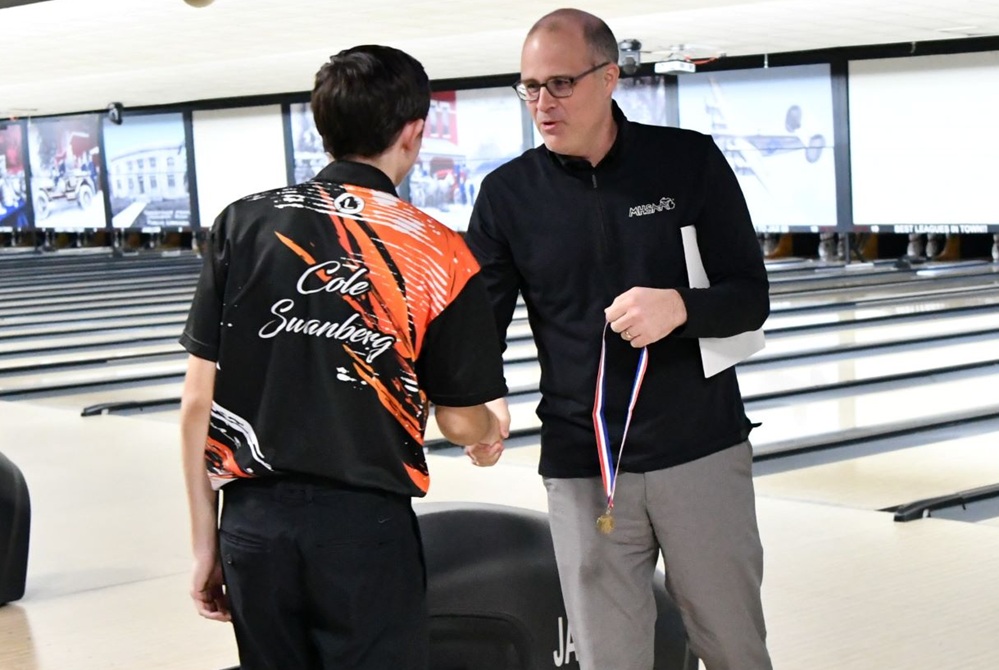
MHSAA Senior Assistant Director Frushour to Receive NFHS Citation
By
Geoff Kimmerly
MHSAA.com senior editor
January 23, 2026
Andy Frushour, a senior assistant director for the Michigan High School Athletic Association, is one of eight high school association leaders who has been selected to receive a Citation from the National Federation of State High School Associations (NFHS) during this summer’s annual meeting.
The Citation is one of the NFHS’ highest honors and recognizes recipients for their contributions to the NFHS, state high school associations, athletic director and coaching professions, the officiating avocation and fine arts/performing arts programs.
Frushour is in his 25th year at the MHSAA and currently directs the association’s efforts in marketing, girls and boys soccer, and student services. His tenure has been most notably defined by his leadership in making the MHSAA a national trendsetter in digital initiatives and communication, and he has spearheaded several pioneering efforts to bring student voices into decisions affecting their activities.
After beginning his tenure in the communications department, Frushour created the MHSAA’s marketing and brand team – which remains unique among state associations and aims to tell the story of school sports. The team tackles everything from media communications, sports information, website content and social media to ticketing, corporate sales and merchandise. As part of his digital branding contributions, Frushour has served as the lead contributor on every website redesign since 1999, created the Michigan Power Rating (MPR) formula now used for seeding in eight MHSAA Tournament sports, and led Michigan’s efforts to exclusively use digital tickets for postseason events.
“Sometimes the most valuable player on a baseball team is the utility player – somebody who plays but also excels at a number of different positions. For the last 25 years, Andy clearly has done that – from student leadership, to running a sport, to branding, to business decisions,” MHSAA Executive Director Mark Uyl said. “He’s someone who is competent, respected and has become a huge part of MHSAA history during his 25 years with us.”
Frushour also has steered the MHSAA to adopt a more prominent focus on students through the creation of several popular programs, including the Student Advisory Council, a series of annual interactive sportsmanship summits and captains clinics, and the Battle of the Fans student section competition. Building off that work, he has developed and created four free NFHS Learn courses geared toward team captains.
Frushour also has served on NFHS committees for soccer, student services, summer meeting and strategic planning, and spoken at several summer meetings and one NFHS winter meeting, and at the National Athletic Directors Conference.
After graduating in 1995 from Mason High School (Mich.) – where he played baseball and golf – Frushour attended Hope College, where he majored in business administration and minored in communications, graduating in 1999. He received an MBA in sports business from Arizona State in 2003.