


Be the Referee: Deciding the Game
March 2, 2017
This week, MHSAA assistant director Mark Uyl discusses why officials must make calls even in the final moments of a close game during tournament time.
Be The Referee is a series of short messages designed to help educate people on the rules of different sports, to help them better understand the art of officiating, and to recruit officials.
Below is this week's segment – Deciding the Game - Listen
Every American sports fan knows when the calendar turns to March, it’s time to start thinking about basketball tournament games.
With all of the pundits out there talking about the matchups and who may advance on the brackets, the comment gets made every single year that we simply hope the players decide the outcome of every game – and not a referee’s call.
The fact of the matter is that in the last 10 seconds of a tied game, when a player drives down the lane and gets hit and get knocked to the floor, an official has to make that foul call because the players did decide the outcome of that game. For the officials to simply swallow their whistles and let one team break the rules for a clear advantage is not letting those players decide the outcome.
Past editions
Feb. 23: Pitch Counts - Listen
Feb. 16: Recruiting Officials - Listen
Feb. 9: Ejections - Listen
Feb. 2: Wrestling & Technology - Listen
Jan. 26: Post Play - Listen
Jan. 19: Ice Hockey Overtime - Listen
Jan. 12: Free Throw Change - Listen
Jan. 5: Ratings - Listen
Dec. 22: Video Review - Part 2 - Listen
Dec. 15: Video Review - Part 1 - Listen
Dec. 8: Registration - Part 2 - Listen
Dec. 1: Registration - Part 1 - Listen
Nov. 24: You Make the Call - Sleeper Play - Listen
Nov. 17: Automatic 1st Downs - Listen
Nov. 10: Uncatchable Pass - Listen
Nov. 3: The Goal Line - Listen
Oct. 27: Help Us Retain Officials - Listen
Oct. 20: Point After Touchdown - Listen
Oct. 13: Untimed Down - Listen
Oct. 6: Soccer Penalty Kick Change - Listen
Sept. 29: Preparation for Officials - Listen
Sept 22: You Make the Call: Returning Kickoffs - Listen
Sept. 15: Concussions - Listen
Sept 8: Equipment Covering the Knees - Listen
Sept. 1: Play Clock Experiment - Listen
Aug. 25: Clipping in the Free Blocking Zone - Listen
Be the Referee: Unsuspecting Hockey Hits
By
Paige Winne
MHSAA Director of Brand Management
December 19, 2023
Be The Referee is a series of short messages designed to help educate people on the rules of different sports, to help them better understand the art of officiating, and to recruit officials.
Below is this week's segment – Unsuspecting Hockey Hits - Listen
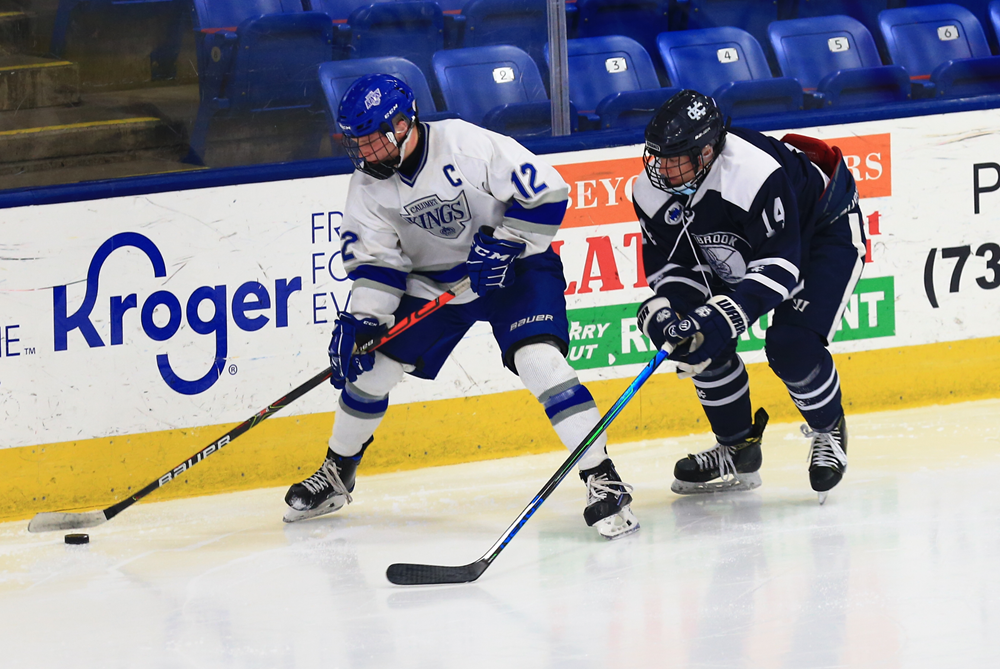
We’re on the ice today and we’ve got two players, one from the home team, one from the away team, trying to gain control of the puck.
As they are jockeying for the puck, a second home team player comes in and checks the away team player – allowing the home team to gain possession.
Is this physical contact by the second player allowed?
If the opposing player is in an unsuspecting or vulnerable position – then no, it is not allowed and the aggressor should be penalized.
This is a point of emphasis for the 2023-24 season which aims to remove unsuspecting hits to defenseless or vulnerable players.
Previous Editions
Dec. 12: No More One-And-Ones - Listen
Nov. 21: Football Finals Replay - Listen
Nov. 14: Volleyball Unplayable Areas - Listen
Nov. 7: Pass/Kick Off Crossbar - Listen
Oct. 31: Cross Country Interference - Listen
Oct. 24: Soccer Overtime - Listen
Oct. 17: Tennis Spin - Listen
Oct. 10: Blocked Kick - Listen
Oct. 3: Volleyball Double & Lift - Listen
Sept. 26: Registration Process - Listen
Sept. 20: Animal Interference - Listen
Sept. 13: Feet Rule on Soccer Throw-In - Listen
Sept. 6: Volleyball Jewelry - Listen
Aug. 30: Football Rules Similarities - Listen
Aug. 23: Football Rules Differences - Listen