

Be the Referee: Equipment Responsibility
December 21, 2017
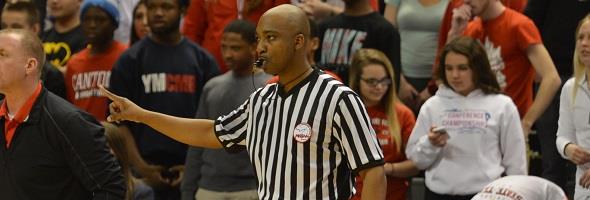
In this week's edition, assistant director Mark Uyl explains that coaches are responsible for making sure their players are properly equipped.
Be The Referee is a series of short messages designed to help educate people on the rules of different sports, to help them better understand the art of officiating, and to recruit officials.
Below is this week's segment – Coaches Responsible for Equipment - Listen
Over the past decade, just about all new playing rules have tended to focus on improving the health and safety of those playing the game. In all sports, it’s the responsibility of the head coach to make sure that his or her players are properly equipped according to the rules of the game.
It’s generally one of the first things the official will ask the head coach before play begins. This can cover everything from bats in baseball and softball, to helmets and face masks in football or ice hockey, or to those sports where mouth guards are required. This is to ensure that each school and the head coach is taking responsibility when it comes to the equipment being worn and keeping those playing the game safe.
Past editions
December 14: Mentoring New Officials - Listen
December 7: Dive on the Floor - Listen
November 30: Wrestling Weight Monitoring - Listen
November 23: Ejections - Listen
November 16: Toughest Call - Listen
November 9: Hurdling - Listen
November 2: The Survey Says - Listen
October 26: Helmet Comes Off - Listen
October 19: Goal Line Rules - Listen
October 12: No 1st-Year Fee - Listen
October 5: Athletic Empty Nesters - Listen
September 28: Misunderstood Football Rules: Kicking - Listen
September 21: Preparation for Officials - Listen
September 14: Always Stay Registered - Listen
September 7: Other Football Rules Changes - Listen
August 31: Pop-Up Onside Kicks - Listen
August 24: Blindside Blocks - Listen
Connections: Novara Success Stretches Across State, Official Offers Encouragement
By
Geoff Kimmerly
MHSAA.com senior editor
December 8, 2023
Separated by 527 travel miles – whether over Mackinac Bridge or around Lake Michigan, the Novara family celebrated nearly parallel football successes this fall.
At Portland, John Novara completed his 25th season as head coach leading the Raiders to a 12-1 record – their best since finishing Division 5 runner-up in 2018, and a second-straight Capital Area Activities Conference White championship on the way to reaching the Division 4 Semifinals.
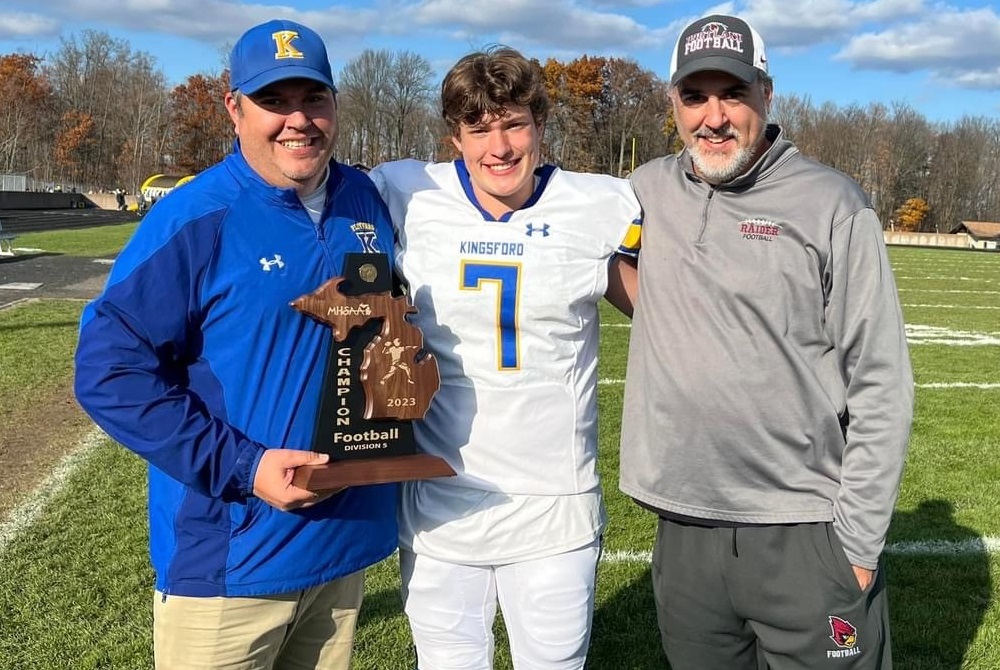
At Kingsford, fifth-year coach Mark Novara led the Flivvers to a 10-2 record – their best since posting the same in 2004. Kingsford shared the Western Peninsula Athletic Conference Copper title and won a Division 5 District title, its first District championship since 2009.
John Novara graduated from Iron Mountain in 1989, and younger brother Mark graduated from Kingsford in 1993.
Similarly parallel, both teams were quarterbacked by Novaras. Dominic Novara directed the Raiders’ attack, and cousin Nic Novara led the Flivvers. Both are juniors. (Mark Novara was a Division III All-American at quarterback at Lakeland College in Wisconsin.)
One more connection: Portland athletic director Kevin Veale quarterbacked the Iron Mountain teams with John Novara as tight end long before they worked together downstate. Veale’s nephew Garrett Veale was a standout two-way lineman for Mark Novara and Kingsford this fall.
Small gesture, memorable connection
Dante DeGrazia’s senior season was sadly short-lived this fall, as he suffered a season-ending injury during the first half of South Lyon East’s opening game against White Lake Lakeland at Michigan Stadium.
 But an official provided a memory the DeGrazias will not forget.
Chris Curtis had begun his 16th season as an official earlier that day at U-M, and stuck around to watch the Lakes Valley Conference matchup. A month later, he was officiating the East/Warren Mott game, and made sure to check in with DeGrazia – a small gesture, but a meaningful one as well and another reminder of the interconnectedness of communities within educational athletics.
“When he heard my son wasn't able to play anymore, needed surgery and that he was a senior, he offered him kindness and a hug on the field,” Dante’s mother Dana DeGrazia wrote to East athletic director Greg Michaels. “As a parent whose son is going through a rough time dealing with losing his senior season, hearing this story from Dante means a lot to me and the support that was given to him and I wanted to reach out and tell him thank you.”
PHOTOS (Top) Kingsford football coach Mark Novara, far left, quarterback Nic Novara and Portland coach (and uncle) John Novara celebrate the Flivvers' District title. (Middle) South Lyon East's Dante DeGrazia (33) and official Chris Curtis meet for a quick hug during East's Week 5 game. (Photos courtesy of the Portland football program and DeGrazia family, respectively.)