


Be the Referee: Pass Interference
September 9, 2014
This week, MHSAA assistant director Mark Uyl explains one of the toughest calls to make on the football field.
"Be the Referee" is designed to help educate people on the rules of different sports, to help them better understand the art of officiating and to recruit officials. The segment can be heard on Mondays, Wednesdays and Fridays during the school year on The Drive With Jack Ebling on WVFN-AM, East Lansing.
Below is this week's segment - Pass Interference - Listen
Today we’re going to talk about one of the most difficult calls for any football official – pass interference. It’s important to know that whenever a forward pass is thrown beyond the line of scrimmage that both players – the offensive receiver as well as the defender – each have an equal right to make a play on the football.
Now, not all contact will automatically result in a pass interference foul. The official must judge if that early contact before the ball arrives has placed one of the two players at a distinct disadvantage. When that contact does create the disadvantage, you have a foul for pass interference. When the contact is minimal and is simply incidental, no foul has occurred.
Past editions
Aug. 25 - Targeting - Listen
Sept. 4 - Concussions - Listen
Be the Referee: Primary Areas
February 11, 2016
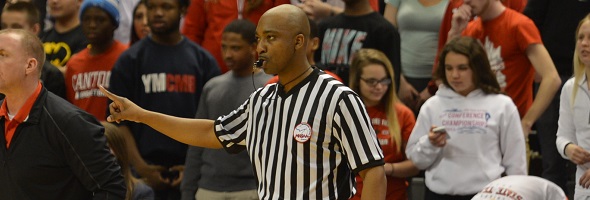
This week, MHSAA assistant director Mark Uyl explains how angle is the most important factor when determining which basketball official should make a call.
Be The Referee is a series of short messages designed to help educate people on the rules of different sports, to help them better understand the art of officiating, and to recruit officials.
Below is this week's segment - Primary Areas - Listen
In just about every single basketball game ever played, there are times where fans will turn to each other and wonder, “Why did that official make the call when there was another member of the crew that was a whole lot closer to the play?”
The most important thing in all of officiating and especially basketball officiating is angle is the most important element for an official.
There will be many times during the game that the official that is closest to the play actually has the worst look or the worst angle. Many times the player is going up in the lane for that shot, and the whistle will come from one of the two outside officials because they had the perfect angle to see all the elements of the play and can rule correctly.
Past editions:
Feb. 4: Block/Charge Calls - Listen
Jan. 28: Dive on the Floor - Listen
Jan. 21: Hockey Officials' Options - Listen
Jan. 14: Recruiting Officials - Listen
Jan. 7: Wrestling Weight Monitoring - Listen
Dec. 31: Respect for Referees - Listen
Dec. 24: Basketball Instant Replay - Listen
Dec. 17: Basketball Communication - Listen
Dec. 10: Basketball Excessive Contact - Listen
Nov. 26: Pregame Communication - Listen
Nov. 19: Trick Plays - Listen
Nov. 12: 7-Person Football Mechanics - Listen
Nov. 5: Make the Call: Personal Fouls - Listen
Oct. 29: Officials Demographics - Listen
Oct. 15: Make the Call: Intentional Grounding - Listen
Oct. 8: Playoff Selection - Listen
Oct. 1: Kick Returns - Listen
Sept. 24: Concussions - Listen
Sept. 17: Automatic First Downs - Listen
Sept. 10: Correcting a Down - Listen
Sept 3: Spearing - Listen
Aug. 27: Missed Field Goal - Listen