

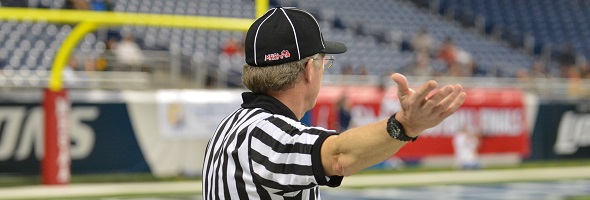
Be the Referee: Registration - Part 1
December 11, 2014
This week, MHSAA assistant director Mark Uyl dicusses the first step in becoming an MHSAA registered official.
"Be the Referee" is designed to help educate people on the rules of different sports, to help them better understand the art of officiating and to recruit officials. The segment can be heard on Mondays, Wednesdays and Fridays during the school year on The Drive With Jack Ebling on WVFN-AM, East Lansing.
Below is this week's segment - Registration Part 1 - Listen
Today we are going to talk about how a person becomes an MHSAA registered official. Depending on the sport, that could mean a referee, umpire or judge.
The first step in the process is to contact the MHSAA and identify the sport or sports in which a person wants to become an official. The next step is to complete the MHSAA Officials Guidebook Exam.
The Officials Guidebook covers some of the basic elements and procedures that are necessary in becoming a sports official. Things such as game assignments, payment of game fees, playing rules and ejection protocols are covered in this first step of the process.
Past editions
Dec. 3 - Legacy Program - Listen
Nov. 26 - Sideline Management - Listen
Nov. 19 - 7-Person Mechanics - Listen
Nov. 12 - Blocking Below the Waist - Listen
Nov. 5 - Tournament Selection - Listen
Oct. 29 - Uncatchable Pass - Listen
Oct. 22 - Preparation for Officials - Listen
Oct. 15 - Automatic First Downs - Listen
Oct. 8 - Officials & Injuries - Listen
Oct. 1 - Overtime - Listen
Sept. 25 - Field Goals - Listen
Sept. 18 - Tackle Box - Listen
Sept. 11 - Pass Interference - Listen
Aug. 25 - Targeting - Listen
Be the Referee: Cheer Judges
By
Paige Winne
MHSAA Director of Brand Management
January 20, 2026
Be The Referee is a series of short messages designed to help educate people on the rules of different sports, to help them better understand the art of officiating, and to recruit officials.
Below is this week's segment – Cheer Judges - Listen
Ready! Set!
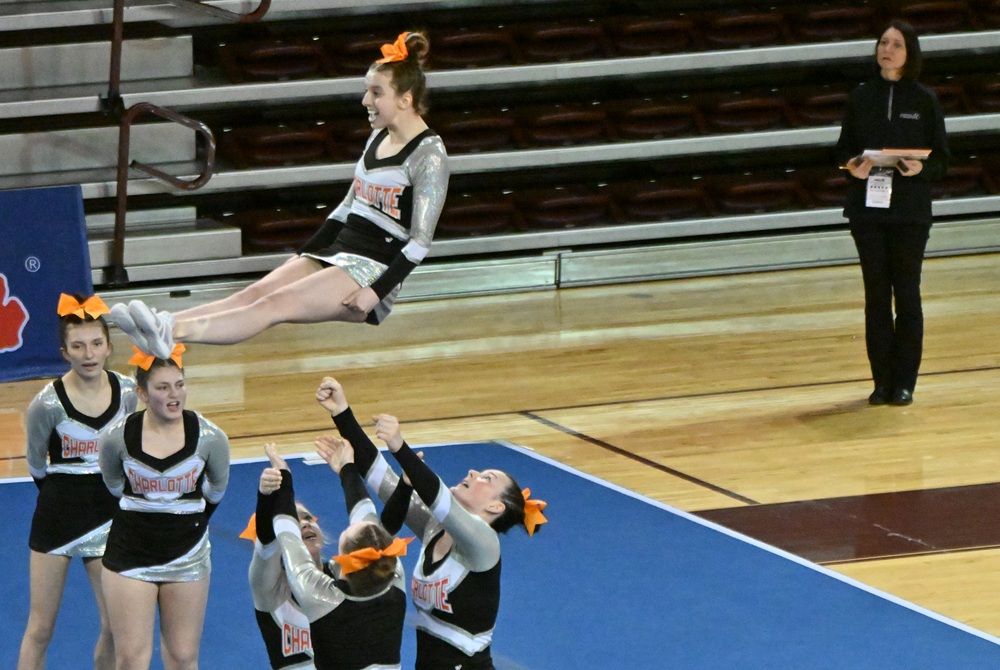
There are a lot of moving parts to a competitive cheer competition, including safety judges.
For each competition there are a minimum of two safety judges and 3 panel judges. But what does each position do?
Safety judges are there for safety – as simple as that sounds. During competition, they are mobile, circling the mat identifying illegal skills, improper spotting techniques, time infractions, and anything else deemed unsafe. They also are counting the number of competitors and floor formations for each team.
Panel judges – and there are three of them – are scoring the round. Each round is made up of skills, floor formations, transition moves and stunts that all must be evaluated.
Both safety and panel judges can deduct points for errors in the routine.
Previous 2025-26 editions
Jan. 13: Basketball Over the Back - Listen
Jan. 6: Bowling Ball Bounces Out of Gutter - Listen
Dec. 9: Puck on Goal Netting - Listen
Dec. 2: Goaltending vs. Basket Interference - Listen
Nov. 25: Football Finals Instant Replay - Listen
Nov. 18: Volleyball Libero Uniforms - Listen
Nov. 11: Illegal Substitution/Participation - Listen
Nov. 4: Losing a Shoe - Listen
Oct. 28: Unusual Soccer Goals - Listen
Oct. 21: Field Hockey Penalty Stroke - Listen
Oct. 14: Tennis Double Hit - Listen
Oct. 7: Safety in Football - Listen
Sept. 30: Field Hockey Substitution - Listen
Sept 23: Multiple Contacts in Volleyball - Listen
Sept. 16: Soccer Penalty Kick - Listen
Sept. 9: Forward Fumble - Listen
Sept. 2: Field Hockey Basics - Listen
Aug. 26: Golf Ball Bounces Out - Listen