

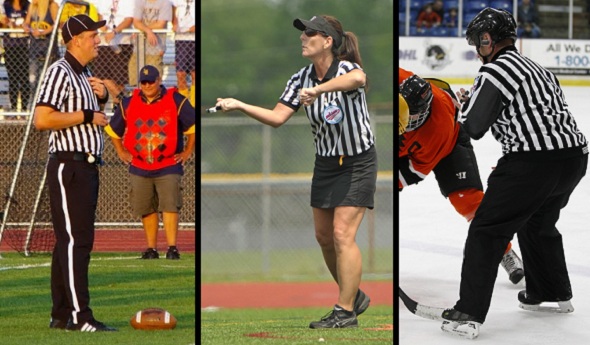
Making - and Answering - the Call
September 28, 2012
By Rob Kaminski
benchmarks editor
“Life is a game with many rules but no referee. Small wonder, then, that so many play dirty, that so few win, that so many lose.” – Joseph Brodsky, Russian Poet and Essayist
To varying degrees, the world of athletics mirrors society. There are winners and losers. There are participants who look for ways to skirt the rules. However, in considering Mr. Brodsky's quotation above, there is one glaring difference between sports and life. Our games do have referees. Because of that, dirty play is less rampant and our games have more winners than losers, for the scoreboards only tell part of the story. There are lessons in winning and losing within the framework of enforced rules, lessons which equip young people with the tools to make society a little better in the future.
In life, the deck is stacked in favor of the players. According to one 2010 census, there were 1.8 police officers per 1,000 citizens in Michigan, a ratio which ranked 40th in the United States.
In contrast, during the 2011-12 school year, there were 37.2 registered MHSAA officials per 1,000 high school participants. Maybe, just maybe, that’s why school sports are at odds with Brodsky’s depiction of society; there are simply more cops on the beat.
At the very least, officials play a vital role in the existence of school sports. The games can’t go on without these men and women, and the MHSAA annually seeks improved recruitment and retention methods to promote growth of this group so integral to the health of its product.
They answer the call
So who are these people whose best work goes unnoticed; of whom perfection is the expectation; and who automatically alienate 50 percent of interested parties each time they make a decision? Who applies for this job? Why are some suited for the task, and others not? Asking why people leave the officiating life can often reveal just as many clues as talking to those who stay.
 In 2004, the MHSAA conducted a survey targeting former officials to reveal their reasons for leaving the avocation and ask what might be done to bring them back.
The top three reasons people hung up their whistles or other tools of the trade were as follows: 1) career change/job demands; 2) poor sportsmanship by coaches and fans; 3) local association politics. Time spent away from family was also cited as a prime reason for leaving the games.
Eight years later, in a survey this August, the MHSAA again called upon former officials to generate data which can be helpful in recruiting new officials or luring back “retired” veterans.
Of more than 600 respondents at press time, the consensus of comments indicate a shift in culture. Career and personal demands no longer top the chart as reasons for leaving. Today’s barometer indicates that local association politics (the ability to receive games and advance through the ranks) and a lack of adequate training for new, younger, officials rank as the prime reasons for people exiting the game relatively early in their quest.
Sportsmanship concerns for the behavior of coaches, parents and participants still rates as the second-greatest deterrent.
“It is imperative to survey our constituents on a frequent basis so we can react to the various factors which prompt trends in the industry,” said Mark Uyl, MHSAA assistant director who oversees the state’s 12,000 registered officials. “I think we’ve successfully addressed some issues based on the findings from the 2004 survey, and we expect to analyze this year’s questionnaire at length to address the most pressing issues accordingly.”
The majority of the slips filling the suggestion box from the August survey: 1) provide increased training opportunities for new officials; 2) work with local associations to create more opportunities for new people to receive a greater number of games; 3) allow officials to rate schools and coaches, and develop programs for peer evaluation, rather than receiving ratings from coaches only.
The MHSAA has made strides in tackling each issue, and this year’s data will further focus its efforts to improve the officiating environment.
In recent years, the MHSAA has conducted officials camps in basketball and football (see stories on pages 14 and 33) and created an officials video training page on MHSAA.com.
While the officials ratings still come from the schools, local approved officials associations now submit candidates for MHSAA tournament assignments, and the nominations hold more weight with the MHSAA than ever before. As a result, local associations are better evaluating their members.
Additionally, officials can now access and submit a school sportsmanship feedback form to rate school facilities and coach, player and spectator behavior. Findings from this year’s survey indicate that officials would like a more detailed system, and a greater emphasis on sportsmanship education for coaches. To that end, the MHSAA offers one of the most comprehensive coaches education programs in the nation through its Coaches Advancement Program, and offers incentives to those who register for classes, many of which tout sportsmanship.
“We also encourage local associations to communicate with leagues and conferences outside the playing boundaries,” Uyl said. “Several associations invite coaches to a meeting or two each year for honest, face-to-face discussion. We’ve also been told of schools which invite a veteran official to parents meetings or team meetings prior to the season to help explain rules and their role in the games. Conversation in these settings serve our members well and assist in breaking down barriers.”
Key to growth and improvement of MHSAA sports officials are the efforts of local approved associations.
“There is no question that any successes we enjoy as a state association are directly related to the leadership of our local associations,” Uyl said. “Through programs like our train-the-trainers sessions each summer we can put the wheels in motion, but the real grass-roots education of our men and women happens in communities throughout the state. And, the people in place to carry out our officials education are second to none.”
Recruitment starts with family
If there’s anything you’ll take from this issue of benchmarks, it’s that there are no better recruiters, – no more qualified individuals to blare the trumpets – than officiating’s own family members. It’s a recurring theme repeated by numerous individuals.
Carl Van Heck, assigner for the West Michigan Umpires Association, said his association attempts to identify MHSAA-registered umpires in the area not currently members of the WMUA and invite them to join. His association also attracts a few individuals per year through an ad in the Grand Rapids Press. The real recruitment and retention begins once the rookies are in the association.
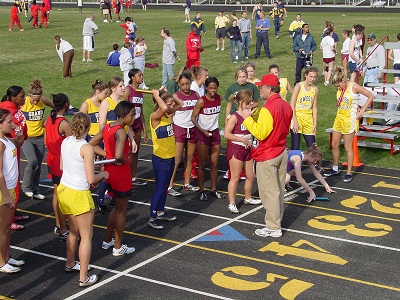 “Our executive board recently voted to install a mentoring program which will pair a veteran official to work a number of games with a new official to get him or her started on the right foot,” said Van Heck. “This is on a voluntary basis for both the veteran and the newcomer, and they are assigned these games in addition to their regular schedule.
“We also conduct an annual clinic on a Saturday at Grand Valley State University that is free to all of our members. We want the best-trained umpires both new and old to put on the field for the schools we work for.”
That’s the hook; making new officials feel comfortable while increasing their skill level and affording them ample opportunities to work.
While much of this responsibility falls to the local level, much is also expected of the MHSAA to assist in this process.
“The biggest obstacles young referees face in officiating high school soccer matches are legalistic rule changes, lack of expert feedback and lack of opportunity,” said Alex Smith, president of the Greater Lansing Area Soccer Referees Association. Smith opines that onfield issues in soccer are often met with the addition of a new rule, and in many instances there aren’t enough knowledgeable leaders to assist the younger soccer officials.
“For excited young or new referees looking to improve, there are few, if any, options for unbiased or expert feedback for them to consult,” Smith said, while adding that continued efforts between GLASRA and the MHSAA could soothe development issues.
“Certainly, in recent years GLASRA and others have given MHSAA credit for beginning to address these weaknesses. It's our hope that MHSAA continues to refine, streamline and improve its development and retention of new officials,” Smith said.
Uyl agrees, and welcomes input from all entities around the state.
“Some of the areas identified from GLASRA and other associations in other sports continue to be on the radar for improvement and change,” Uyl said. “Frank, honest and professional feedback is the only way we can keep moving forward in the right direction together with all of our officials.”
Onward and upward
At times, it seems, the biggest roadblock to officials advancement is officials themselves, resulting from a collision of two eras.
When it comes to younger officials proclaiming a lack of training opportunity and game assignments, how much of it is a reflection of societal change? Newer officials are raised in a world of instant gratification; from fast food, to satellite TV, to smart phones and the Internet, they are of the culture that gets anything it wants, when it wants.
Older officials, who tend to be the assigners, have an understanding of what it takes to work the highest levels of a sport. They know what they’ve been through to move up the ranks, and they know who they’ve moved up with. It becomes a matter of trusting the known, and being suspicious of the unknown. Yes, at times, the industry can be a “good ol’ boy network.”
The challenge is to make sure the new kids are aware of existing training opportunities and the investment necessary for advancement, while opening the veterans’ eyes to a pool of new talent and identifying those best suited to lead the neophytes.
“Again, I think this is an area that’s improving as we try to encourage our leaders around the state to take ownership in the development of our young officials,” Uyl said. “We constantly encourage our associations to nominate ‘new blood’ for our tournaments, and I think associations can take pride in turning out young people who are knowledgeable, physically fit and passionate about this business we’re in. It’s a people business, first and foremost, so it’s paramount that our own kind work together.”
As mentioned, the MHSAA began seeking greater input from approved associations for its tournament selection a few years back. While the coaches rating system still serves as one of the gauges, the ratings are not the be-all, end-all when it comes to assignments. Local associations need to take that lead.
“We promote our officials from the subvarsity level to the varsity level based on ratings, and there is a lack of ratings from our local schools for officials working on the subvarsity level,” Van Heck said. “We tend to lose officials who after the third year are not advancing due to lack of ratings.”
The WMUA’s new mentor program can serve to change the culture there. As more feedback is gathered from veteran officials working with the newcomers, less weight can be attached to coaches ratings which seldom arrive.
In any line of work, people want to be rewarded for their efforts, or, at the very least, appreciated by their peers. If it’s motivation, education and affirmation that young officials are seeking, there will be no better place to look than Grand Rapids next July. A day-long event tailored to high school officiating in Michigan takes place Saturday, July 27, preceding the 2013 National Sports Officials Association Summit. All registered MHSAA officials are encouraged to attend. Registration information will be posted to MHSAA.com later this fall.
Last call
Survey examines reasons for calling it quits
Following is a sampling of responses from former officials offering reasons for leaving the playing fields and arenas, along with suggestions for retention. Complete survey results can be found on the Officials page of MHSAA.com.
- “Maybe some further education for the coaches, who in turn can educate their parents, might help the process. We, as officials, don't question the play calls of the head coach publicly. Why should it be fair for the coach to question the calls of the official publicly?”
- “Find a way to schedule officials who want to work games. People want to work, but no one wants to schedule them. I often hear it is a lack of experience, but you can't get experience unless you work games.”
- “When a new member comes on board, have an experienced official contact him or her immediately about assignments. This will make his or her first game more comfortable. Officials are team players just like those who they will officiate.”
- “The time away from family, the cost and effort to stay certified, and the commitment to staying conditioned and prepared for the level of play unfortunately does not surpass the "lack of fun" that refereeing soccer has become. A solution seems unrealistic because of the scope of the problem – but it needs to start somewhere. Great idea to send this survey and begin the process of improvement.”
- “I was woefully unprepared and lacked the knowledge necessary to be an effective official. If it weren't for an optional clinic I took part in, I would have been a disaster. A lot of that is on me, but I can't believe I was let on the field by the MHSAA considering how little training and information I was provided. Rookie officials need more shadowing and more observation before being put into a game.”
- “I just wanted to officiate middle school sports and was very comfortable with this level. I quickly learned being part of a local association of officials and going through that hoopla was more of a pain. I got a couple games because I knew the middle school administration, but that was too short-lived.”
- “Legislate how much the assigners can charge young official to attend camps. I found that the amount of instruction was not commensurate with the charge. I don't have a major problem with assigners being compensated for their organizing and other things they might being doing. However, officials should not have to break even or operate at a loss when the assigners are padding their pockets.”
- “Improve education on how to prepare for unreasonable fans, coaches and parents. Also improve on the efforts of team’s comprehension of rules. Coach and fan behavior: I’ve officiated 25-30 minor league baseball games. We take more abuse at the high school level. It just got old.”
- “I believe coaches and athletic directors should introduce graduating seniors to local associations. This would get younger people involved.”
Be the Referee: Home Run or Not?
May 4, 2016
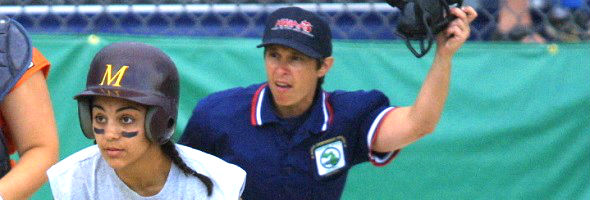
This week, MHSAA assistant director Mark Uyl presents a "You Make the Call" on a fly ball that ends up over the fence, but with a little bit of help.
Be The Referee is a series of short messages designed to help educate people on the rules of different sports, to help them better understand the art of officiating, and to recruit officials.
Below is this week's segment - Home Run or Not? - Listen
Today let’s play "You Make The Call" with this following baseball or softball situation:
With no runners on base, the batter hits a long fly ball directly down the left field line. The left fielder comes over and attempts to catch the ball directly in front of the outfield fence and the left field foul pole. The ball touches the fielder’s glove in fair territory and then hits off the glove and goes over the outfield fence, but on the foul side of the foul pole.
You Make The Call.
In this case, when the ball was touched in fair territory, it was a fair ball.
But when the ball went over the fence in foul territory, it became a ground rule double.
Past editions:
April 28: Norris Award Winner Linda Hoover - Listen
April 21: Legacy Program - Listen
April 14: Baseball/Softball Replay - Listen
March 24: Use of the Monitor - Listen
March 17: Block/Charge - Listen
March 10: Ball Stuck on the Rim - Listen
March 3: Three Seconds - Listen
Feb. 25: Deciding the Game - Listen
Feb. 18 : Cheer Safety - Listen
Feb. 11: Primary Areas - Listen
Feb. 4: Block/Charge Calls - Listen
Jan. 28: Dive on the Floor - Listen
Jan. 21: Hockey Officials' Options - Listen
Jan. 14: Recruiting Officials - Listen
Jan. 7: Wrestling Weight Monitoring - Listen
Dec. 31: Respect for Referees - Listen
Dec. 24: Basketball Instant Replay - Listen
Dec. 17: Basketball Communication - Listen
Dec. 10: Basketball Excessive Contact - Listen
Nov. 26: Pregame Communication - Listen
Nov. 19: Trick Plays - Listen
Nov. 12: 7-Person Football Mechanics - Listen
Nov. 5: Make the Call: Personal Fouls - Listen
Oct. 29: Officials Demographics - Listen
Oct. 15: Make the Call: Intentional Grounding - Listen
Oct. 8: Playoff Selection - Listen
Oct. 1: Kick Returns - Listen
Sept. 24: Concussions - Listen
Sept. 17: Automatic First Downs - Listen
Sept. 10: Correcting a Down - Listen
Sept 3: Spearing - Listen
Aug. 27: Missed Field Goal - Listen