

Century of School Sports: Everything We Do Begins with Participation
By
Geoff Kimmerly
MHSAA.com senior editor
March 5, 2025
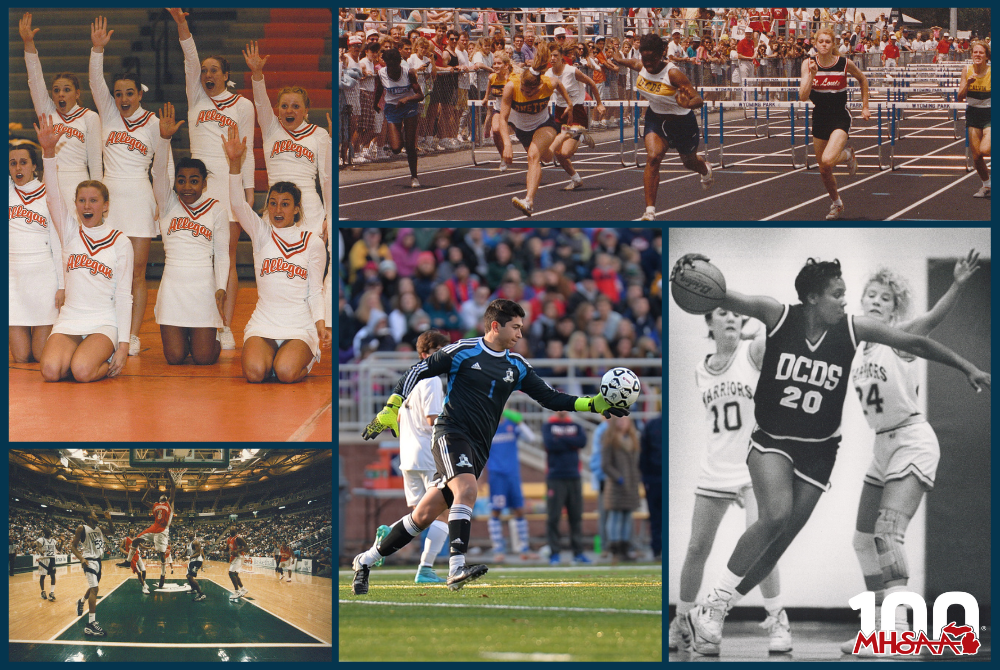
For 100 years the MHSAA and its member schools have trumpeted the many benefits of educational athletics. The list of positive reasons to play has only grown.
But every idea and effort to make school sports excellent starts with one underlying theme that has served as a primary motivation from the beginning:
Participation.
The MHSAA long has been driven by a desire to see as many students participate in sports as possible, within a framework of rules that intentionally makes that opportunity so valuable that playing for the school team becomes the dream for thousands of kids all over our state.
And MHSAA member schools have a long history of succeeding at that mission.
A few comparisons and a decent share of context are necessary to explain how. We will dive into some numbers, but these two points sum up the story:
The total number of high school students in Michigan has been shrinking annually over several years – high-school aged population in this state is down 21 percent since 2006-07. But the numbers of students playing sports at MHSAA schools has grown three straight years and has declined by only 13.5 percent over the same stretch of time.
Michigan participation in high school sports annually outpaces where it ranked nationally in high school-aged population. We may have fewer students than some states, but more of them are playing more sports for their schools.
How do we know all this?
Every spring since 1971, the MHSAA has reported how many athletes from member schools participate – by sport – as part of a survey from the National Federation of State High School Associations (NFHS). Those numbers are crunched by the NFHS for all 50 states and Washington, D.C., and over the last several years the MHSAA has taken that data and then compared how Michigan participation stacks up to state populations of people aged 14-17.
(The NFHS collects data on all school sports, whether they receive state association sponsorship or not. Participants also are counted once for every sport they participate in, so two-sport athletes are counted twice, three-sport athletes are counted three times, etc.).
For this narrative’s sake, let’s start with the 1977-78 school. By then, several girls sports had begun to receive MHSAA sponsorship and also had a few years to get established and grow. For that school year, the MHSAA reported 242,616 participants. Just under a decade later, for 1985-86, that total had grown to 265,227 (and a few more girls sports had been added), and those totals continued to rise during the 1990s reaching 295,858 in 2000-01.
A key high point came in 2006-07, when the MHSAA reported 320,479 total participants in all sports at member schools including 313,093 in MHSAA-sponsored sports. The grand totals then shifted downward slowly once again – but in proportion to falling student enrollment at MHSAA member schools, which has dropped nearly 113,000 students (21 percent) since that notable year. It’s also fair to make an educated guess – because students are counted once for every sport played – that a trend toward sport specialization also affected those numbers to some degree.
Fast forward to today. For the 2023-24 school year, there were 270,664 participants in MHSAA sports, plus another 19,920 in sports not sponsored by the association (weight lifting, etc.). So while Michigan hasn’t approached 300,000 participants in more than a decade, the total for MHSAA sports this past year was only 13.5 percent fewer than that 2006-07 season – again, compared to 21-percent fewer students at those schools. And the even better news? Participation has increased three straight years coming out of the COVID-19 pandemic.
Another telling comparison is how Michigan participation continues to compare nationally.
Going back to at least the 2012-13 school year – not counting 2019-20 and 2020-21, when the NFHS survey was suspended because of COVID-19’s effect on school sports – Michigan consistently has ranked either seventh or eighth in participation nationally, falling past that ranking only once to ninth. For 2023-24, Michigan ranked eighth for participation.
Meanwhile, Michigan ranked ninth nationally for high school-aged population from 2012-13 through 2015-16 before sliding into its current 10th spot on that list. So for this past school year, participation at MHSAA member schools ranked two spots ahead of its ranking for high school-aged population.
The first step to receiving the benefits of school sports is getting out there and playing them. And Michigan high schoolers are continuing to do so – both at rates that compare well historically over the last 50 years, and compared to states across the country of similar sizes. This has long been a point of MHSAA pride, and will continue to be a primary focus of its work.
Previous "Century of School Sports" Spotlights
Feb. 25: Slogans & Logos Remain Unforgettable Parts of MHSAA History - Read
Feb. 19: MHSAA Tickets Continue to Provide Fan-Friendly Value - Read
Feb. 11: We Recognize Those Who Make Our Games Go - Read
Feb. 4: WISL Conference Continues to Inspire Aspiring Leaders - Read
Jan. 28: Michigan's National Impact Begins at NFHS' Start - Read
Jan. 21: Awards Celebrate Well-Rounded Educational Experience - Read
Jan. 14: Predecessors Laid Foundation for MHSAA's Formation - Read
Jan. 9: MHSAA Blazes Trail Into Cyberspace - Read
Dec. 31: State's Storytellers Share Winter Memories - Read
Dec. 17: MHSAA Over Time - Read
Dec. 10: On This Day, December 13, We Will Celebrate - Read
Dec. 3: MHSAA Work Guided by Representative Council - Read
Nov. 26: Finals Provide Future Pros Early Ford Field Glory - Read
Nov. 19: Connection at Heart of Coaches Advancement Program - Read
Nov. 12: Good Sports are Winners Then, Now & Always - Read
Nov. 5: MHSAA's Home Sweet Home - Read
Oct. 29: MHSAA Summits Draw Thousands to Promote Sportsmanship - Read
Oct. 23: Cross Country Finals Among MHSAA's Longest Running - Read
Oct. 15: State's Storytellers Share Fall Memories - Read
Oct. 8: Guided by 4 S's of Educational Athletics - Read
Oct. 1: Michigan Sends 10 to National Hall of Fame - Read
Sept. 25: MHSAA Record Books Filled with 1000s of Achievements - Read
Sept. 18: Why Does the MHSAA Have These Rules? - Read
Sept. 10: Special Medals, Patches to Commemorate Special Year - Read
Sept. 4: Fall to Finish with 50th Football Championships - Read
Aug. 28: Let the Celebration Begin - Read
Choose the Right Sports Medicine Expert
July 7, 2020

By Christina Eyers, Ed.D., AT, ATC
Henry Ford Health System
If you're an athlete, chances are you'll require specialized care from a health professional during your career.
Confused about the differences between athletic trainers, sports medicine physicians and exercise physiologists, among other experts? You're not alone!
Each of these professionals has different levels of training, expertise and certifications, but the care they provide often overlaps. That's one reason why they often work together.
Sports Professionals Defined
Caring for athletes isn't always clear-cut. In fact, most athletes require a full team of professionals working in concert to stay at the top of their game. Yet confusion remains about which professionals you need to see for training, injury prevention, and recovery and treatment after an injury.
Each type of professional has its own set of experience, training and certifications. Here’s how they measure up:
· Sports medicine doctor: Sports medicine physicians are typically trained in orthopedic surgery, primary care or emergency medicine. These professionals have medical degrees as well as specialized training in sports medicine, including the prevention and treatment of injury. In addition to caring for conditions ranging from concussion to head colds, sports medicine physicians also focus on helping people return to sports safely and effectively after illness or injury.
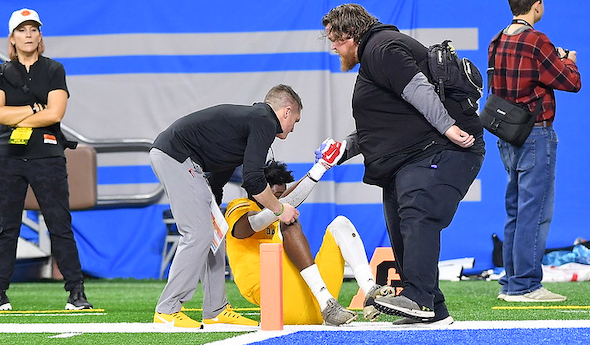
· Athletic trainer: Athletic trainers take care of athletes from prevention through rehabilitation. In collaboration with a physician, these professionals offer insights that help minimize risk and prevent injuries. They evaluate athletes and provide immediate care and treatment, sometimes even on the sidelines. They also provide rehabilitation and reconditioning after an injury or illness.
· Exercise physiologist: Exercise physiologists study the effect of exercise on the muscular, cardiovascular, and sympathetic and parasympathetic nervous systems. They examine functional capacity and strength due to endurance training or strength training. These professionals may also test athletes for VO2max (your oxygen volume while training) and body composition (the ratio of fatty mass to lean mass).
· Physical medicine and rehab physician: These professionals treat a variety of medical conditions that affect the brain, spinal cord, nerves, bones, joints, ligaments, muscles and tendons. They take the whole body into account to pinpoint problems and enhance performance without surgery.
· Physical therapist: Physical therapists diagnose and treat individuals of all ages with conditions that limit their ability to move and perform daily activities.
Other Specialized Professionals Who Care for Athletes
In addition to the health care professionals described above, athletes may meet with a host of experts, including:
· Nurses and medical assistants
· Occupational therapists
· Cardiologists
· Neurologists
· Behavioral health specialists
· Dietitians
· Complementary medical practitioners, such as acupuncturists and chiropractors
None of these individuals are "fitness professionals," a term nearly anyone can use to describe a range of professional activities. Rather, these sports medicine experts are part of a comprehensive team that includes at least one physician. They are each licensed by the state to provide specialized care to athletes.
Personal trainers, on the other hand, focus on helping people find their way around the gym, hold them accountable to achieve their goals and help new exercisers and seasoned fitness enthusiasts stick to a workout regimen.
If you're an athlete, you need a team of health professionals who can provide comprehensive care to reach your highest potential.
Christina Eyers, Ed.D., AT, ATC, is the Director of Athletic Training & Community Outreach with Henry Ford Sports Medicine.
Want to learn more? Henry Ford Health System sports medicine experts are treating the whole athlete, in a whole new way. From nutrition to neurology, and from injury prevention to treatment of sports-related conditions, they can give your athlete a unique game plan.
Visit henryford.com/sports or call (313) 972-4216 for an appointment within 24 business hours.