

Century of School Sports: WISL Conference Continues to Inspire Aspiring Leaders
By
Geoff Kimmerly
MHSAA.com senior editor
February 4, 2025
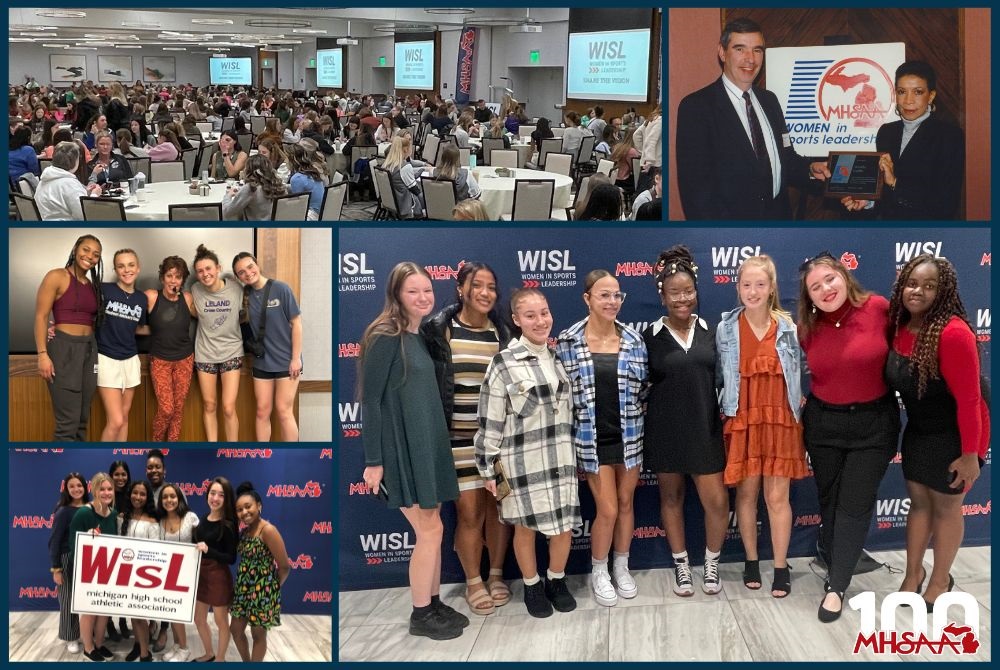
There has long been a mighty sense of pride at the MHSAA for its Women In Sports Leadership Conference – which remains the nation’s first, largest and longest-serving event promoting the roles of females in athletics.
The event has continued to grow tremendously since the first group of 130 administrators, coaches, high school and college students assembled in Lansing in 1989. It’s easy to argue as well that the WISL Conference has become even more impactful over its 26 editions, the most recent beginning a year ago today with the theme “Share the Vision.”
Nearly 800 participants – mostly female high school student-athletes – attended last year’s two-day event, where they were able to engage in several of 36 workshops and learn from a group of 45 speakers with expertise in a wide variety of sports-related fields. The WISL Conference has welcomed Olympians, leaders in Michigan government and Hall of Fame coaches at all levels of athletics among several who have put their voices to the goals of encouraging women and growing their presence at all levels of sport.
Attracting women back to coaching and officiating was the mission of the first WISL Conference – percentages of both had fallen dramatically since the dawn of Title IX nearly two decades prior had led to rapid growth in athletic competitive opportunities for females at various levels. The first WISL events were organized by MHSAA assistant director Suzanne Martin, under the leadership as well of then-executive director Jack Roberts, until Martin retired in December 2002. Fun fact: The first Michigan legislative resolution recognizing Feb. 5 as Girls and Women In Sports Day statewide (in addition to nationally) was presented during the 1990 WISL Conference.
Kathy Vruggink Westdorp took over the WISL program upon joining the MHSAA staff as assistant director during the 2003-04 school year after more than two decades as a teacher, coach and administrator in the Grand Rapids area. Under her leadership, WISL has continued to build and thrive – it’s currently an every-other-year event, generally hosted during the first weekend in February although the 25th WISL took place during October 2022 as part of the culmination of the MHSAA’s year-long celebration of “Title IX at 50.” Topics covered still include coaching and teaching and learning leadership, but also sports nutrition and performance, empowerment and goal-setting, and several more areas of interest.
In 1990, the MHSAA also awarded its first of now 38 Women In Sports Leadership Awards, recognizing pioneers who have elevated athletics in Michigan as pioneers, advocates, voices and leaders, particularly at the interscholastic level. The 39th Women In Sports Leadership Award winner will be announced later this month.
Previous "Century of School Sports" Spotlights
Jan. 28: Michigan's National Impact Begins at NFHS' Start - Read
Jan. 21: Awards Celebrate Well-Rounded Educational Experience - Read
Jan. 14: Predecessors Laid Foundation for MHSAA's Formation - Read
Jan. 9: MHSAA Blazes Trail Into Cyberspace - Read
Dec. 31: State's Storytellers Share Winter Memories - Read
Dec. 17: MHSAA Over Time - Read
Dec. 10: On This Day, December 13, We Will Celebrate - Read
Dec. 3: MHSAA Work Guided by Representative Council - Read
Nov. 26: Finals Provide Future Pros Early Ford Field Glory - Read
Nov. 19: Connection at Heart of Coaches Advancement Program - Read
Nov. 12: Good Sports are Winners Then, Now & Always - Read
Nov. 5: MHSAA's Home Sweet Home - Read
Oct. 29: MHSAA Summits Draw Thousands to Promote Sportsmanship - Read
Oct. 23: Cross Country Finals Among MHSAA's Longest Running - Read
Oct. 15: State's Storytellers Share Fall Memories - Read
Oct. 8: Guided by 4 S's of Educational Athletics - Read
Oct. 1: Michigan Sends 10 to National Hall of Fame - Read
Sept. 25: MHSAA Record Books Filled with 1000s of Achievements - Read
Sept. 18: Why Does the MHSAA Have These Rules? - Read
Sept. 10: Special Medals, Patches to Commemorate Special Year - Read
Sept. 4: Fall to Finish with 50th Football Championships - Read
Aug. 28: Let the Celebration Begin - Read
(MHSAA file photos.)
Concussion Care: Signs & Symptoms to Watch
October 27, 2020

Henry Ford Health System
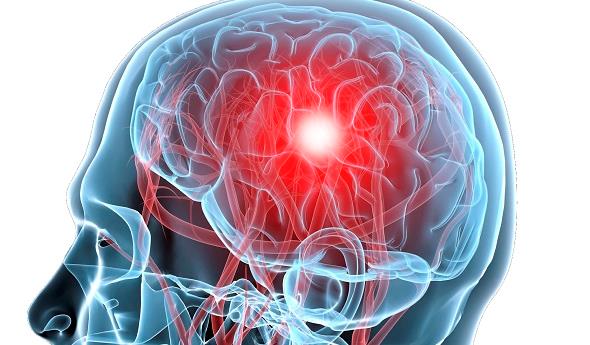
When you experience a blow to the head, knowing whether you've suffered a concussion isn't always clear cut.
Head injuries have a range of physical, psychological and intellectual effects — and only a small number of people lose consciousness.
"It's critical for parents, coaches, players and trainers to recognize the potential signs and symptoms of a concussion," says Jeffrey Kutcher, M.D., a sports neurologist who treats athletes at the Henry Ford Kutcher Clinic for Concussion and Sports Neurology. "The basic rule is that a concussion can affect any aspect of brain function."
Signs of Concussion
The Latin root of the word "concussion" means "to shake violently" — which makes sense. Concussions happen when there's a combination of movement and impact. So, any injury that involves a hit to the head — a fall, collision or hard hit by a heavy object — could cause one. So could a hit to the body that causes the head to move quickly.
"But every brain injury is different," Dr. Kutcher says. "Some symptoms show up right away while others develop gradually over days."
Here are common concussion symptoms to watch for — both immediately following a head injury and in the hours and days after:
Physical Concussion Symptoms
- Changes in sleep patterns
- Difficulty with balance
- Dizziness or lightheadedness
- Fatigue
- Headache
- Light sensitivity
- Nausea
- Numbness or tingling
- Sensitivity to sound
- Visual problems
- Vomiting
Emotional Concussion Symptoms
- Anxiety
- Depression
- Irritability
- Mood swings
Cognitive Concussion Symptoms
- Confusion
- Difficulty concentrating
- Feeling "slow" or "foggy"
- Memory problems
Diagnosing Concussion: Getting It Right
One reason concussions are frequently misdiagnosed is because they're assessed on the field or courtside during game play or practice. Coaches, trainers and parents often make lightning fast decisions about whether symptoms, such as headache, nausea and light sensitivity, are signs of concussion.
"Unfortunately, it’s more complicated than completing a concussion checklist. Everyone — and every concussion — is different. So, observers shouldn’t be diagnosing a head injury on the spot, but rather making a triage decision for safety. They should leave the diagnosis to the medical professionals," Dr. Kutcher says. In fact, those in-the-moment assessments are wrong about half of the time.
People should focus instead on getting immediate, emergency care for anyone who displays the following signs and symptoms right after a hit:
- Difficulty walking
- Weakness on one or both sides
- Not waking up
- Repeated vomiting
- Persistent confusion
- Seizures
- Unconsciousness
No matter how hard (or lightly) you think you've been hit, it's important to take head injury symptoms seriously. Even a seemingly minor blow could have a major impact. A complete evaluation by a medical professional will not only determine whether you have a concussion, it can also identify more serious, or even life-threatening, concerns.
"In every case, medical professionals are better equipped to assess the extent of the damage if you have a comprehensive baseline evaluation on file," Dr. Kutcher says. This thorough evaluation with a sports neurologist, including a complete family and neurological history, can act as a critical point of reference when trainers and medical professionals are trying to diagnose or manage a concussion.
Dr. Jeffrey Kutcher is a sports neurologist and the medical director of the Henry Ford Kutcher Clinic for Concussion and Sports Neurology.
Want to learn more? Henry Ford Health System sports medicine experts are treating the whole athlete, in a whole new way. From nutrition to neurology, and from injury prevention to treatment of sports-related conditions, they can give your athlete a unique game plan.
Visit henryford.com/sports or call (313) 972-4216 for an appointment within 24 business hours.