

Century of School Sports: WISL Conference Continues to Inspire Aspiring Leaders
By
Geoff Kimmerly
MHSAA.com senior editor
February 4, 2025
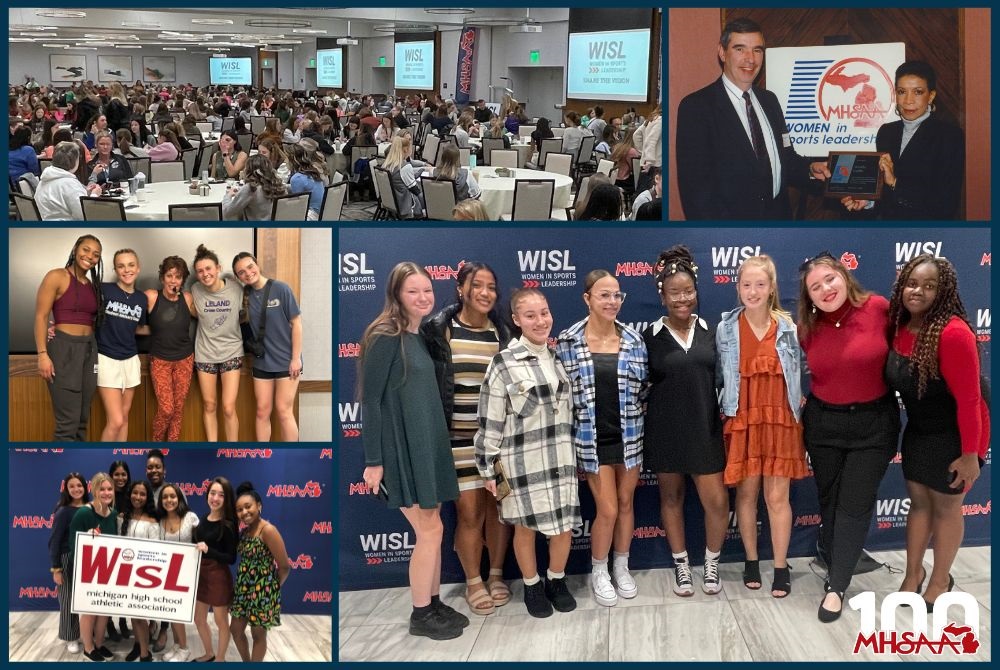
There has long been a mighty sense of pride at the MHSAA for its Women In Sports Leadership Conference – which remains the nation’s first, largest and longest-serving event promoting the roles of females in athletics.
The event has continued to grow tremendously since the first group of 130 administrators, coaches, high school and college students assembled in Lansing in 1989. It’s easy to argue as well that the WISL Conference has become even more impactful over its 26 editions, the most recent beginning a year ago today with the theme “Share the Vision.”
Nearly 800 participants – mostly female high school student-athletes – attended last year’s two-day event, where they were able to engage in several of 36 workshops and learn from a group of 45 speakers with expertise in a wide variety of sports-related fields. The WISL Conference has welcomed Olympians, leaders in Michigan government and Hall of Fame coaches at all levels of athletics among several who have put their voices to the goals of encouraging women and growing their presence at all levels of sport.
Attracting women back to coaching and officiating was the mission of the first WISL Conference – percentages of both had fallen dramatically since the dawn of Title IX nearly two decades prior had led to rapid growth in athletic competitive opportunities for females at various levels. The first WISL events were organized by MHSAA assistant director Suzanne Martin, under the leadership as well of then-executive director Jack Roberts, until Martin retired in December 2002. Fun fact: The first Michigan legislative resolution recognizing Feb. 5 as Girls and Women In Sports Day statewide (in addition to nationally) was presented during the 1990 WISL Conference.
Kathy Vruggink Westdorp took over the WISL program upon joining the MHSAA staff as assistant director during the 2003-04 school year after more than two decades as a teacher, coach and administrator in the Grand Rapids area. Under her leadership, WISL has continued to build and thrive – it’s currently an every-other-year event, generally hosted during the first weekend in February although the 25th WISL took place during October 2022 as part of the culmination of the MHSAA’s year-long celebration of “Title IX at 50.” Topics covered still include coaching and teaching and learning leadership, but also sports nutrition and performance, empowerment and goal-setting, and several more areas of interest.
In 1990, the MHSAA also awarded its first of now 38 Women In Sports Leadership Awards, recognizing pioneers who have elevated athletics in Michigan as pioneers, advocates, voices and leaders, particularly at the interscholastic level. The 39th Women In Sports Leadership Award winner will be announced later this month.
Previous "Century of School Sports" Spotlights
Jan. 28: Michigan's National Impact Begins at NFHS' Start - Read
Jan. 21: Awards Celebrate Well-Rounded Educational Experience - Read
Jan. 14: Predecessors Laid Foundation for MHSAA's Formation - Read
Jan. 9: MHSAA Blazes Trail Into Cyberspace - Read
Dec. 31: State's Storytellers Share Winter Memories - Read
Dec. 17: MHSAA Over Time - Read
Dec. 10: On This Day, December 13, We Will Celebrate - Read
Dec. 3: MHSAA Work Guided by Representative Council - Read
Nov. 26: Finals Provide Future Pros Early Ford Field Glory - Read
Nov. 19: Connection at Heart of Coaches Advancement Program - Read
Nov. 12: Good Sports are Winners Then, Now & Always - Read
Nov. 5: MHSAA's Home Sweet Home - Read
Oct. 29: MHSAA Summits Draw Thousands to Promote Sportsmanship - Read
Oct. 23: Cross Country Finals Among MHSAA's Longest Running - Read
Oct. 15: State's Storytellers Share Fall Memories - Read
Oct. 8: Guided by 4 S's of Educational Athletics - Read
Oct. 1: Michigan Sends 10 to National Hall of Fame - Read
Sept. 25: MHSAA Record Books Filled with 1000s of Achievements - Read
Sept. 18: Why Does the MHSAA Have These Rules? - Read
Sept. 10: Special Medals, Patches to Commemorate Special Year - Read
Sept. 4: Fall to Finish with 50th Football Championships - Read
Aug. 28: Let the Celebration Begin - Read
(MHSAA file photos.)
Choose the Right Sports Medicine Expert
July 7, 2020

By Christina Eyers, Ed.D., AT, ATC
Henry Ford Health System
If you're an athlete, chances are you'll require specialized care from a health professional during your career.
Confused about the differences between athletic trainers, sports medicine physicians and exercise physiologists, among other experts? You're not alone!
Each of these professionals has different levels of training, expertise and certifications, but the care they provide often overlaps. That's one reason why they often work together.
Sports Professionals Defined
Caring for athletes isn't always clear-cut. In fact, most athletes require a full team of professionals working in concert to stay at the top of their game. Yet confusion remains about which professionals you need to see for training, injury prevention, and recovery and treatment after an injury.
Each type of professional has its own set of experience, training and certifications. Here’s how they measure up:
· Sports medicine doctor: Sports medicine physicians are typically trained in orthopedic surgery, primary care or emergency medicine. These professionals have medical degrees as well as specialized training in sports medicine, including the prevention and treatment of injury. In addition to caring for conditions ranging from concussion to head colds, sports medicine physicians also focus on helping people return to sports safely and effectively after illness or injury.
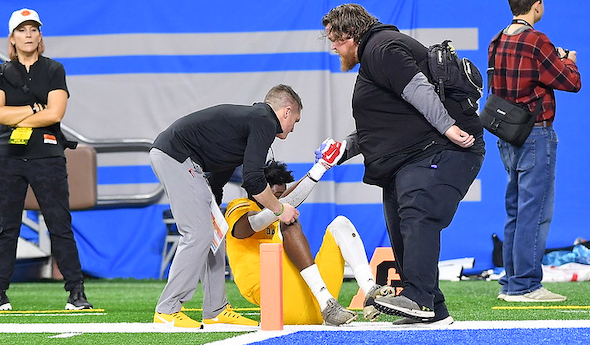
· Athletic trainer: Athletic trainers take care of athletes from prevention through rehabilitation. In collaboration with a physician, these professionals offer insights that help minimize risk and prevent injuries. They evaluate athletes and provide immediate care and treatment, sometimes even on the sidelines. They also provide rehabilitation and reconditioning after an injury or illness.
· Exercise physiologist: Exercise physiologists study the effect of exercise on the muscular, cardiovascular, and sympathetic and parasympathetic nervous systems. They examine functional capacity and strength due to endurance training or strength training. These professionals may also test athletes for VO2max (your oxygen volume while training) and body composition (the ratio of fatty mass to lean mass).
· Physical medicine and rehab physician: These professionals treat a variety of medical conditions that affect the brain, spinal cord, nerves, bones, joints, ligaments, muscles and tendons. They take the whole body into account to pinpoint problems and enhance performance without surgery.
· Physical therapist: Physical therapists diagnose and treat individuals of all ages with conditions that limit their ability to move and perform daily activities.
Other Specialized Professionals Who Care for Athletes
In addition to the health care professionals described above, athletes may meet with a host of experts, including:
· Nurses and medical assistants
· Occupational therapists
· Cardiologists
· Neurologists
· Behavioral health specialists
· Dietitians
· Complementary medical practitioners, such as acupuncturists and chiropractors
None of these individuals are "fitness professionals," a term nearly anyone can use to describe a range of professional activities. Rather, these sports medicine experts are part of a comprehensive team that includes at least one physician. They are each licensed by the state to provide specialized care to athletes.
Personal trainers, on the other hand, focus on helping people find their way around the gym, hold them accountable to achieve their goals and help new exercisers and seasoned fitness enthusiasts stick to a workout regimen.
If you're an athlete, you need a team of health professionals who can provide comprehensive care to reach your highest potential.
Christina Eyers, Ed.D., AT, ATC, is the Director of Athletic Training & Community Outreach with Henry Ford Sports Medicine.
Want to learn more? Henry Ford Health System sports medicine experts are treating the whole athlete, in a whole new way. From nutrition to neurology, and from injury prevention to treatment of sports-related conditions, they can give your athlete a unique game plan.
Visit henryford.com/sports or call (313) 972-4216 for an appointment within 24 business hours.