

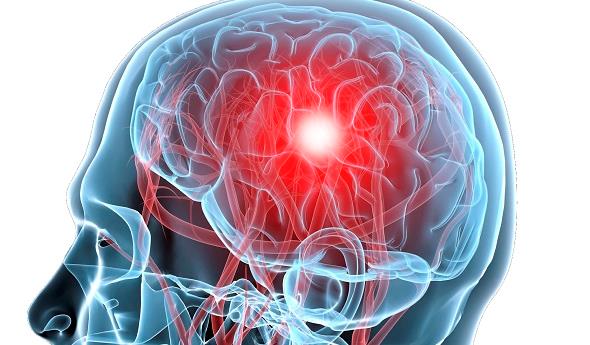
Concussion Care: Signs & Symptoms to Watch
October 27, 2020

Henry Ford Health System
When you experience a blow to the head, knowing whether you've suffered a concussion isn't always clear cut.
Head injuries have a range of physical, psychological and intellectual effects — and only a small number of people lose consciousness.
"It's critical for parents, coaches, players and trainers to recognize the potential signs and symptoms of a concussion," says Jeffrey Kutcher, M.D., a sports neurologist who treats athletes at the Henry Ford Kutcher Clinic for Concussion and Sports Neurology. "The basic rule is that a concussion can affect any aspect of brain function."
Signs of Concussion
The Latin root of the word "concussion" means "to shake violently" — which makes sense. Concussions happen when there's a combination of movement and impact. So, any injury that involves a hit to the head — a fall, collision or hard hit by a heavy object — could cause one. So could a hit to the body that causes the head to move quickly.
"But every brain injury is different," Dr. Kutcher says. "Some symptoms show up right away while others develop gradually over days."
Here are common concussion symptoms to watch for — both immediately following a head injury and in the hours and days after:
Physical Concussion Symptoms
- Changes in sleep patterns
- Difficulty with balance
- Dizziness or lightheadedness
- Fatigue
- Headache
- Light sensitivity
- Nausea
- Numbness or tingling
- Sensitivity to sound
- Visual problems
- Vomiting
Emotional Concussion Symptoms
- Anxiety
- Depression
- Irritability
- Mood swings
Cognitive Concussion Symptoms
- Confusion
- Difficulty concentrating
- Feeling "slow" or "foggy"
- Memory problems
Diagnosing Concussion: Getting It Right
One reason concussions are frequently misdiagnosed is because they're assessed on the field or courtside during game play or practice. Coaches, trainers and parents often make lightning fast decisions about whether symptoms, such as headache, nausea and light sensitivity, are signs of concussion.
"Unfortunately, it’s more complicated than completing a concussion checklist. Everyone — and every concussion — is different. So, observers shouldn’t be diagnosing a head injury on the spot, but rather making a triage decision for safety. They should leave the diagnosis to the medical professionals," Dr. Kutcher says. In fact, those in-the-moment assessments are wrong about half of the time.
People should focus instead on getting immediate, emergency care for anyone who displays the following signs and symptoms right after a hit:
- Difficulty walking
- Weakness on one or both sides
- Not waking up
- Repeated vomiting
- Persistent confusion
- Seizures
- Unconsciousness
No matter how hard (or lightly) you think you've been hit, it's important to take head injury symptoms seriously. Even a seemingly minor blow could have a major impact. A complete evaluation by a medical professional will not only determine whether you have a concussion, it can also identify more serious, or even life-threatening, concerns.
"In every case, medical professionals are better equipped to assess the extent of the damage if you have a comprehensive baseline evaluation on file," Dr. Kutcher says. This thorough evaluation with a sports neurologist, including a complete family and neurological history, can act as a critical point of reference when trainers and medical professionals are trying to diagnose or manage a concussion.
Dr. Jeffrey Kutcher is a sports neurologist and the medical director of the Henry Ford Kutcher Clinic for Concussion and Sports Neurology.
Want to learn more? Henry Ford Health System sports medicine experts are treating the whole athlete, in a whole new way. From nutrition to neurology, and from injury prevention to treatment of sports-related conditions, they can give your athlete a unique game plan.
Visit henryford.com/sports or call (313) 972-4216 for an appointment within 24 business hours.

NFHS Voice: Leadership Continues at NADC
December 17, 2019
By Karissa Niehoff
NFHS Executive Director
In the history of high school sports, the early 1970s will always be remembered first and foremost for the passage of Title IX in 1972 – legislation that sparked the growth of girls sports in the United States.
A year earlier, however, the National Federation of State High School Associations made a decision that has impacted education-based athletics in an equally significant manner.
Recognizing the future growth of the high school athletic directors profession, the NFHS started the National Conference of High School Directors of Athletics in February 1971. A total of 355 athletics directors attended the first conference in St. Louis, followed by another 257 at the December 1971 gathering in Columbus, Ohio.
The national conference for high school athletic directors has been held annually in December since that time, and on Friday, December 13, at the Gaylord National Resort and Convention Center in National Harbor, Maryland, more than 2,100 athletic administrators were scheduled to convene for the 50th National Athletic Directors Conference (NADC).
The growth of the high school athletic administration profession as well as the NADC was additionally fueled in 1977 when the NFHS formed the National Interscholastic Athletic Administrators Association (NIAAA), a national professional organization for high school athletic directors. Membership in the NIAAA expanded rapidly and, in 2006, it became its own organization. Since that time, the NFHS – the national leader and advocate for high school athletics and performing arts – and the NIAAA have worked together annually to sponsor the NADC.
Without a doubt, athletic directors are the leaders of education-based athletics in our nation’s high schools. They have an endless list of responsibilities and set the tone for the overall success of a school’s athletics and/or activities program.
In recent releases of “The NFHS Voice,” we have noted the significant role that athletic directors play with regard to the educational direction of a school’s athletic program, as well as ensuring that security measures are in place for after-school events.
Unlike national conferences for some groups, professional development is among the main reasons that athletic directors attend this annual conference. They know that they are entrusted with key leadership roles and want to provide a safe and fun experience for student-athletes in their schools.
This year, 40 workshops were offered on key issues related to athletic directors' tasks, including coaching coaches, social media, effective communication, managing fan behavior, event management, generating new sources of revenue, creating positive parent culture and promoting multi-sport participation.
In addition, the NIAAA offered 52 Leadership Training classes, on topics from legal issues, to marketing and promotions, to managing fields and equipment, to working with students with disabilities.
Very simply, high school athletic directors are the key leaders in our nation’s education-based athletic programs. Local schools depend on these individuals to lead their athletics programs. Our member state high school associations depend on these men and women to help lead state events and initiatives. And the NFHS and NIAAA look to athletic administrators for leadership at the national level. We appreciate the tremendous service they provide our nation’s young people!
Dr. Karissa L. Niehoff is in her second year as executive director of the National Federation of State High School Associations (NFHS) in Indianapolis, Indiana. She is the first female to head the national leadership organization for high school athletics and performing arts activities and the sixth full-time executive director of the NFHS, which celebrated its 100th year of service during the 2018-19 school year. She previously was executive director of the Connecticut Association of Schools-Connecticut Interscholastic Athletic Conference for seven years.