

Flashback 100: The Other Mr. Forsythe in Michigan School Sports

December 13, 2024

(The following is a reposted 2017 blog entry by retired MHSAA Executive Director Jack Roberts)

The modern world is quick to dismiss pioneers who paved our way, but it would be wrong to diminish the accomplishments of those who gave form and function to school-sponsored sports in Michigan.

It was a time when travel was arduous and communications were slow. A time when the fundamentals of sports we take for granted today were being determined. A time when the basic rules of competition and eligibility we have today were being developed.

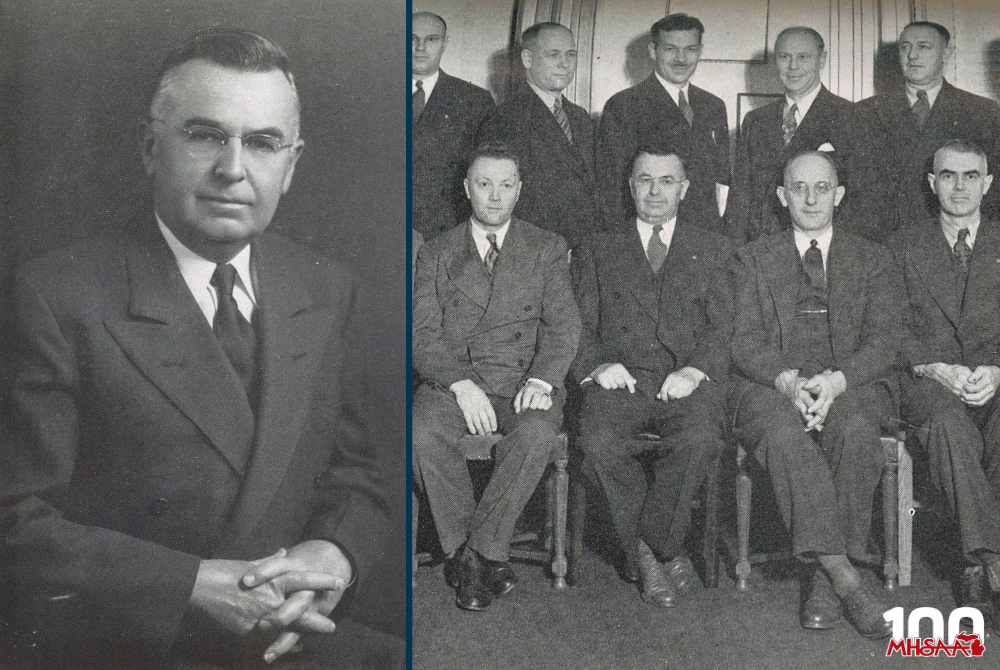
No single person has done more than L.L. Forsythe to shape school sports in Michigan, and the nation. This is Lewis L. Forsythe, not Charles E. Forsythe, the first and longest-serving executive director of the Michigan High School Athletic Association.

In 1918-19 and again in 1923-24, L.L. Forsythe served as president of the MHSAA’s predecessor organization, the Michigan Interscholastic Athletic Association, which operated from 1910 to 1924. He served on its board of control from 1921 to 1924.

When the MIAA gave way to the MHSAA in 1924, L.L. Forsythe was elected president of its Representative Council, and he served unpaid in that position for 18 consecutive years (1924 to 1942).

L.L. Forsythe served on the Executive Committee of the newly forming National Federation of State High School Associations from 1922 to 1940, and was the young national organization’s vice president for 15 of those 18 years.

During these years, the MHSAA commenced state tournaments in seven sports and the National Federation ended national high school tournaments in all sports. Playing rules moved from a local hit-and-miss process to a national system that emphasized standardization and safety. Much that we do routinely now was a matter of first impression then.

Previous "Flashback 100" Features

Dec. 6: Coleman's Legendary Heroics Carry Harrison Through Repeat - Read
Nov. 29: Harbaugh Brothers' Football Roots Planted in Part at Pioneer - Read
Nov. 22: 8-Player Football Finals Right at Home at Superior Dome - Read
Nov. 15:
Leland Career Helps Set Stage for Glass' International Stardom - Read
Nov. 8: Future Baseball Pro Led Escanaba's Legendary Football Title Run - Read
Nov. 1: Michigan High School Baseball Trio Provide World Series Voices - Read
Oct. 25: Before Leading Free World, Ford Starred for Champion GR South - Read
Oct. 18: Mercy Links Legend Becomes World Golf Hall of Famer - Read
Oct. 11: Fisher Races to Finals Stardom on Way to U.S. Olympic First - Read
Oct. 4: Lalas Leaves High School Legacies on Ice & Pitch - Read
Sept. 27: Tamer's History-Making Run Starts in Dexter, Continues to Paris - Read
Sept. 20: 
Todd Martin’s Road to Greatness Starts at East Lansing - Read
Sept. 13: 
James Earl Jones, Dickson High Hoops to Hollywood Legend - Read
Sept. 6: 
Pioneers' Unstoppable Streak Stretches 9 Seasons - Read
Aug. 30: Detroit dePorres Rushes to 1995 Class CC Football Championship - Read 

PHOTOS At left is L.L. Forsythe; at right, seated second from left, is L.L. Forsythe with members of the Representative Council in 1939. (MHSAA file photos.)
5 Concussion Myths Debunked

February 28, 2020

Henry Ford Health System


Awareness about the dangers of concussions is at an all-time high. In response, athletic organizations — from Pop Warner football (a nonprofit program for kids 5 to 16) to USA Hockey — have safe-play protocols in place. But misconceptions about injury — prevention, management and return to play — are still all too common.

"It's great that parents, coaches and athletes are focused on the potential for concussions, but they also need to be aware of the complexities involved in evaluating, diagnosing and managing concussion," says Jeffrey Kutcher, M.D., a sports neurologist who treats athletes at the Henry Ford Kutcher Clinic for Concussion and Sports Neurology.

The best way to get the knowledge you need? Learn how to separate fact from fiction.


Separating Concussion Fact From Fiction

Here’s the truth behind five common concussion myths:

Myth #1: Concussions are only caused by blows to the head.

Concussions happen in response to force. While they often result from a blow to the head, they can also occur after a hit to the neck, shoulders or anywhere else on the body. To cause brain injury, the force of the impact only needs to cause the head to move rapidly back and forth (think whiplash from a car crash or a spill down the stairs).

Myth #2: Concussions always involve a loss of consciousness.

A very small percentage of all concussions, 10 percent or less, result in a loss of consciousness. For the remaining injuries, parents, coaches and medical providers should watch for additional symptoms such as:

· Confusion
· Balance problems
· Slurred speech
· Physical complaints including headache, nausea and vomiting.

Myth #3: You should keep a person awake overnight after a concussion has occurred.

It's important to observe and interact with a recently concussed person for the first few hours to recognize the potential signs of a more serious injury. However, if they are interacting normally after four hours, it’s okay to let them sleep. If you have any doubts or questions, always err on the side of caution and seek medical attention.

Myth #4: After a concussion, kids should avoid digital media until they feel better.

Unless digital activities or screen time significantly worsen symptoms, there's no reason to avoid them. "You shouldn't force people who have suffered a concussion to rest too much — or deprive them of sensory input — if they are comfortable engaging in activity," Dr. Kutcher says. What’s more, taking away activities that bring a person joy or keep them socially connected could end up prolonging their recovery by creating additional symptoms.

Myth #5: All physical activity should be avoided after a concussion.

It’s important to rest for the first two to three days after a concussion. However, you need to be careful not to rest too much or avoid all activity for too long.

Engaging in physical, mental and social activities can be beneficial. But knowing how much to do and when to take it easy can be difficult. If you have any questions, consult a sports neurologist for specific recommendations.

Ground Rules for Concussion Prevention and Management

When it comes to preventing concussion, common sense offers the greatest impact, Dr. Kutcher notes. He recommends starting with these four tenets:

  • Whenever possible, limit the amount of contact in practices and games.
  • Wear proper fitting and certified helmets or other head protection whenever appropriate.
  • Spread contact drills out over time as much as possible.
  • Practice good technique and play by the rules.

Athletes — especially those who play contact sports — should undergo an annual neurological evaluation that includes a comprehensive, focused neurological history and examination. This information provides a critical point of reference for medical professionals.

Knowing the truth about concussions — including what to watch for and what to do if one occurs — is really the best game plan.

Dr. Jeffrey Kutcher is a sports neurologist at the Henry Ford Concussion and Sports Neurology Clinic and the global director of the Kutcher Clinic.

Want to learn more? Henry Ford Health System sports medicine experts are treating the whole athlete, in a whole new way. From nutrition to neurology, and from injury prevention to treatment of sports-related conditions, they can give your athlete a unique game plan.

Visit henryford.com/sports or call (313) 972-4216 for an appointment within 24 business hours.