

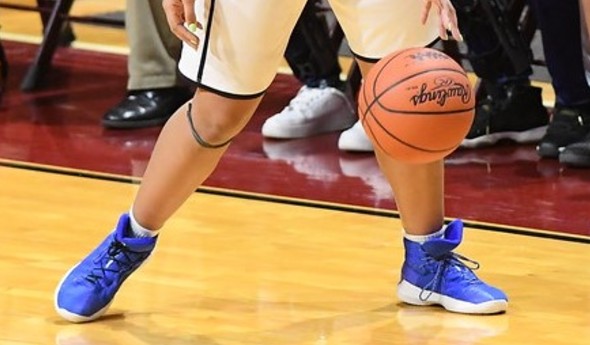
Navigating Twists, Turns Of Ankle Sprains
November 30, 2020

Henry Ford Health System
Oh, how the ankle turns! If you’ve had a misstep or wrong turn result in a sprained ankle, you know how painful this injury can be. Henry Ford podiatric surgeon Paul Di Liddo, DPM, discusses ankle sprains and treatments.
Ankle Injury 101
From risk factors to treatments (and nearly everything in between), here’s what to know — and do — about ankle sprains.
Sprained Ankles Are Painfully Common
In fact, they’re among the most frequent injuries in the United States, with up to 25,000 people per day spraining their ankles. Although often associated with sports, ankle sprains can happen to anyone, anywhere. “I see ankle sprains from tripping over curbs, stepping in holes in a yard or simply walking,” says Dr. Di Liddo. “Ankle sprains — like accidents — happen.”
Ankle Sprains Injure Ligaments
“Ankle sprains occur when the ankle suddenly and forcefully twists or rolls past a point that the ankle ligaments can tolerate,” remarks Dr. Di Liddo. “The ankle ligaments will stretch or tear, either partially or completely.” An ankle can twist, turn or roll during a fall, jump or change of direction, while walking on uneven ground and more.
A Weak Ankle Is A Vulnerable Ankle
Most sprained ankles heal without long-term concern. In some cases, however, ligaments may not fully heal, resulting in a weak or unstable ankle. “A weak or unstable ankle can make an individual more susceptible to repeated ankle sprains,” explains Dr. Di Liddo.
High Arches Can Be Risky Business
People who have high-arched feet are more at risk of rolling — and therefore spraining — their ankles. So are people who have “loose joints,” because the ankle can overstretch with a seemingly minor twist. People who are at-risk for ankle sprains should take extra precautions when playing sports or performing other activities.
Some Sprains Can Be Treated At Home — Emphasis On Some
How you treat a sprained ankle depends on the severity of the injury. Minor sprains can be treated at home with the RICE method. The RICE method include:
- Rest by avoiding use of the injured ankle
- Ice applied to the ankle (without touching the skin) for no more than 20 minutes every three to four hours
- Compression with an elastic bandage
- Elevation above the heart
Ice, compress and elevate your ankle for the first few days. Rest and refrain from sports until ankle pain and swelling have subsided.
At-home treatments aren’t right for everyone — or every ankle injury. “A swollen ankle is typical if you have experienced a sprain,” says Dr. Di Liddo. “However, if you have severe ankle swelling, are in extreme pain or notice an odd ankle appearance, seek medical attention.” This is also true if you can’t walk more than a few steps or have limited ankle mobility. A foot and ankle specialist can diagnose your injury and begin treatment.
Ankle Treatments Abound
Ankle sprain treatments are designed to decrease pain and swelling, while protecting the ligaments from further injury. Treatments include wearing an ankle brace, walking boot or cast. Physical therapy to strengthen the ankle and maintain range of motion may also be incorporated after the ligaments have started to heal.
“Of course, for more severe injuries, a thorough physical exam and X-rays are necessary,” says Dr. Di Liddo. “This helps ensure that there is no other underlying injury, such as a fractured ankle or Achilles tendon rupture.”
Healing Times Vary
The recovery time for a sprained ankle depends on the severity of the injury. Sprains with minimal ligament stretching and no tear require one to three weeks. Partially torn ankle ligaments may take up to six to eight weeks to heal. A fully torn ligament can take several months to fully heal.
What To Do When Ankle Problems Persist
For people who continue to experience ankle instability, there are a host of options. “Physical therapy is the first step — but not the only one,” says Dr. Di Liddo. “If physical therapy has not been beneficial, we can discuss surgical approaches.”
Surgical options include:
- Ligament repair or reinforcement via an outpatient procedure
- Osteotomy, which is surgical cutting of bone, to lower arches when ankle instability is caused by high arches
For those with frequent ankle sprains or instability, a medical assessment is necessary and may include:
- Physical exam
- X-rays to assess bones and joints
- MRI to evaluate ankle ligaments
With this information in mind, you can prevent — or address — the twists and turns of ankle sprains.
Want to learn more? Henry Ford Health System sports medicine experts are treating the whole athlete, in a whole new way. From nutrition to neurology, and from injury prevention to treatment of sports-related conditions, they can give your athlete a unique game plan.
Visit henryford.com/sports or call (313) 972-4216 for an appointment within 24 business hours.

This Week In High School Sports: 1/17/20
January 16, 2020
This week’s show highlights work to promote and protect youth football, awards Game Balls to Pickford basketball's Darcy Bennin and Cadillac basketball's Levi Klotz, explains an addition to the wrestling tie-breaker criteria and discusses the importance of amateurism and commitment to educational athletics.
The 5-minute program, powered by MI Student Aid, leads off each week with feature stories from around the state from the MHSAA’s Second Half or network affiliates. "Be The Referee," a 60-second look at the fine art of officiating, comes in the middle of the show and is followed by a closing MHSAA "Perspective."
Listen to this week's show by Clicking Here.
Past editions
Jan. 10: Livonia Stevenson hockey's Seth Lause, multi-media and social media impacts - Listen
Dec. 27: Mona Shores "Sailor Nation" life-saving success - Listen
Dec. 20: Battle of the Fans IX, details on purchasing Finals broadcasts - Listen
Dec. 13: Port Huron United hockey, what matters most in high school sports - Listen
Dec. 6: Highlights from 2019 11-Player Football Finals, instant replay in review - Listen
Nov. 29: Highlights from 2019 8-Player Football, Girls Volleyball and Girls Swimming & Diving Finals - Listen
Nov. 22: Ida volleyball record-setter Taylor Wegener, new Football Finals video review - Listen
Nov. 15: Reading lineman Nick Affholter, coaches as leaders in sportsmanship - Listen
Nov. 8: Lower Peninsula Cross Country and Boys Soccer Finals highlights - Listen
Nov. 1: Muskegon Orchard View football, bolstered MHSAA broadcast schedule - Listen
Oct. 25: Grand Rapids NorthPointe Christian girls golf, MHSAA Football Playoff selection - Listen
Oct. 18: Mendon volleyball's title drive, recognition for longtime announcer Erik O. Furseth - Listen
Oct. 11: Negaunee cross country's Emily Paupore, MHSAA mental health awareness efforts - Listen
Oct. 4: South Lyon soccer's Josh Mason, improving youth football - Listen
Sept: 27: Utica Eisenhower golfer Ariel Chang, adult fan behavior - Listen
Sept: 20: Pinckney football inspiration, decisions made at the local level - Listen
Sept. 13: Muskegon's offensive line, soccer substitution rule change - Listen
Sept. 6: Jenison girls golf's inspiration, new football practice contact restrictions - Listen
Aug. 30: St. Johns quarterback-now-coach Andy Schmitt, benefits of a multi-sport experience - Listen