

NFHS Voice: Thank You to All Coaches
January 29, 2021
By Karissa Niehoff
NFHS Executive Director
Earlier this week, the NFHS recognized more than 700 individuals for their efforts as high school coaches during the 2019-20 school year, including 23 as National Coaches of the Year.
The accomplishments of the national recipients are extraordinary, but comments about their roles as education-based coaches are even more telling as to why they were selected.
Mary Beth Bourgoin, field hockey coach at Winslow High School in Maine, who, although she has won 173 games, said, in an article in the Portland Press-Herald, “It’s not about winning and losing. It’s about relationships and having fun.”
Donna Moir has won three state championships as girls basketball coach at Sacred Heart Academy in Louisville, Kentucky, but is known more for her sportsmanship, humility and kindness.
Jerry Petitgoue, basketball coach at Cuba City (Wisconsin) High School, who has won 963 games in 53 years, led his team to an unblemished 25-0 record before the pandemic cancelled the state tournament.
In an article for SWNew4u.com, Petitgoue said, “I’m very proud to receive this recognition for Cuba City High School and the community. I’m happy it comes during these trying times. Every little positive thing is uplifting these days.”
Mary Jo Truesdale, softball coach at Sheldon High School in Sacramento, California, has won 759 games and eight California Interscholastic Federation-Sac Joaquin Section championships, but was unable to coach her team last spring due to the pandemic.
“I worry about the well-being of my players, especially the seniors who don’t have a next season to play in high school,” said Truesdale in an article in the Sacramento Bee. “We know there are more things going on in life that are much bigger than softball, and that’s what we’re all learning.”
Ron Murphy, baseball coach at Rio Rancho (New Mexico) High School, is second all-time in his state with 567 victories but was only able to lead his team to a few wins last spring before the coronavirus shut down the program and ended hopes for a state tournament.
Despite his own success, Murphy was more focused on his players in a recent article in the Albuquerque Journal, noting that, “The thing that gets me most excited about this award is that it brings national attention to Rio Rancho High School baseball.”
Doug Hislop, wrestling coach at Imbler (Oregon) High School, has coached for 50 years and remains active at 73 years of age, continuing to teach kids lessons on and off the mat.
David Halligan, soccer coach at Falmouth (Maine) High School, has led his teams to 12 state titles. In an article in the Portland Press Herald, Halligan said, “I’m proud that we’ve had a lot of good players and good programs for a lot of years. I find a lot of joy in coaching at the high school level. I love seeing how kids develop from freshmen to seniors and how they grow as people.”
These are but a few of the individuals selected for national honors in 2019-20 – all of whom have impacted student-athletes in positive ways for decades.
When it comes to honoring coaches for the 2020-21 school year, we should give a shout-out to every individual involved in high school education-based athletics for their tremendous efforts leading programs through the pandemic. Next to frontline health-care workers, there is no group of individuals to whom we should be more indebted than high school coaches.
Prior to the pandemic, a high school coach’s job was already a next-to-impossible 24-7 mission. In addition to preparing for the daily “Xs and Os,” interscholastic coaches spend countless hours in mentorship capacities with student-athletes off the field or court, answer tough questions from parents, teach classes during the school day and handle a number of never-ending, always-changing daily tasks.
This year, coaches are faced with other tasks related to COVID-19, which, in some cases, involve keeping team members connected and motivated in a virtual setting.
There is pressure on coaches to maintain protocols related to the pandemic and stay on course so the games can continue. The additional daily checklist is endless: sanitize equipment, remind students to wear masks and maintain social distancing, temperature and wellness checks with students, follow an endless list of protocols if a student tests positive, and the list goes on and on.
The tasks of high school coaches seem larger than life this year, and these men and women deserve our utmost respect and appreciation. In addition to parents, and perhaps in lieu of parents in some cases, high school coaches are helping student-athletes survive the pandemic and maintain a healthy outlook on life.
We salute this year’s award recipients – and all high school coaches – for their commitment to keeping our country’s future leaders – high school students – on track during one of the most trying years in our nation’s history.
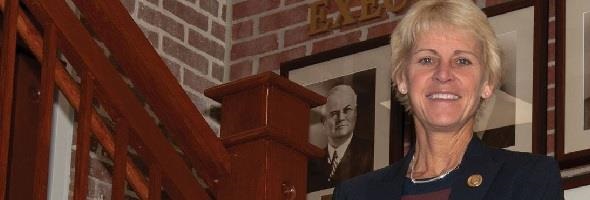
Dr. Karissa L. Niehoff is starting her third year as executive director of the National Federation of State High School Associations (NFHS) in Indianapolis, Indiana. She is the first female to head the national leadership organization for high school athletics and performing arts activities and the sixth full-time executive director of the NFHS, which celebrated its 100th year of service during the 2018-19 school year. She previously was executive director of the Connecticut Association of Schools-Connecticut Interscholastic Athletic Conference for seven years.
This Week in High School Sports: 2/19/26
By
Jon Ross
MHSAA Director of Broadcast Properties
February 19, 2026
This week's edition recaps Boyne City's Exemplary Program Award, presents Game Balls to standouts in bowling and basketball, and details the upcoming MHSAA basketball tournament schedules.
 The 5-minute program each week includes feature stories from MHSAA.com or network affiliates, along with "Be the Referee," a 60-second look at the fine art of officiating.
"This Week in High School Sports" is powered by MI Student Aid, a division within the Department of Lifelong Education, Advancement, and Potential (MiLEAP).
Listen to this week's show by Clicking Here.
Previous 2025-26 editions
Feb. 12: MHSAA connections to this year's Winter Olympics & Super Bowl - Listen
Feb. 5: MHSAA personal branding activities rule, Bear Lake's Harless twins - Listen
Jan. 29: Women in Sports Leadership Conference, WISL Award winner Anika McEvans - Listen
Jan. 22: Multi-sport participation, MHSAA/Farm Bureau Insurance Scholar-Athlete Awards - Listen
Jan. 15: Genesee's Averie Zinn & Mio's Mia McGregor, MHSAA Winter Finals schedule - Listen
Jan. 8: 2024-25 MHSAA Tournament attendance, tribute to Vic Michaels - Listen
Dec. 11: MHSAA 2024-25 participation's national ranking, 2026 Wrestling Tournament - Listen
Dec. 4: 11-Player Football Finals review - Listen
Nov. 26: Girls Volleyball, 8-Player Football, Lower Peninsula Girls Swimming & Diving Finals review - Listen
Nov. 20: NFHS Network championship schedule, Sportsmanship Summits - Listen
Nov. 13: Performance of the Week, Shelby football - Listen
Nov. 6: Lower Peninsula Cross Country Finals, Boys Soccer Finals review - Listen
Oct. 30: Mendon football's Owen Gorham, MHSAA Girls Volleyball Tournament primer - Listen
Oct. 23: Lower Peninsula Girls Golf Finals review, LP Boys Tennis Finals - Listen
Oct. 16: MHSAA Football Playoff selection, Field Hockey Finals week primer - Listen
Oct. 9: Upper Peninsula Girls Tennis Finals review, 2025 Sportsmanship Summits - Listen
Oct. 2: 2026 MHSAA/Farm Bureau Insurance Scholar-Athlete Awards, Boys Soccer Tournament - Listen
Sept. 25: Saline's record-approaching performance, SAC sportsmanship statement - Listen
Sept. 18: Athletic director training, "Block Party" volleyball report - Listen
Sept. 11: Football coaching legend Al Fracassa, MHSAA Student Advisory Council - Listen
Sept. 4: MHSAA participation rising, Harbor Springs soccer's Henry Juneau - Listen
Aug. 28: Field hockey's first season, changes to Football Playoffs, Tennis Finals - Listen