

Past MHSAA standouts to Compete with World's Elite at Winter Olympics
By
Jon Ross
MHSAA Director of Broadcast Properties
January 29, 2026
The XXV Winter Olympic Games start Friday, Feb. 6 with games taking place in Milan and Cortina d’Ampezzo, Italy. Ninety-three countries are sending more than a combined 3,500 athletes to compete for 195 medals, with a handful of former MHSAA athletes hoping to land on the podium.
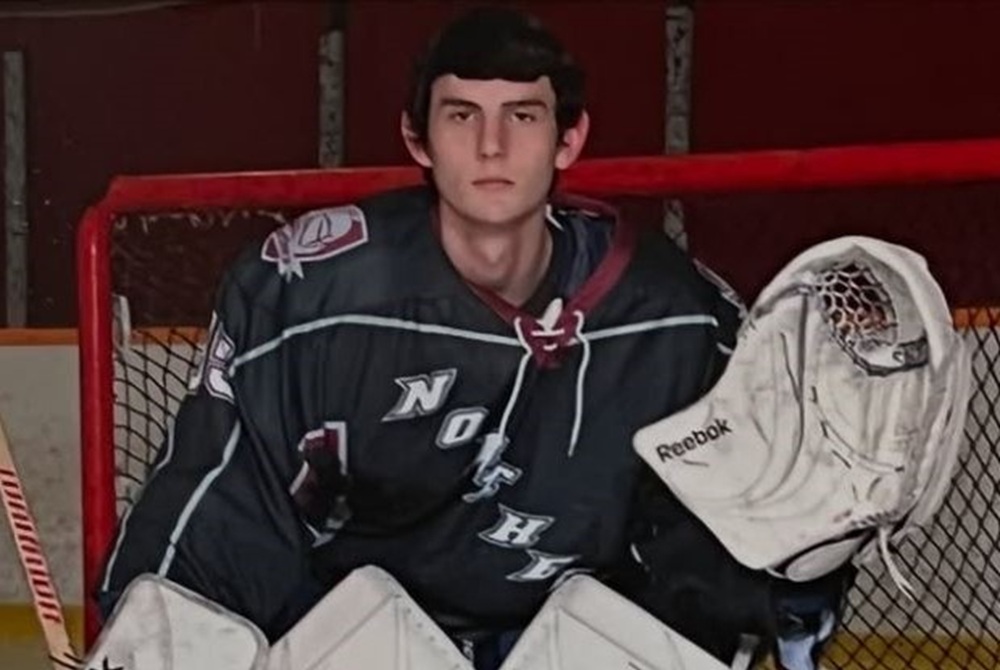
The Team USA men’s ice hockey team will be backstopped by Connor Hellebuyck, a three-time Vezina Award winner as the NHL’s top goalie after playing at Walled Lake Northern and graduating in 2011. Joining him on the ice will current Detroit Red Wing Dylan Larkin and Columbus Blue Jacket Zach Werenski. Larkin played soccer and golf at Waterford Mott before going to play hockey at the University of Michigan and in the NHL. Werenski played on the JV boys lacrosse team for one season at Grosse Pointe North.
 The women’s ice hockey team features 2014 North Farmington grad Megan Keller – who played softball and basketball while in high school, in addition to travel hockey.
Nick Baumgartner will be participating in his fourth Winter Olympiad. He qualified in snowboard cross in 2010, 2014 and won Olympic gold in 2022. The 2000 graduate of West Iron County High School played football, wrestled, and ran track.
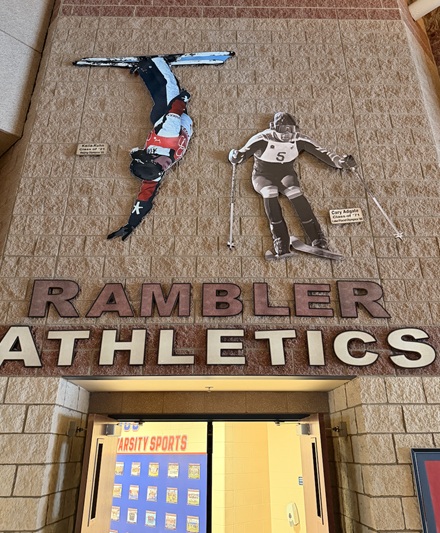
Boyne City graduate Kaila Kuhn (2021) is headed to her second Olympics. She finished eighth in freestyle ski aerials in Beijing in 2022 and is looking to improve on that this year. She ran track her senior year at Boyne City. Her father, Chris, coached the ski program at Boyne City from 2017-2025, and her older brother Quinton skied for the Ramblers.
Figure skater Emilea Zingas, a 2020 graduate of Grosse Pointe South, played JV girls lacrosse while participating on the varsity figure skating team.
And finally, while they didn’t participate in MHSAA-sponsored sports, figure skater Evan Bates (Ann Arbor Huron 2007) was on the figure skating team and snowboarder Jake Vedder (Pinckney 2016) was on the school-sponsored snowboarding team.
PHOTOS (Top) Connor Hellebuyck poses for a photo while playing at Walled Lake Northern. (Middle) This tribute at Boyne City High School celebrates Olympians Kaila Kuhn, class of 2021, and Cary Adgate, class of 1971. Adgate was a two-time Olympian in alpine skiing, competing in 1976 and 1980. (Photos courtesy of the respective schools.)

NFHS Voice: 'New Normal' Sportsmanship
May 20, 2020
By Karissa Niehoff
NFHS Executive Director
The “new normal” is one of the many terms we hear repeatedly as the country begins its return to normal activities from the COVID-19 pandemic. Keeping six feet apart from other people, wearing a mask and frequent washing of hands are three of those important warnings.
And then there is the new “no-no” that cuts at the heart of high school sports – the handshake. Shaking hands has been a part of our culture for centuries and a mainstream of high school sports forever. It is hard to imagine high school sports without handshakes.
In addition to emotional displays among team members involving handshakes, high-fives and hugs, the handshake has been a way of demonstrating good sportsmanship toward the opponent.
In wrestling, for instance, shaking hands before a match is actually a part of the rules, which, of course, will have to be relaxed for the coming season. There are handshakes at the coin toss in football and before the opening jump ball in basketball.
After a hard-fought, back-and-forth tennis match, players meet at the net to shake hands – congratulating each other for their efforts. The actions are the same after golfers battle each other for 18 holes – removing the cap and shaking hands.
These age-old practices demonstrate respect for the opponent, and in the case of post-game handshakes, graciousness in victory or defeat.
The emotions in high school sports are often off the chart, with end-of-game celebrations by players, coaches and fans involving handshakes, high-fives and hugs. So, as the early phases of return to sports occur this fall, how do we meet social distance guidelines and continue to exhibit emotions and emphasize sportsmanship, which typically have involved touching between individuals?
While the social-distancing and no-contact guidelines are necessary – at least for the short term – to diminish the spread of the virus, they should not dampen the enthusiasm and emotion by everyone involved with high school sports. We hope these types of restrictions will be lifted at some point down the road, but for now, this is our “new normal.”
The absence of these time-honored ways to express respect for the opponent does not diminish the importance of displaying sportsmanship in high school sports. In fact, we believe concern for fairness and displays of kindness, respect and graciousness will be more pronounced once high school sports resume; however, the methods of sharing these feelings will be different.
Although perhaps not as endearing as a handshake, high-five or hug, there are other ways to express these feelings and emotions – for the opponent as well as teammates.
Some alternatives to consider are a slight bow with the palms pressed together, an air high-five, a smile and quick wave, a double-tap of the right hand across the heart and a wink with the thumbs up. Certainly, there are other possibilities – in fact, teams could develop their own methods for demonstrating sportsmanship to their opponents and celebrating big plays or victories with teammates. Through their resilience and great spirit, we look forward to how the millions of participants in high school sports and activities will accept this challenge.
There will be many concessions necessary to resume athletic competition, and shaking hands is one that must cease – at least for now. However, let’s view this change as an opportunity to find new ways to showcase sportsmanship in high school sports.
Dr. Karissa L. Niehoff is in her second year as executive director of the National Federation of State High School Associations (NFHS) in Indianapolis, Indiana. She is the first female to head the national leadership organization for high school athletics and performing arts activities and the sixth full-time executive director of the NFHS, which celebrated its 100th year of service during the 2018-19 school year. She previously was executive director of the Connecticut Association of Schools-Connecticut Interscholastic Athletic Conference for seven years.