

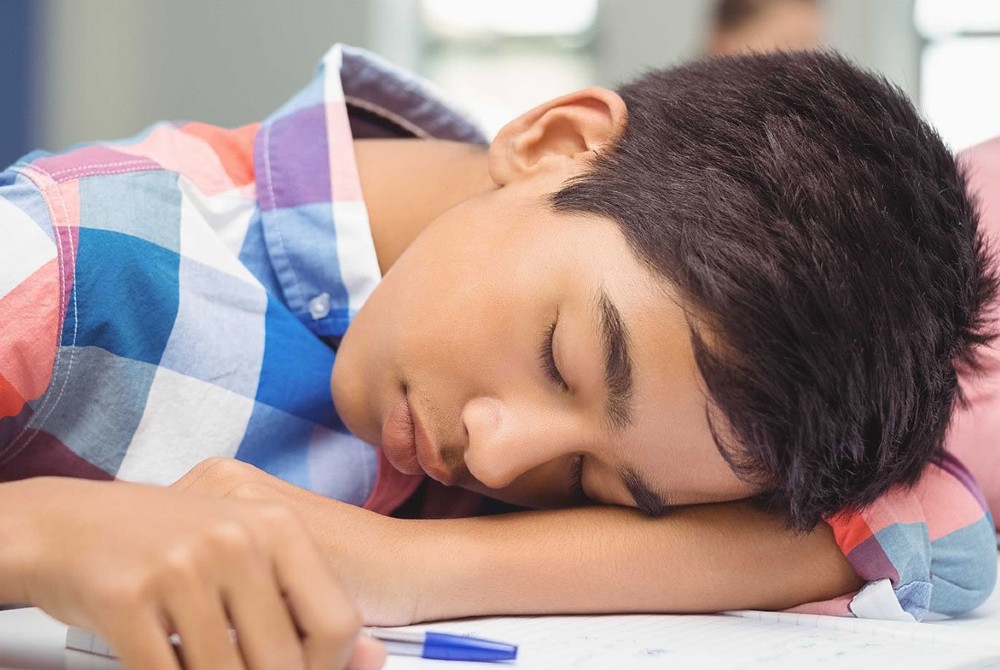
Is Your Teen Sleep-Deprived?
March 2, 2021

Many teens tend to stay up late. They’re on social media, watching television or YouTube, studying, or just tossing and turning for hours unable to fall asleep. Sleep can also be disrupted during stressful times during adolescence like exams or relationship problems.
More than two-thirds of high school students in the U.S. are failing to get sufficient sleep on school nights, according to a recent study from the Centers for Disease Control and Prevention (CDC).
“The American Academy of Sleep Medicine (AASM) recommends that teens should sleep eight to 10 hours per night on a regular basis to promote optimal health,” explains Virginia Skiba, M.D., a sleep specialist with the Henry Ford Health System. Insufficient sleep can have a negative impact on their grades, athletic performance and mental and physical well-being, including depression and anxiety issues and drug and alcohol use.
It’s a safety issue, as well. Motor vehicle crashes are a leading cause of teen deaths in the U.S. In a recent survey, more than half of teens admitted to having driven when feeling too tired and nearly one in 10 teens reported having fallen asleep at the wheel.
A typical high school student is biologically wired to fall asleep around 11 p.m. Many high schools in Michigan start school as early as 7 a.m. – long before a teen’s natural wake time. The AASM advocates a later middle school and high school start time of 8:30 a.m. or later.
Tips for a Good Night’s Sleep
Teenagers’ sleep-wake cycles are biologically determined – they are programmed to stay up late at night and sleep later in the morning. Most teens are instinctively night owls. Falling asleep is often a challenge, but there are things teens can do that may help them get a good night’s sleep.
Here are some tips from Dr. Skiba, which apply not only to teens but are great advice for anyone who is struggling with feeling sleep deprived:
► First and foremost, make sleep a priority. In our busy society, too often making time for sleep is last on the list.
► Maintain a consistent bedtime and wake time that allows at least eight hours of nightly sleep, including on weekends and vacation.
► Keep the bedroom quiet and dark. Keep the TV, computer, phone and video game system out of the bedroom.
► Set a technology curfew; turn off all devices one hour before bedtime.
► Engage in quiet activities before bed, like reading, journaling or yoga, and establish a relaxing bedtime ritual.
Dr. Virginia Skiba is a sleep medicine expert who sees patients at Henry Ford Medical Centers in Grosse Pointe and Sterling Heights.
If your teen is struggling with sleep issues, talk to your pediatrician or family doctor to find out if he or she could benefit from a sleep evaluation. Call 1-800-HENRYFORD (436-7936) or visit henryford.com to learn more.
Visit henryford.com/sports or call (313) 972-4216.

This Week in High School Sports: 9/11/25
By
Jon Ross
MHSAA Director of Broadcast Properties
September 11, 2025
This week's edition details the legendary career of Bloomfield Hills Brother Rice football coach Al Fracassa, who died over the weekend at age 92; awards Game Balls to high achievers in volleyball and football, and explains the role and duties of the MHSAA's Student Advisory Council.
 The 5-minute program each week includes feature stories from MHSAA.com or network affiliates, along with "Be the Referee," a 60-second look at the fine art of officiating.
"This Week in High School Sports" is powered by MI Student Aid, a division within the Department of Lifelong Education, Advancement, and Potential (MiLEAP).
Listen to this week's show by Clicking Here.
Previous 2025-26 editions
Sept. 4: MHSAA participation rising, Harbor Springs soccer's Henry Juneau - Listen
Aug. 28: Field hockey's first season, changes to Football Playoffs, Tennis Finals - Listen