

Father, Son: Diamond Rivals No Longer
By
Pam Shebest
Special for MHSAA.com
March 18, 2016
MATTAWAN — As Mattawan’s Brady Neel stepped to the plate, the Kalamazoo Loy Norrix baseball coach called for a shift, expecting the batter to hit toward right field.
 When Neel sent the ball into the gap between second and third, driving in a run with the hit, a voice in the crowd yelled, “Nice shift, coach.”
That incident during last year’s MHSAA Division 1 District still makes for some ribbing.
The Loy Norrix coach was Brian Neel, Brady’s father, and the voice heckling the coach was Neel’s wife, Lorri.
That situation will not arise this season.
After 20 years as Loy Norrix’s baseball coach, Brian Neel resigned so he can attend the games of his sons, sophomore Brady and 13-year-old Parker, a seventh grader at Mattawan Middle School.
“We knew with Brady playing at a different school (than Brian), that’s what had to happen,” Lorri Neel said. “Last year, Brian was blowing up my phone every game wanting to know what was going on.
“I am a little relieved Brian resigned his coaching position because family comes first.”
Brian Neel knew his son had a good chance to make the varsity team as a freshman, but didn’t know he would be a starter.
That made for some interesting table talk last year.


 Both father and son had their first clash, a doubleheader, marked on the calendar.
“Right when I knew I was on varsity, I had the days counted out,” Brady said. “I DH’d that day, hitting fifth. I was kind of nervous at first.
“It was kind of a weird day. When I woke up that morning, we didn’t say a word to each other. It was awkward. I got to the field and just stayed calm and played another game of baseball.”
Said Brian Neel: “I don’t normally call pitches but his very first at bat I was just trying to strike him out. I kinda know where his weaknesses are.
“He doesn’t have a lot but I know where to pitch him. It didn’t work. After him, I just let the catcher call the pitches. It was weird.”
Said Brady: “I knew he just wanted to strike me out. I just wanted to get the job done and get that run in.”
He not only knocked in the run, but went 3 for 6 including a blast off the fence as Mattawan took both games, 15-0 on a no-hitter and 10-2 in the second, giving Brady family bragging rights.
The third meeting was at the District where Mattawan won 2-1, highlighted by the infamous “shift” strategy.
 “Kind of weird how Brady (and the Wildcats) ended his dad’s coaching career,” said Mattawan baseball coach Cory DeGroote, who teaches physical education at the middle school.
Being a coach’s son is one thing that helped Brady’s baseball success, DeGroote said.
“I think there’s something about a coach’s kid,” said DeGroote, who has coached the Wildcats the past 12 years. “Your baseball IQ is higher than most.
“Brady’s an extreme competitor. He’s mentally tough; he’s physically just as big and strong as most of the kids on our team. He’s played at a high level for a long time. He just fits right in.”
Brian Neel, who teaches world history at Loy Norrix, said he didn’t expect it to sink in that he was no longer coaching until tryouts, but there is one perk.
“The winter was pretty busy usually,” the coach said. “On Sundays I was at (Loy Norrix) from 8 until 1 or 2 because there’s rules on how many kids you can have.
“So it’s been nice to sleep in on Sundays. I miss being there but I don’t miss getting up at 7 a.m. or when the day is crummy, contacting people about the schedule.”
Lorri Neel, who was an all-state softball player at Mattawan and is now a surgical nurse at Bronson Methodist Hospital, said her life should be a bit easier with her husband not coaching.
“It’s going to be easier as far as having a partner to transport, but I think it’s going to be a difficult year for Brady. If he doesn’t succeed, I’m afraid he’ll blame it on his dad being around.
“(Brian) and I never sit together, ever. I’m a crazy sport, competitive. He’ll ask me after the fact what I think and I’m like, ‘Well, you asked’ … I don’t hesitate to tell him.”
Neel taught physical education for 13 years before switching to history, and that had a huge impact on his son’s life.
 “He grew up in the gym ever since he was able to walk,” Brian Neel said. “My players throughout my career have been outstanding to both my boys, like big brothers. He would go around shooting baskets, hitting off the tee.
“He played Little League until (age) 10, then played travel. We have a batting cage in our backyard and we have a net he can hit into, so he’s worked his tail off to get where he’s at.”
As this season gets underway, Brady, an outfielder who also catches, has his eye on one school record.
“I didn’t have any home runs (last year) but I hit a lot off the fence and had 12 doubles, three away from the school record, which is one of my goals, and I have three more years to do that,” he said.
Neel hit .313 last season, had 23 RBI and scored 14 runs.
“His numbers for a freshman were as good as we’ve ever had,” DeGroote said.
The Wildcats, who posted a 23-13-1 record last season, lost seven seniors to graduation.
They have just four seniors this year: Sam Miller, Mitchell Dundore, Kyle Woods and Nate DeBoer.
“We lost our Nos. 1 and 3 pitchers and have a bunch of kids who are going to fight for those spots,” DeGroote said.
Woods, Cam Doornweerd and Hunter Ashmus will pitch for the Wildcats and Miller, an infielder, will also log some innings on the mound.
DeGroote said this year’s players are committed to the weight room and morning workouts.
“As a coach, you get attached to groups,” he said. “If our preseason is any indication what our season is going to be, we’re going to be all right. It’s probably the best preseason workouts I’ve ever had.
“We’ve got tremendous leadership, extremely unselfish kids. To beat us, you’re going to have to compete for 21 outs because our kids are going to roll up their sleeves and come at you. I like that.”
As for the rivalry with Loy Norrix, father and son definitely disagree.
“We’re a pretty good hitting team, put the ball in play a lot,” Brady said. “We need to get better defensively.
“I think it will be the same (Mattawan wins) because I grew up going to (work out) at Norrix with all those guys. I have a lot of friends there, so there will still be a big rivalry. There are few kids on that team that are on the Maroons (travel team) with me.”
Said Brian Neel: “I personally think that Norrix is going to beat them this year. I want Brady to be successful in the game, but I’d probably like to see Norrix beat them.
“But then the (Loy Norrix) parents will probably say, ‘They got him out of there and now they’re winning games,’” he added, laughing.
 Pam Shebest served as a sportswriter at the Kalamazoo Gazette from 1985-2009 after 11 years part-time with the Gazette while teaching French and English at White Pigeon High School. She can be reached at [email protected] with story ideas for Calhoun, Kalamazoo and Van Buren counties.
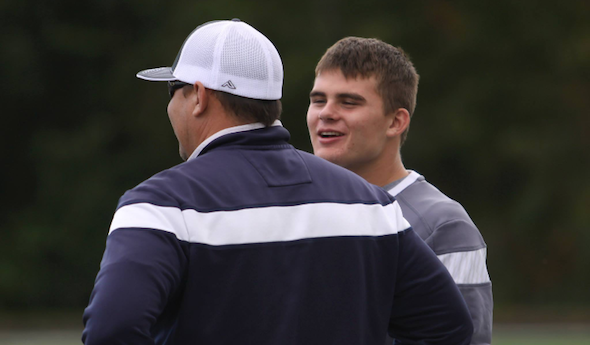
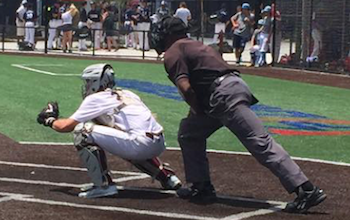
PHOTOS: (Top) Brady Neel and his father Brian share a laugh during a game in 2015. (Middle) Brian Neel, Lorri Neal, Brady Neel, Cody DeGroote. (Below) Brady Neel catches during a game last summer. (Top and middle photos courtesy of the Neel family.)
Senior-Powered Spring Lake Answering Anticipation, Pursuing High Expectations
By
Dean Holzwarth
Special for MHSAA.com
April 29, 2026
SPRING LAKE – The time is now for the Spring Lake baseball team.
 With the return of 11 veteran seniors, the Lakers entered this spring with lofty expectations and an eye on an extended postseason run.
Anticipation has come to fruition in the form of a state ranking and a nearly perfect start.
“Our motto is we are going to worry about next year next year, and we are going to do all we can this year,” Lakers fourth-year coach Bill Core said. “We knew we were going to have a big experienced group coming back, and that's just how the roster folded out. We have a lot of experience, a lot of returners and pretty high expectations.”
Spring Lake, which finished as Division 2 runner-up in 2024 and won a conference title last year for the first time since 2014, is off to an impressive 13-1 start (9-0 in the Ottawa-Kent Conference Black) and has climbed to No. 7 in the latest coaches poll.
Core said the vast number of returners, which includes five players who will play in college next year, has paid early dividends.
“I think that’s been a big difference,” he said. “We’ve played some younger teams that were breaking in sophomores or juniors or new kids, and our guys were ready to go right from the start. It’s been an advantage early on.”
Senior starting pitchers Oliver Smies and Maddux Kipling believe the strong bond among the senior class has been a major factor in the torrid start.
 “I think something that’s really important about this team is our team chemistry and the amount of seniors we have on the team,” Smies said. “That alone allows us to have a ton of experience, and I think that's a big reason why we are off to such a hot start. We have been playing good team baseball and complementary baseball with good defense and good offense.”
Added Kipling: “We genuinely like being around each other, and every day we show up ready to get a little better. Our team has a real gritty and energetic identity, and I think that shows in how we compete and support each other.”
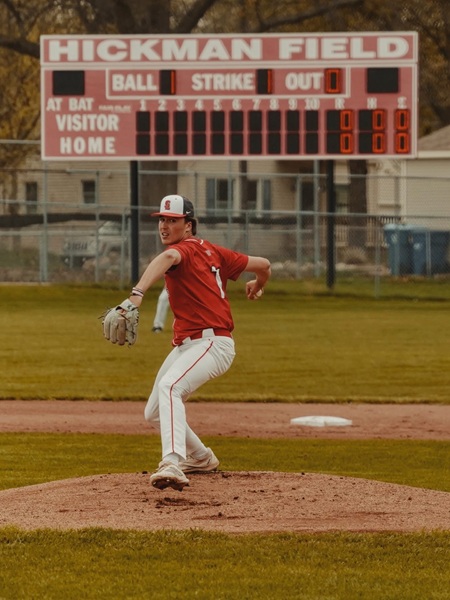
Kipling and Smies have been dominant on the mound this season. They haven’t allowed an earned run while combining for 80 strikeouts. Kipling earned a second-team all-state accolade as a junior and is headed to Michigan State next year. Smies will play at Calvin University.
“It starts with our pitching,” Core said. “Any time you are going to make a run, it starts with your pitching and we are pretty lucky, especially with our top two.”
Offensively, the Lakers possess a balanced lineup and boast a .330 batting average.
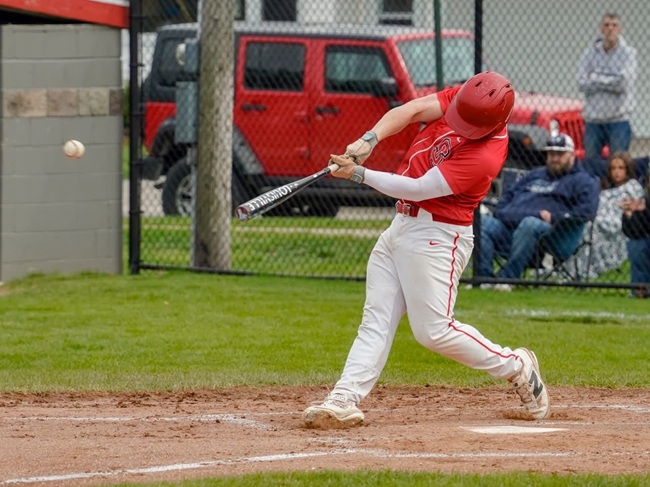
Senior Owen Smies, who will join his twin brother at Calvin, is hitting a team-best .432 with 13 RBIs. Seniors Alex Strauss (Adrian College) and Max Feltner (Muskegon Community College) are both batting .333 and have combined to score 25 runs.
As a team, Spring Lake has produced eight shutouts and nine wins by run differential.
“We got off to a good start, but we are going to play a lot better competition,” Core said. “This is a good week for us because we play Northview and state-ranked East Grand Rapids. We just picked them up, so we were excited to fill in the week with those two schools.”
Spring Lake is 62-6 over its last 68 games and trying to remain focused on each game as it attempts to erase the disappointment of last year’s early exit from the postseason.
 Despite winning 30 games, the Lakers suffered a 3-2 loss to Grand Rapids West Catholic in District play.
“I think there is some motivation there from that loss,” Oliver Smies said. “And I think that loss last year taught us that any team can beat any team, so you have to play your best baseball every single game no matter the opponent.”
Core said last year hasn’t been discussed, but believes it still sits in the back of his players’ minds.
“I think they think about that, but we've had quite a few mercies to start the season, and I said to them that when we get to the tournament it's going to be a one-run game and we are going to have to do the little things to make a difference because we are not going to win 14-0 all the time,” he explained. “We try to keep everyone in the moment.”
Kipling isn’t dwelling on the past – or looking too far ahead.
“As a group we’ve done a great job staying focused on the present and not getting caught up in the past or worrying too much about the future,” Kipling said. “My dad has always told me to focus on what you can control because putting energy into things you can’t control is a waste.
"That mindset has stuck with me, especially on the field. I try to live by ‘one pitch at a time,’ and because of that I haven’t really spent time thinking about last year’s loss. That’s behind us, and we’re just focused on what we can do right now.”
 Dean Holzwarth has covered primarily high school sports for Grand Rapids-based WOOD-TV for five years after serving at the Grand Rapids Press and MLive for 16 years along with shorter stints at the Ionia Sentinel and WZZM. Contact him at [email protected] with story ideas for Allegan, Kent and Ottawa counties.
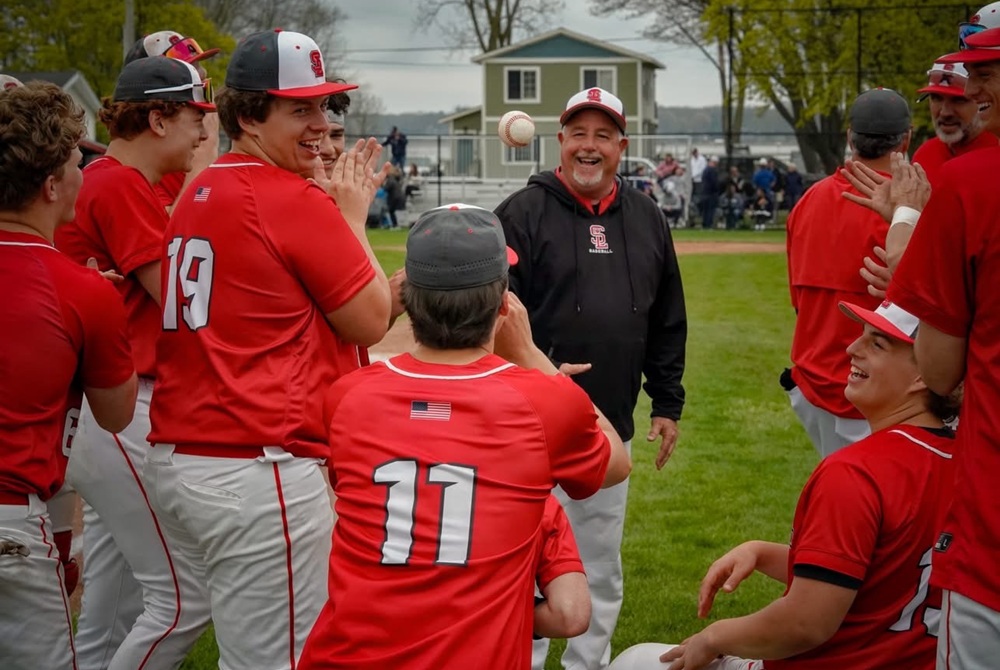
PHOTOS (Top) Spring Lake baseball coach Bill Core tosses Maddux Kipling his home run ball after a win over Fruitport. (Middle) Kipling pitching at Spring Lake's Hickman Field. (Below) Senior Oliver Smies connects with a pitch. (Photos by Trevor McCue/Grand Haven Tribune.)