


'Anyone Can Save a Life' Aims to Prepare
July 28, 2015
By Rob Kaminski
MHSAA benchmarks editor
It was 2008 when Jody Redman and staff at the Minnesota State High School League developed an emergency action plan to provide guidance and procedure in the event of sudden cardiac arrest during scholastic athletic competition.
The desired response from schools upon receipt of the plan was, well, less than enthusiastic.
“Only about 40 percent of our schools used the information and implemented the program,” said Redman, associate director for the MSHSL. “Our focus was completely on sudden cardiac arrest, that being the worst-case scenario regarding athletic-related health issues.”
The MSHSL asked the University of Minnesota to survey its member schools, and results showed that the majority of schools not on board simply felt a sudden cardiac arrest “would never happen at their school.” Naive or not on the schools’ parts, that was the reality – so Redman went back to revise the playbook.
“We expanded the plan to deal with all emergencies, rather than specific incidents,” Redman said. “Now it’s evolved so that we are prepared to deal with a variety of situations which put participants at risk. We shifted gears and got more schools to participate.”
Did they ever. And not just in Minnesota.
This summer, the “Anyone Can Save a Life” program, authored by the MSHSL and the Medtronic Foundation, is being disseminated to high schools nationwide with the financial support of the NFHS Foundation. The program will reach schools in time for the 2015-16 school year.
Once received, schools will find that there are two options for implementation, via in-person training or online.
“The in-person method is facilitated by the athletic administrator with the assistance of a training DVD” Redman said. “The important element is the follow through, ensuring coaches return their completed Emergency Action Plan (EAP). With the e-learning module on anyonecansavealife.org, individuals will complete an e-learning module that will walk them through the details of their specific plan, and as they answer questions, the information will automatically generate a PDF of the Emergency Action Plan (EAP) which they can edit at a later date as information changes.”
Schools will find five major components of the program to be received this summer: the first is an implementation checklist for the AD, explaining their role. Next are sections for in-person training, online training and event staff training. The last item contains a variety of resources that will ensure the successful implementation of a comprehensive emergency response to all emergencies.
Generally speaking, the program prompts schools to assemble preparedness teams, broken into four categories: a 911 team, a CPR team, an AED team and a HEAT STROKE team. The groups are made up of coaches and their students who will be in close proximity to all after-school activities.
“The reality about school sports is, at 3:30 every day the office closes and any type of medical support ceases to exist,” Redman said. “We then send thousands of students out to gyms, courts, fields and rinks to participate without systemic support for emergencies. This program puts into place that systemic support.”
Another stark reality is that the majority of schools in any state do not have full-time athletic trainers. Even for those fortunate enough to employ such personnel, it’s most likely the training “staff” consists of one person. That one body can only be in one place at one time, and on widespread school campuses the time it takes to get from one venue to another could be the difference between life and death.
“Athletic trainers can champion the program, but someone needs to oversee that every coach has a completed EAP in place,” Redman said. “For every minute that goes by when a cardiac arrest occurs, chance for survival decreases by 10 percent.”
Thus, it’s imperative to train and grant responsibility to as many people as possible, including student-athletes. In fact, students are a vital component to having a successful EAP. Students will be put in position to call 911, to meet the ambulance at a pre-determined access point, to locate the nearest AED, to make sure emersion tubs are filled for hot-weather practices, and for those who are trained, to assist with CPR. Coaches will identify students at the beginning of the season and prior to an emergency taking place. They will provide them with the details of the job they are assigned so they will be ready to assist in the event of an emergency.
“We have game plans for every sport, and for every opponent on our schedule,” Redman said. “But we don’t have a plan to save the life of a member of our team or someone attending a game at our school.
“This is about developing a quick and coordinated response to every emergency so we give someone in trouble a chance at survival, and then practicing it once or twice a season. We have ‘drop the dummy’ drills where we drop a dummy and evaluate how it went, and how everyone performed. In one scenario, it’s the coach that goes down, and then you have a group of 15- or 16-year-olds standing there. That’s why students have to take ownership of this, too.”
The key to an effective emergency action plan is to utilize and empower students in every sport and at every level to be a part of the response team. Following are brief descriptions of the teams.
The 911 Team
- Two students will call 911 from a pre-determined phone and provide the dispatcher with the location and details of the emergency.
- Two students will meet the ambulance at a pre-determined access point and take them to the victim.
- Two students will call the athletic trainer, if one is available, and the athletic administrator and alert them to the emergency.
The CPR Team
- The coach is the lead responder on this team and is responsible for attending to the victim and administering CPR, if necessary, until trained medical personnel arrive.
- One person is capable of providing effective CPR for approximately two minutes before the quality begins to diminish. Having several students trained and ready to administer CPR will save lives.
The AED Team
- Two students will retrieve the AED and take it to the victim.
- Two students will physically locate the athletic trainer, if one is available, and take him or her to the victim.
The Heat Stroke Team
- Two students identify locations of emersion tub, water source, ice source and ice towels.
- Two students prepare tub daily for practices and events.
For more information, visit anyonecansavealife.org or contact the MSHSL.

2026 MHSAA Bush Awards Honorees Exemplify Dedicated Service in Several Roles
By
Geoff Kimmerly
MHSAA.com senior editor
June 30, 2026
Athletic administrators must balance multiple roles no matter the size of their school districts or numbers of sports they direct, and St. Ignace’s Don Gustafson, Brethren’s Jason Kemler, Grand Rapids’ Jolinda Lucas and Greenville’s Brian Zdanowski have thrived while shouldering wide-ranging responsibilities to provide first-rate athletic experiences for their students.
Their dedication to school sports and those athletes – both locally and statewide – made them clearly deserving recipients of 2026 Allen W. Bush Meritorious Service Awards as selected by the Michigan High School Athletic Association’s Representative Council.
Al Bush served as executive director of the MHSAA for 10 years. The award honors individuals for past and continuing service to school athletics as a coach, administrator, official, trainer, doctor or member of the media. The award was developed to bring recognition to people who are giving and serving locally, regionally or statewide without a lot of attention. This is the 35th year of the award.
 Gustafson has taught at his alma mater St. Ignace since 1982 and continued even after retiring from administration in 2021. In addition to his classroom work, he served as assistant athletic director his first three years, then athletic director for four, as junior high principal from 1994-2005, high school principal from 2005-11 and superintendent for the next decade.
He’s also been an MHSAA-registered game official since 1978, working six Finals in football, one in basketball and numerous in cross country, in addition to several more postseason events during his time officiating seven sports. He was named to the Basketball Coaches Association of Michigan (BCAM) Hall of Honor in 2021 as an official and “Friend of Basketball.”
Gustafson served on the MHSAA Representative Council from 2015-21. The Michigan State University grad also has served on St. Ignace’s city council, taking time away only during his tenure as superintendent.
“Don Gustafson’s contributions to school sports span nearly half a century and have included everything from behind-the-scenes support to being considered one of the state’s top game officials and a valued voice on our Representative Council,” MHSAA Executive Director Mark Uyl said. “He has long been a knowledgeable and positive voice impacting not only the Upper Peninsula but our community statewide.”
 Brethren High School athletic director Jason Kemler recently completed his 20th year with the Kaleva Norman Dickson school district, where he has hosted several MHSAA Tournament events in a variety of sports including Regionals in track & field both at the high school and middle school/junior high levels. He’s also served on multiple MHSAA committees including the Junior High/Middle School Committee.
Kemler has done extensive work as well as part of the Michigan Interscholastic Athletic Administrators Association (MIAAA), serving as a regional representative, historical records chairperson and co-chair of the middle school/junior high committee, and also co-chair for the MIAAA’s 60th and 65th anniversary celebrations. He was named the MIAAA’s Region 3 Athletic Director of the Year in 2023.
Kemler is a graduate of Dansville High School and Albion College and received his teaching certificate from Michigan State University and master’s from Central Michigan University. He also serves as a captain for his local fire department.
“Jason Kemler’s stamp is all over the Brethren athletic department and community as a whole, as he’s embraced all of the roles that go with serving at a small school – teaching physical education and history and coaching as well as serving as athletic director and representing his school in significant ways among his colleagues statewide,” Uyl said. “His commitment and dedication are fine examples of what the Bush Award seeks to recognize.”
 Lucas also has made an outsized impact at the middle school level during her 14 years serving in multiple roles for Grand Rapids Public Schools, including as middle school athletic director, director of all GRPS elementary sports and as athletic director for Grand Rapids University Prep Academy, whose students compete for either Ottawa Hills or Union High School. She has served on the MHSAA Junior High/Middle School Committee, contributing to an increasing emphasis at that level, and was selected as a meet manager for inaugural MHSAA Cross Country and Track & Field Regionals for junior high/middle school athletes.
Also a teacher at University Prep and an MHSAA-registered official the last six years for track & field and cross country – and the last two for volleyball – Lucas has served as sportsmanship chair for the MIAAA and as part of the MHSAA/Farm Bureau Insurance Scholar-Athlete Award Committee, and on the board for the Michigan-based Academy of Sports Leadership. She was named the MIAAA’s Region 14 Athletic Director of the Year in 2022.
Lucas graduated from Hobart (Ind.) High School and has a bachelor’s degree in physical education and health from Indiana State University, a master’s in educational leadership from Indiana University, and earned her certified athletic administrator designation from the National Interscholastic Athletic Administrators Association (NIAAA). She is a Red Cross instructor and has served on the GRPS health and physical education leadership team. Prior to coming to Grand Rapids, Lucas served in multiple athletic administration roles in Indiana, where she also taught for 24 years and earned a 30-year coaching and multiple 20-year service awards.
“Jolinda Lucas has brought a special dedication to our junior high and middle school sports and their important roles in educational athletics,” Uyl said. “She has provided valuable input on a variety of historic decisions, including the addition of sixth graders to MHSAA competition and creation of Regional competitions in cross country and track & field. Her foresight is impacting Michigan’s school-sports athletes at the youngest levels and making a difference that will continue to benefit them as they advance to high school programs.”
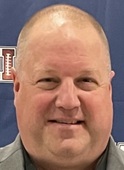 Zdanowski recently completed his 28th school year as athletic director at Greenville after previously serving as a teacher, coach and athletic director over a decade at Onaway and Midland Bullock Creek. As an athletic director, he has hosted more than 100 MHSAA Tournament events, including five 8-Player Football Finals and 13 11-Player Semifinals. He also has been an MHSAA-registered game official for 44 years, working five sports including Finals in baseball in 1995 and football in 2001.
The longtime administrator also has served on multiple MHSAA committees, including more than a decade on the MHSAA/Farm Bureau Insurance Scholar-Athlete Award Committee, and served as Ottawa-Kent Conference president for two years. He’s been a member of the MIAAA for 34 years, Michigan Association of Secondary School Principals (MASSP) for 28 years and National Association of Sports Officials (NASO) for 25. He was named the MIAAA’s Region 4 Athletic Director of the Year in 2008.
Zdanowski, a graduate of Standish-Sterling, has a bachelor’s degree in teacher education from Saginaw Valley State University and a master’s in athletic administration from Central Michigan University. He’s also completed 24 courses from the NIAAA Leadership Training Institute.
“Brian Zdanowski has created a program at Greenville that is the model of quality, and that was proven deservedly when his athletic department was named an Exemplary Athletic Program by the MIAAA in 2000, the first year of that prestigious recognition program,” Uyl said. “He has consistently shared what he’s built at home with the rest of the state for now several decades, and we continue to be thankful for Brian’s desire to serve and contribute to school sports in a variety of leadership roles.”
The MHSAA is a private, not-for-profit corporation of voluntary membership by more than 1,500 public and private senior high schools and junior high/middle schools which exists to develop common rules for athletic eligibility and competition. No government funds or tax dollars support the MHSAA, which was the first such association nationally to not accept membership dues or tournament entry fees from schools. Member schools which enforce these rules are permitted to participate in MHSAA tournaments, which attract more than 1.4 million spectators each year.