

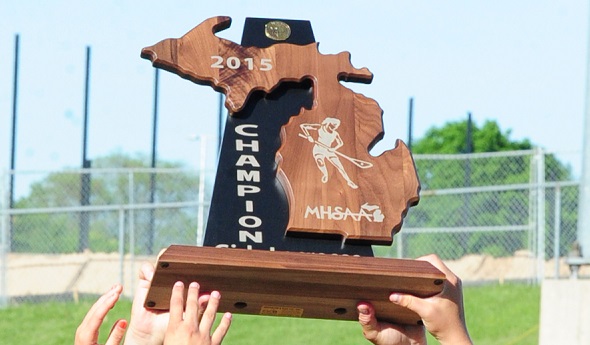
Casting Lines for Future Tournaments
August 12, 2016
By Jack Roberts
MHSAA Executive Director
The MHSAA is best known to the public for the tournaments it conducts to conclude the fall, winter and spring seasons each school year.
These tournaments, the first and largest program of the MHSAA, have survived the Vietnam War, the Korean conflict and two World Wars. They have survived the technology bubble, the housing collapse, the energy crisis and the Great Depression.
MHSAA tournaments existed at the dawn of aviation and at the time of our nation’s lunar landing. Popes, presidents and governors have changed and changed again and again, and MHSAA tournaments roll on year after year.
But the sense of tradition and permanence and inevitability of MHSAA tournaments doesn’t dissuade us from asking questions about our tournaments, even some of the most basic questions. Here are two.
Question #1
I have long been and will always be an advocate for a Ryder Cup format for the MHSAA Golf Finals, and a team tennis approach to the MHSAA Tennis Finals; but 90 years of tradition is hard to overcome. Might this be a more exciting format? Could it be co-ed? Could it reverse the decline in boys tennis participation, and increase girls golf participation? Wouldn’t it be fun to try?
Periodically, the International Olympic Committee requires each of the designated Olympic sports to defend its status, to state its case why the sport should remain a part of the Olympic program. Then, after a series or votes that retain one sport at a time, the IOC drops the sport that makes the weakest case. It does so to make room for one of the previously unlisted sports that makes the best case for inclusion.
This would appear to keep the existing Olympic sports on their toes, and to keep the Olympic movement fresh and reflective of modern trends in sports.
While I would not enjoy the controversy, I can see the potential for some positive results if the MHSAA were to invoke the same policy for determining the 14 tournaments it will provide for girls and the 14 for boys.
This might cause us to consider more deeply what a high school sport should look like, or at least what an MHSAA tournament sport should stand for.
On the one hand, we might be inclined to drop tournaments for those sports that involve mostly non-faculty coaches and non-school venues, or require cooperative programs to generate enough participants to support a team, or resort almost entirely to non-school funding, or cater to individuals more than teams.
Or perhaps this process would cause policymakers to forget traditional thinking and ask: “In this day and age, should we shake off traditional notions of sport and consider more where modern kids are coming from?” That might mean fewer team sports and more individual sports, more “extreme” sports like snowboarding and skateboarding, and more lifetime sports, meaning not just golf and tennis and running sports, but also fishing and even shooting sports.
Currently, MHSAA policy states that the MHSAA will consider sponsorship of a tournament series for any sport which 64 member schools conduct on an interscholastic basis as a result of action by the governing boards of those schools.
Should the only question be how many schools sponsor a sport, or must an activity also have certain qualities and/or avoid certain “defects?” What should an MHSAA tournament sport look like and stand for?
Question #2
Bristling from criticism that his association is a money-grabbing exploiter of children, my counterpart in another state said, “If we were running our programs just to make money, we would do very many things very differently.” I knew exactly what he meant.
Because we care about the health and welfare of students, because we mean what we say that the athletic program needs to maximize the ways it enhances the school experience while minimizing academic conflicts, and because we try to model our claim that no sport is a minor sport when it comes to its potential to teach young people life lessons, we operate our programs in ways that make promoters, marketers and business entrepreneurs laugh, cry or cringe.
If money were the only object, we would seed and select sites to assure the teams that attracted the most spectators had the best chance to advance in our tournaments, regardless of the travel for any team or its fan base. If money were the only object, we would never schedule two tournaments to overlap and compete for public attention, much less tolerate three or four overlapping events. If money were the only object, we would allow signage like NASCAR events and promotions like minor league baseball games.
Those approaches to event sponsorship may not be all wrong; they’re just not all right for us. And we will live with the consequences of our belief system.
During a typical school year, more than 20 percent of the MHSAA’s 2,097 District, Regional and Final tournaments lose money. Not a single site in golf, skiing or tennis makes a single penny. In no sport did every District, Regional and Final site have revenue in excess of direct expenses.
In fact, in only three sports – boys and girls basketball and football – is revenue so much greater than direct expenses overall that it helps to pay for all the other tournaments in which the MHSAA invests.
That’s right: invests. When we present our budget to our board, we talk about the MHSAA’s investment in providing tournament opportunities in all those sports and all those places that cannot sustain the cost of those events on their own. How much is this investment worth to students, schools and society?
These two are core questions that require our focus far in advance of talk about scheduling, site selection, seeding and the myriad matters that too often hijack our time and attention.
Gull Lake Players Find Opportunities to Play, New Friendships as Part of 'Parchment Pride'
By
Pam Shebest
Special for MHSAA.com
September 22, 2026
PARCHMENT — When he took the field for his senior football season, Lucas Hutchinson did not expect to be wearing maroon and white.

The navy blue and white of Gull Lake High School was more his style.
But before the season started, an unusual series of events found Hutchinson and his 18 Gull Lake teammates without any team at all.
That’s when Parchment athletic director Brennan Davis stepped in, contacting Gull Lake AD Karyn Furlong and offering a solution: a cooperative team.
All of a sudden, those 19 players found a new football home.
“Obviously I’d rather be wearing navy blue and white but I’m happy to play in whatever color I can,” Hutchinson said. “Now that I’m playing for Parchment, I gotta have that Parchment Pride so I wear it with honor, and even though it’s not the color I wanted to wear, I’m excited to wear it.”
Gull Lake canceled its football season Aug. 12 after a preseason camp incident that resulted in school and law enforcement investigations.
Davis said his team’s numbers were down this year and adding the Gull Lake players would be the boost his team needed.
“I had heard about Gull Lake canceling their season due to safety concerns, and the schedule they’re playing is tough – to go into the game with 20 kids against some perennial powers,” Davis said. “So I reached out to Karyn (Furlong) on a Wednesday morning (about combining the teams). I heard back from her a few hours later.”
From there, a co-op team was born with the assurance that none of the players involved in the incident would be on the team.
The two groups held their first combined practice a week before the Aug. 27 season opener with just one snag.
“One issue we had was helmets,” Davis said. “We had a specific number of maroon helmets that would have outfitted our varsity and JV players, but then (Gull Lake) came over, they had white helmets.
"We asked the Gull Lake players to give up their white helmets for maroon helmets and gave the white to the JV players.”
First-day jitters
Several Gull Lake players, including Hutchinson, were a bit nervous that first practice.
“I didn’t know how we were going to work together and get along,” Hutchinson said. “I knew no one, but I do now,” he laughed. “When I first went into the locker room it was with a bunch of random faces I didn’t know. I was definitely eager to know everybody.”
He said he was worried about the way he and his teammates would be treated.
“Past two years, I was starting on varsity both ways, so even though I was getting to play football, I was worried how things were going to change, for not just me but all the guys from Gull Lake being treated equally and getting playing time. It transitioned smoothly, definitely no favoring with the coaches.”
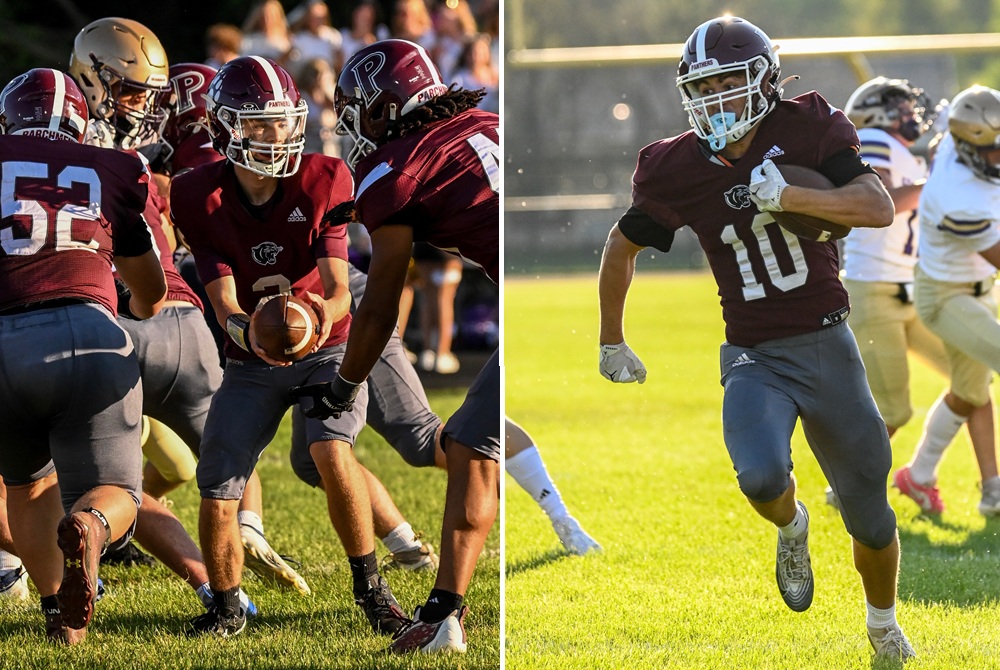
Parchment quarterback Jordan Bagley said before the rosters combined the Panthers were preparing for a tough season with just 20 players.
“We knew we were going to have a lot of two-way players so that means we weren’t going to drag butt at practice,” the junior said. “We had to show up and bring it every day.
“It was definitely going to be a tough season mentally and physically. That’s a lot of wear and tear on your body.”
He added that Gull Lake players give the Panthers extra depth.
“It lets everybody come out fresh,” he said. “It reduces the risk of injuries, too. They don’t have to worry about coming out of the game if they’re gassed or need a breather, so it’s a big help.”
A bonus for Parchment was Hutchinson and junior quarterback Zac Pfenning, both past all-Southwest Michigan Athletic Conference first-teamers.
“We have a lot more skill positions so that’s always good for receivers and defensive backs to rotate in,” Bagley said. “They bring some leadership, too. Kessler (Johnson) is a good leader who’s helped X (Xavier Garcia). Depth and more players and a lot of new friendships.
"This has been one of better experiences for football in my career. I’ve actually enjoyed it a lot. It’s been a very positive thing for both sides, I believe. Everybody gets to play some football.”
Todd Nunn, Parchment’s second-year head coach, said he was excited to have his team’s numbers doubled.
“I don’t think we could have asked for a better practice that first day,” he said. “The group seemed to gel well; the Parchment kids were explaining to the Gull Lake kids our offensive plays, helped them understand the defense that was being called. It was like they’d been there the whole time.”
Nunn is no stranger to co-op teams.
He coached at Burr Oak, which combined with Colon for the four years he was there.
“I knew what it felt like being the team coming over to the main school,” he said. “I understood some of the reservations the Gull Lake kids might have coming over here.
“We sat the kids down, explained what was happening and how it would benefit them, not having to play both sides of the ball, getting more time to come to the sidelines to get a break. I think they were very receptive to that.”
Parchment and Gull Lake cheerleaders also have combined for several games.
“The co-op was just for football, but our cheerleaders and Gull Lake’s cheer team and coaches are good friends,” Davis said. “They have practiced together previously over the summer.
“We decided on a specific schedule where their cheerleaders would cheer with ours, four or five games.”
In addition, the football team will play a home game for Senior Night at Gull Lake, against Lawton on Oct. 16. The Blue Devils have 14 seniors and five juniors on the team.
Parchment has six seniors, 11 juniors and three sophomores.
Quick transition, perfect fit
The ease with which the process came together surprised Davis.
“Everything fell into place, which was strange because things usually take forever,” he said.
Over the course of one week:
- Davis and Furlong talked on a Wednesday.
- Parchment already had a staff development day scheduled that day and talked about the cooperative possibility.
- A Southwestern Athletic Conference meeting had been previously postponed from Tuesday to Thursday, and all 18 teams approved the co-op.
- “We did not involve the kids until prior to the (Parchment) board meet on Monday at 5.” Davis said. “I met with four of our team leaders at 4:50, board meeting at 5, meet the team night at 6:30, Gull Lake board meeting at 7, so that whole night was a lot.”
- The MHSAA then approved it.
With the season under way, the Panthers take a 2-2 record into Friday’s game against Kalamazoo United, another co-op team made up of Kalamazoo Christian and Hackett Catholic Prep players.
“(Gull Lake) kids follow our strength and conditioning requirements,” Davis said. “Whenever we have an away game, the kids drive here, ride our buses to our events.
“If there are disciplinary issues, they are a Parchment student-athlete, they function as Parchment students. Luckily nothing (bad) has happened.”
Bagley said the combined team has resulted in friendships that will last beyond this season.
“I got to meet a lot of new people, made a bunch of new friendships, which I’m really thankful for,” he said.
Hutchinson said he and his teammates have adjusted well.
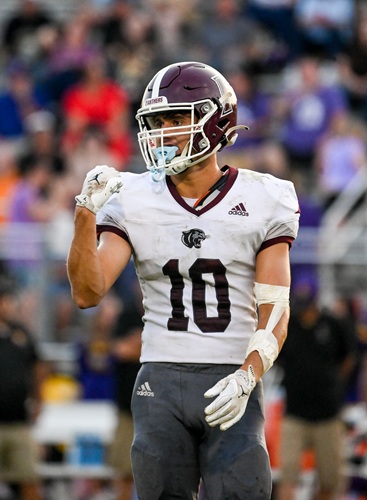
“The first week it was weird seeing everyone wearing a different color (than he wore at Gull Lake), running out to a different field and having it be our home field. But now I’ve embraced it. Now I’m a Parchment Panther … for football,” he added, laughing.
 Pam Shebest served as a sportswriter at the Kalamazoo Gazette from 1985-2009 after 11 years part-time with the Gazette while teaching French and English at White Pigeon High School. She can be reached at [email protected] with story ideas for Calhoun, Kalamazoo and Van Buren counties.
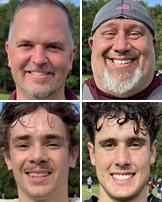
PHOTOS (Top) At left, Parchment quarterback Jordan Bagley (2) hands off during a game this season, and at right, Lucas Hutchinson (10) carries the ball downfield. (Middle) Clockwise from top left: Parchment athletic director Brennan Davis, varsity football coach Todd Nunn, senior Lucas Hutchinson and junior Jordan Bagley. (Below) Hutchinson wears the maroon and white of the Panthers. (Action photos by Kelci Henton. Headshots by Pam Shebest.)