


Coaches Get U-M Concussion Training
July 24, 2012
Already administering a strong set of protocols addressing the removal and return to play of young athletes suspected of sustaining concussions in competition, the Michigan High School Athletic Association is further ramping up its concussion education efforts of coaches, student-athletes and parents as the 2012-13 school year approaches.
In partnership with the University of Michigan’s NeuroSport and the Pediatric Trauma Program at C.S. Mott Children’s Hospital, required online rules meetings for coaches and officials will include an education component illustrating the serious nature of concussions; recognition of the signs and symptoms; a review of return to play protocols; applicable MHSAA regulations; and downloadable co-branded resources from NeuroSport, as well as materials produced by a joint effort of the Brian Injury Association of Michigan, the Detroit Lions, the Center for Disease Control and the MHSAA.
This is the second year the MHSAA has included concussion education in its online rules meetings, which are annually viewed by nearly 20,000 coaches and game officials. This year, the Michigan NeuroSport Concussion Education - High School Coach edition, endorsed by the American Academy of Neurology last fall, has been modified for the MHSAA audience. The MHSAA will also promote the availability of the NeuroSport concussion education modules offered specifically for parents and coaches.
“These educational efforts, coupled with protocols addressing concussions when they take place on the field of play, put our schools in the best possible position to minimize the risk to young people,” said John E. “Jack” Roberts, executive director of the MHSAA. “We’re pleased to have our new partnership with University of Michigan NeuroSport and our ongoing partnership with the Brian Injury Association of Michigan which put our state at the forefront of addressing the critical health issue for interscholastic athletes.”
Roberts added that the same educational materials the Association has co-branded with its partners will also be used to help raise concussion awareness in other youth sports by other sponsors in the state.
“We are proud to partner with MHSAA and bring the most up-to-date concussion education to those on the frontline of athletics. Education is a vital component to improving player safety,” says Amy Teddy, injury prevention program manager at C.S. Mott Children’s Hospital. “We believe that ‘It takes a team to keep concussions on the sidelines.’ Parents, coaches, teammates, officials and athletic trainers all have a role in protecting athletes from serious injury.
“In addition to our coach modules, we recently launched our parent edition to help another member of the ‘team’ better recognize and understand concussion.” added Teddy, who also is director of education for Michigan Neurosport.
The NeuroSport online programs for parents, high school coaches and youth sports coaches is now available at http://www.MichiganNeuroSport.com. An online program for athletes will be available soon.
NeuroSport has also produced a 60-second public service announcement in which one of the state’s all-time winningest football coaches – John Herrington of Farmington Hills Harrison – talks about concussions. This video, along with a 30-second PSA recently updated by the MHSAA, “No Such Thing As Just Getting Your Bell Rung,” will be made available to media outlets in time for the coming sports season, and will be shown during MHSAA programming online and on cable television.
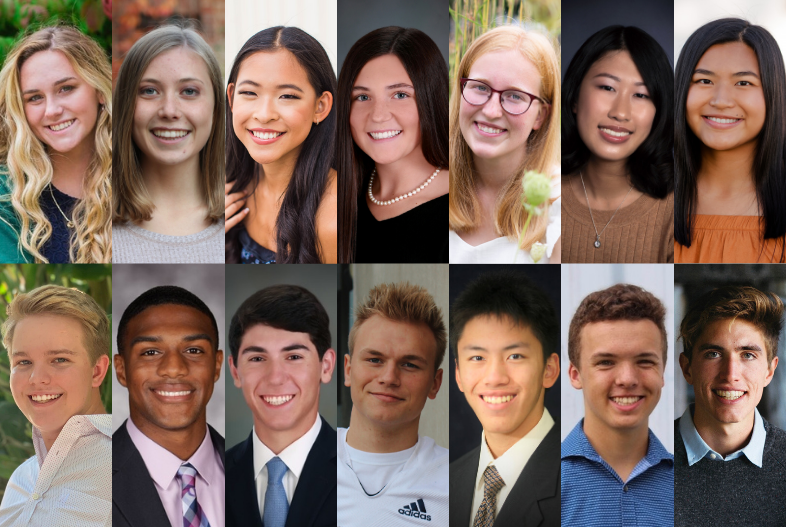
Scholars & Athletes 2021: Class A
By
Geoff Kimmerly
MHSAA.com senior editor
February 23, 2021
The Michigan High School Athletic Association has selected 14 student-athletes from Class A member schools to receive scholarships through the MHSAA/Farm Bureau Insurance Scholar-Athlete Award program.

Farm Bureau Insurance, in its 32nd year of sponsoring the award, will give $1,000 college scholarships to 32 individuals who represent their member schools in at least one sport in which the Association sponsors a postseason tournament. The first 30 scholarships are awarded proportionately by school classification and the number of student-athletes involved in those classes; also, there are two at-large honorees who can come from any classification.
Students applying for the Scholar-Athlete Award must be carrying at least a 3.5 (on a 4.0 scale) grade-point average and have previously won a letter in a varsity sport in which the Michigan High School Athletic Association sponsors a postseason tournament. Other requirements for the applicants were to show active participation in other school and community activities and produce an essay on the importance of sportsmanship in educational athletics.
Each of the scholarship recipients will be honored during an online ceremony later this winter. Commemorative medallions will be given to the finalists in recognition of their accomplishments.
The Class A Scholar-Athlete Award honorees are: Michaela Castle, Ionia; Audrey DaDamio, Birmingham Seaholm; Iris Hwang, Mount Pleasant; Madeline Kohler, Grosse Pointe North; Laura O’Brien, Ann Arbor Skyline; Emily Song, Canton; Zoe Ziegler, Okemos; Aidan Eichman, Portage Central; Lawrence Gilliam, Detroit U-D Jesuit; Jacob Harris, Grosse Pointe South; Troy Pratley, St. Joseph; Caleb Qiu, Midland Dow; Liam Smith, Rockford; and Maxwell Werner, Traverse City Central.
Overviews of the scholarship recipients of the Class A Scholar-Athlete Award follow. A quote from each recipient's essay also is included:
(NOTE: If an athlete intended to play and was part of a spring sports team in 2020, that sport is counted among the athlete’s total although the season was canceled due to COVID-19.)
 Michaela Castle, Ionia
Played two seasons of varsity volleyball, is playing her second of varsity basketball and will play her fourth of varsity softball this spring. Earned all-league recognition in volleyball and softball and all-league academic honors multiple seasons. Captained teams in all three sports. Participating in fourth years of student council and National Honor Society, serving as senior student body president and NHS secretary. Also served as secretary of Ionia Athletic Advisory Committee and Ionia County Youth Advisory Council. Participating in fourth years of county youth council and school Principal’s Student Advisory Committee. Participated in four years of debate and forensics and captained both teams. Placed among top five at debate state finals and competed in national competition. Played four years in school’s jazz, symphonic and marching band. Will attend University of Michigan and study political science.
Essay Quote: “The thing I love about athletics, is that while they involve winning or losing, they are also a basis for growth. When a team or individual wins, it reflects the hard work they put in for that growth. When a team or individual loses, it teaches them where to grow so that they may get back up and try again. Thus, win or lose, an athlete grows. Without that respect for your opponents and for the game however, one cannot have respect for oneself and one simply cannot grow.”
 Audrey DaDamio, Birmingham Seaholm
Ran four seasons of varsity cross country and will run her fourth of varsity track & field this spring. Earned all-state in cross country three seasons including as champion in Lower Peninsula Division 1 this past fall. Made MHSAA Finals six times in track and earned three all-state finishes. Also earned academic all-state honors multiple seasons in both sports and captained cross country team. Named National Merit Scholarship semifinalist and earned AP Scholar with Distinction. Participating in second years of National Honor Society and National Chinese Honor Society, and served as chapter co-founder and vice president for latter. Playing fourth year as part of school’s marching band and third year as part of symphony, earning 1 and 2 ratings in district competition and serving as marching band section captain. Participating in fourth year of forensics and qualified for state competition as a sophomore. Will attend Stanford University and study human biology.
Essay Quote: “(Sportsmanship) also fosters confidence – without being overly focused on beating opponents, athletes are able to enjoy the process of competition instead of fixating on whether they win or lose. When I cross the finish line, the pride I feel for my performance is independent of where I finish in relation to my competitors. As long as I put forth my best effort, I’m happy with the result.”
 Iris Hwang, Mount Pleasant
Ran four years of varsity cross country and participated in three years of varsity track & field, and will play her third season of varsity tennis this spring – which included playing on the boys team as a junior. Served as captain of cross country and track teams and earned all-conference and all-academic recognition in both of those sports. Carries 4.37 GPA and is top-ranked student in graduating class. Participating in fourth year of student senate and served as class president and executive board president. Participating in second year of National Honor Society and served as junior representative and chapter vice president. Participating in fourth year of Business Professionals of America and earned multiple regional championships and state conference third place. Participating in school service club for fourth year and has served as chair of community outreach. Participated in research program at Central Michigan University and Emerging Rural Leaders program at University of Chicago. Is undecided where she will attend college but intends to study economics.
Essay Quote: “(Sportsmanship) blurs the line between competitiveness and humanity, connecting an athlete to her team, her supporters, and herself. Sportsmanship is understanding between one and another, treating others how we wish to be treated ourselves. It also is a necessity to treating ourselves with the respect we deserve …”
 Madeline Kohler, Grosse Pointe North
Playing fourth season of varsity basketball and will play her third season of varsity soccer this spring. Earned multiple all-conference and all-state honorable mention honors in basketball and helped that team to multiple league and District titles and a Regional championship and MHSAA Semifinals appearance in 2018. Earned all-league scholar-athlete honors in both sports and academic all-state in basketball, and captained basketball team. Participating in second year of National Honor Society and also second years of Link Crew and Interact Club, and provided mentorship and tutoring through a variety of roles. Played in school’s concert band as freshman and served as section co-leader. Served as official for youth soccer throughout high school. Is undecided where she will attend college, but intends to study nursing.
Essay Quote: “Now, this is what sportsmanship means to me – the continuous appreciation and respect for others no matter the circumstances and the sacrifices you make for one another … . Due to this idea, I have been made aware of its importance most specifically because it establishes a set of morals within all individuals, not just athletes. For me, it has made me become more optimistic, a better student and human being, more giving, and in school it has allowed me to be more cooperative within a group and have more respect for everyone around me.”
 Laura O’Brien, Ann Arbor Skyline
Ran four seasons of varsity cross country and will participate in her fourth of track & field this spring. Ran in two MHSAA Finals for cross country and also qualified for MHSAA Finals for track and earned all-region in that sport. Earned academic all-state honors in both and helped both teams to all-academic awards. Served as cross country captain this past season. Participating in second years of National Honor Society and Freeman Environmental Education Youth Council, and drafted mission statement and future projects among other leadership duties with latter. Participated in University of Michigan School for Environment and Sustainability climate change workshops and presented on PFAS in local waterways at 2019 Southeast Michigan Stewardship Coalition community forum. Performing for fourth year in school choirs and this year as part of virtual state honors choir. Serving as website designer and administrator as co-founder of virtual tutoring program. In undecided where she will attend college, but intends to study environmental science.
Essay Quote: “Sportsmanship is a core value of athletics. It is only through the application of sportsmanship to one’s athletic career that a sport can truly and deeply be appreciated. Most athletes want to win and be recognized for their hard work, but the greatest athletes are those who work towards their personal goals while being cognizant of the hard work of their competitors.”
 Emily Song, Canton
Participating in varsity swimming & diving and will play her second season of varsity tennis this spring. Earned scholar-athlete honors in both sports and served as captain of tennis and club soccer teams and as new player ambassador for tennis team. Ranked number one academically in graduating class, participating in fourth year of district’s STEM academy, and earned AP Scholar with Distinction and selected to National Honor Society. Earned highest level and ratings in piano and saxophone in Michigan Music Teachers Association student achievement testing. Performed various dance styles over 12 years including in competition, and served as team choreographer. Participating in fourth year of Asian Pacific American Club and served as Association of Chinese Americans summer camp counselor. Served as soccer official and youth coach throughout high school. Participating in fourth years of Key Club and GET-IT cyberstart club. Teaches/tutors in math and English, and instructed students in Wuhan, China, during COVID-19. Will attend University of Michigan and study computer science.
Essay Quote: “Amidst the messages that I have learned through school and my coaches, the repetitive message ‘treat others like how (you) would want to be treated’ truly has a prevalent role in sports. However, in sports, this message has a distinctive meaning. In athletics, we have sportsmanship instead of this message; there is a moral code when competing against opponents, yes even against your biggest rival.”
 Zoe Ziegler, Okemos
Ran three seasons of varsity cross country and will play fourth season of varsity lacrosse this spring. Earned multiple all-state honors in lacrosse and academic all-conference in both sports, and served as captain of lacrosse team multiple seasons. Played for China U-19 national lacrosse team at 2019 World Championships. Served as youth lacrosse coach, earning Level 2 certification from US Lacrosse. Attained third-degree black belt in taekwondo. Earned AP Scholar with Distinction and selected to National Honor Society. Participating in fourth year of student council, having served as class vice president three years and student body vice president this year. Founded and served as president of Literature Club. Participating in Science Olympiad for third year. Participating in fourth year of A.C.T.I.O.N. service group. Will attend Grand Valley State University and study behavioral neuroscience.
Essay Quote: “Those who raise us – parents, grandparents, teachers, and pastors – teach us the basic principles of sportsmanship at a young age. However, school-based sports provide us with arguably our first chance at internalizing these ideals as our own. Only you and your teammates are on the field. Coaches are on the sidelines, and parents are in the stands. We have the sole responsibility for the manner in which we choose to competitively engage with each other on and off the field – an opportunity provided to us by athletics.”
 Aidan Eichman, Portage Central
Will play his third season of varsity baseball this spring and played freshman and junior varsity basketball. Earned all-league in baseball and helped team to academic all-state honor; also helped baseball team to league title as a sophomore. Served as captain of subvarsity baseball and basketball teams and travel baseball team. Participating in second year of National Honor Society, and also second year in school’s performing arts/theater program. Serving as student advisory board member for Kalamazoo Area Math and Science Center and has been active in a variety of KAMSC programs throughout high school including as part of cybersecurity team, research team in conjunction with Western Michigan University, and computer science programming team. Earned KAMSC AP Computer Science-A Book Award, named co-champion of American Computer Science League classroom division and earned USA Computing Olympiad silver medal. Helped cybersecurity team to sixth place in state competition. Founded and participated in school tutoring program and KAMSC study table, and also served as part of tutoring program for students in New York City during COVID-19. Is undecided where he’ll attend college but intends to study computer science.
Essay Quote: “Sportsmanship is the glue that permanently holds together ‘student-athlete’ puzzle pieces of different sizes, shapes, and purposes. … It connects nearly 300,000 student athletes in Michigan without regard for their various socioeconomic, educational, or personal circumstances.”
 Lawrence Gilliam, Detroit U-D Jesuit
Will participate in his fourth season of varsity track & field this spring and also ran junior varsity cross country as a freshman. Earned all-county and all-league honors and served as both captain and team chaplain in track & field. Earned College Board National African American Recognition Award and cum laude on National Latin Exam. Participating in National Honor Society and fourth year of student senate. Participating in fourth year as part of school’s Black Awareness Society for Education and third in Detroit Kappa League, and served on BASE executive board. Played in school symphonic band throughout high school and served as president and section leader. Co-founded and participating in second year of school’s be nice. mental health awareness program. Participating in second year of University of Michigan’s Ross School of Business Enriching Academics in Collaboration with High Schools (MREACH) program. Is undecided where he will attend college but intends to study finance and business management.
Essay Quote: “At an early age, I learned about the team line-up following my first T-ball game, giving me early exposure to the concept of sportsmanship. The ceremonial process of shaking hands taught me how to honor the sporting experience with not only my teammates, but with competitors as well, no matter the outcome. These activities taught me how to transition beyond the activity by fostering an environment to raise the spirits of others.”
 Jacob Harris, Grosse Pointe South
Played four seasons of varsity tennis, is playing second of varsity basketball and will play second of varsity baseball this spring. Made MHSAA Finals and earned multiple all-state honors in tennis. Earned all-state academic in baseball and served as varsity captain in all three sports. Carries GPA above 4.0 and twice was medalist on National Spanish Exam. Participating in second year of National Honor Society and LINK Crew and serving as vice president of student pep club. Serving as editor-in-chief in fourth year on staff of student newspaper, and also has participated in DECA throughout high school. Served as youth tennis instructor for three years of high school. Serving second year as student mentor assisting those with academic struggles, and fourth year as part of peer-to-peer program assisting students with disabilities. Designed and distributed bracelets to raise funds for local suicide prevention foundation. Is undecided where he will attend college, but intends to study international relations.
Essay Quote: “Good sportsmanship is contagious. What I saw my freshman year was instilled in me to the point that I had no hesitation to replicate it as an upperclassman myself. In a sport like tennis, sportsmanship is everything. Line calls, rooting on your teammates, and being a team player are all examples of the daily calling for good sportsmanship each player answers.”
 Troy Pratley, St. Joseph
Played three seasons of varsity football, playing second of varsity basketball and will play his third of varsity baseball this spring. Earned all-league in football and tied or broke multiple school records in leading teams to two playoff appearances. Served as captain of all three varsity teams. Participating in National Honor Society and third year of student government, and participated two years in be nice. mental health awareness program and Student Leaders Initiating Change group. Participated in choir throughout high school, earning 1 ratings for solo and ensemble, and sang at Carnegie Hall in New York City. Participating in second year of Interact Club and served as membership director. Served as youth sports official and public address announcer. Nominated to represent state at U.S. Marine Corps Semper Fidelis All-American Program’s Battles Won Academy. Will attend Concordia University Chicago and study special education.
Essay Quote: “If you ask a group of middle schoolers and a group of high schoolers about sportsmanship, you will get very similar answers. Because most of the time kids think of it as something they HAVE to do and not something they CHOOSE to do. In my eyes, it's a choice about how I will be seen and the legacy I will leave.”
 Caleb Qiu, Midland Dow
Played four seasons of varsity tennis, earning all-state honors and serving as team captain. Earned four flight Regional titles as part of four Regional championship teams, and helped 2018 team to runner-up finish in Lower Peninsula Division 2. Also helped team to all-state academic recognition. Trained in taekwondo throughout high school and earned red belt (2nd Kup). Named National Merit Scholarship semifinalist and AP Scholar. Published COVID-19 exposure notification app on Google/Apple stores. Participating in fourth years with robotics team and school’s symphony and honors orchestras. Earned all-state in orchestra as 1st violinist and placed first in quartet state competition. Served as programming co-lead and student director on robotics team’s non-profit board and was named FIRST Robotics FTC Young Mentor Award runner-up. Founded and served as team leader on school’s Lemelson-MIT InvenTeam that earned national grant award. Made finals of U.S. National Chemistry Olympiad. Participating in second years of National Honor Society and math team, and helped latter to state final. Is unsure where he will attend college but intends to study computer science.
Essay Quote: “I view sportsmanship as rising above the intensity and competitive nature of the sport to value your opponent first and foremost, as your peer and fellow passionate competitor. My goal for a match extends beyond winning or even improving my technique. I want to get to know my opponents.”
 Liam Smith, Rockford
Participating in fourth season of varsity swimming & diving. Competed on U.S. Paralympics Swimming national Emerging and C teams. Earned silver and four bronze medals at 2019 Parapan American Games, has won nine national championships, owns an Americas and world para swimming record and 24 U.S. Paralympic national records. Earned six Para All-America honors from National Interscholastic Swim Coaches Association, and three scholastic All-America awards. Served as club team captain. Participated in Boy Scouts throughout high school; attained Eagle Scout and named to Order of the Arrow national honor society. Served as assistant patrol leader and earned Presidential Service Award three years. Participating in National Honor Society and second year as part of peer listening group with school counseling department. Participated two years on student council. Is undecided where he will attend college, but intends to study computer science.
Essay Quote: “Imagine living life the height of a 10-year-old while competing against peers over 6-feet tall. That is my perspective as a person with hypochondroplasia, a type of dwarfism which affects one in 180,000 births. Being the shortest in my high school of 2,400+ students, I have learned to look at life differently. I have been given athletic opportunities sometimes because of my short stature and sometimes despite of it. To me, sportsmanship is a reaction and a choice that defines a person’s character.”
 Maxwell Werner, Traverse City Central
Played three seasons of varsity soccer, skied four seasons on varsity and will participate in his third of varsity track & field this spring. Earned all-league and all-District honors in soccer, all-league and all-region in skiing and competed at multiple MHSAA Ski Finals and helped 2018 team to Division 1 runner-up finish. Earned academic all-state recognition in skiing. Served as team captain of ski and soccer teams. Participating in third years of National Honor Society and Students for Environmental Activism club, and served as chair of fundraising committee for latter. Named Student Environmentalist of the Year by Northern Michigan Environmental Action Council. Owns and operates bike-powered neighborhood composting business. Earned honorable mention at SciMaTech Symposium. Participated throughout high school with Notre Liderato youth-focused advocacy organization and served as vice president, as well as counselor at summer bike camps throughout high school. Played in school orchestra throughout high school. Is undecided where he will attend college, but intends to study environmental engineering.
Essay Quote: “With opportunities for everyone to participate, the interactions between athletes both on the field and in the classroom are critical to character development and healthy relationships. Although sportsmanship is usually thought of as interactions between teams, I believe its most important aspect does not fall into this category, but rather is demonstrated through the impact that teams have on individuals.”
Other Class A girls finalists for the Scholar-Athlete Award were: Addison Bruwer, Lowell; Alexa Downey, Grosse Pointe South; Regina Duerst, Saline; Kennedy Dumas, Holland West Ottawa; Charity Dundas, Lapeer; Sadie Freisthler, Ann Arbor Pioneer; Catelyn Gagnier, Grosse Pointe North; Sadie Gerlach, Dearborn Edsel Ford; Jane C. Heystek, Kalamazoo Loy Norrix; Alyssa M. Karner, Holland West Ottawa; Sarah Liederbach, Petoskey; Megan Lorenzo, Rochester; Tatiana Mason, Grand Ledge; Emma Muir, Lapeer; Katherine Potter, South Lyon; Grace Ann Whipple, Mason; and Samantha Yamin, Bloomfield Hills.
Other Class A boys finalists for the Scholar-Athlete Award were: Jack Eiden, Portage Northern; Brendan Evert, Sterling Heights; Daniel Forsythe, Mount Pleasant; Charles Frank, Dearborn; Kyle Hamlin, Hartland; Jonathan Holland, Walled Lake Western; Kameron Karp, Marquette; Michael Kim, Ann Arbor Huron; Matthew Kozma, Detroit Catholic Central; Michael MacDonald, Grand Haven; Thomas MacDonald, Grand Haven; Chase R. Mahabir, Midland; Alex Mooney, Orchard Lake St. Mary's; Ryan Royston, Traverse City Central; Drew Seabase, Traverse City Central; Grant Uyl, DeWitt; and Ethan Vander Roest, Traverse City Central.
The Class C and D scholarship award recipients were announced Feb. 9, and the Class B honorees were announced Feb. 16.
Farm Bureau Insurance of Michigan was founded in 1949 by Michigan farmers who wanted an insurance company that worked as hard as they did. Those values still guide the company today and are a big reason why it is known as Michigan’s Insurance Company, dedicated to protecting the farms, families, and businesses of this great state. Farm Bureau Insurance agents across Michigan provide a full range of insurance services—life, home, auto, farm, business, retirement, Lake Estate®, and more—protecting nearly 500,000 Michigan policyholders.