

Hoopfest Returns to Jenison Field House
March 19, 2018
Second Half editor
March Magic Hoopfest will return to Jenison Field House for this weekend’s MHSAA Boys Basketball Finals, with extended hours and a Project UNIFY tournament highlighting the ninth championship weekend the event has run concurrent with the games being played at Michigan State University’s Breslin Center.
Up to 10 Special Olympics Project UNIFY teams will take part in a tournament played during the afternoons of March 22 and 23. Unified teams put special education students on the court participating in concert with their general education peers. Lineups must consist of three unified student athletes and two unified student partners on the floor at all times.
Games will be played on the two Hoopfest center courts. On March 24, the center courts will host a number of “JumpBall Jamboree” games made up of teams of boys and girls in grades 3-8.
A number of other favorite attractions will return including slam dunk (on lowered rims), 3-point shootout and half-court shot areas where fans can visit at any time and participate, and the festivities also will include a court for timed “Around the World” shooting games and another court featuring a skills challenge. Also returning is the Walk of History, showcasing championship games, life-size photos and display boards from throughout the MHSAA Finals’ near century-long run.
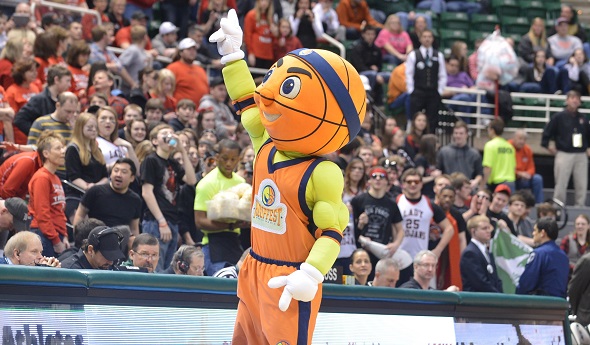
Hoopfest again also will be home to Hoopie, the event’s mascot who made his first public appearances during the 2014 MHSAA Finals.
Admission to the March Magic Hoopfest is $2 per person, and fans attending the MHSAA Boys Basketball Semifinals and Finals will be admitted free with their game tickets. Hours on March 22 and 23 will be 1 p.m. to 7 p.m.; the event is open from 10 a.m. to 6 p.m. on March 24. Jenison Field House, site of Hoopfest, also was the site of the MHSAA Boys Basketball Finals for 31 years. To find out general information about the event, visit the March Magic Hoopfest website.
The March Magic Hoopfest is conducted in partnership between the Greater Lansing Sports Authority (GLSA), a division of the Greater Lansing Convention and Visitors Bureau, and the MHSAA, with vital support coming from the Department of Intercollegiate Athletics at Michigan State University.
“Hoopfest is not just for kids, but the kid in all of us,” MHSAA Director of Brand Management Andy Frushour said. “The adults who stop in seem to love it as much as their children. There are basketball hoops everywhere, and with all of the different games to try it’s like being back on the playground.”
The Greater Lansing Sports Authority’s mission is to be the leading voice of sports tourism in the Greater Lansing area and to promote economic growth by attracting a diverse range of sporting events to the region. The GLSA strives to enhance the quality of life for area residents through the development of local sports and fitness programs for all ages, and supports the continued development and maintenance of safe, high-quality athletic facilities.
“Hoopfest has become the must-attend event for spectators of the MHSAA Tournament,” said Meghan Ziehmer, Associate Director of the Greater Lansing Sports Authority. “With games geared for all ages and abilities, the young and young-at-heart can play before, between and after sessions. With activities like the skills challenge, 3-point shooting contest and lowered rims to show off your athletic prowess, there is no shortage of fun activities.”
Applications Available for 2026-27 MHSAA/Farm Bureau Insurance Scholar-Athlete Awards
By
Geoff Kimmerly
MHSAA.com senior editor
October 6, 2026
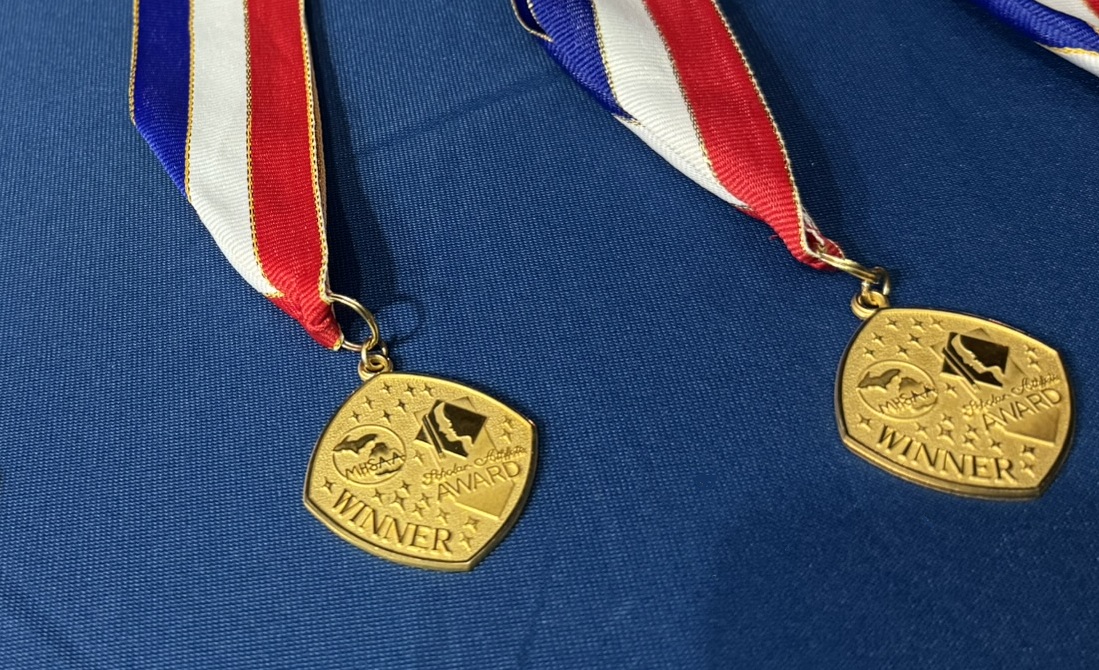
One of the Michigan High School Athletic Association’s most popular programs, the Scholar-Athlete Award, will again with Farm Bureau Insurance present 32 $2,000 scholarships to top student-athletes at member high schools during the 2026-27 school year.

The MHSAA/Farm Bureau Insurance Scholar-Athlete Award highlights the value extracurricular activities play in the total education of high school students, often improving their academic achievements in the process. The Scholar-Athlete Award is in its 38th year. Since the award’s inception in 1988-89, Farm Bureau Insurance has presented more than $1 million in scholarships through this program.
The first 30 scholarships will be presented on a graduated basis across the MHSAA’s traditional class structure. From Class A schools, six boys and six girls will receive scholarships; from Class B schools, four boys and four girls; from Class C schools, three boys and three girls; and from Class D schools, two boys and two girls will be honored. The final two scholarships will be awarded at-large to minority recipients, regardless of school size. The scholarships may be used at the institution of higher learning the recipients attend during the first year at those colleges.
Applications from individual schools will be limited to the number of available scholarships in their enrollment class. Class A schools may submit the names of six boys and six girls, Class B schools may submit four boys and four girls, Class C may submit three boys and three girls and Class D may submit two boys and two girls.
Students applying for Scholar-Athlete Awards must be graduating during the 2026-27 school year, carrying an unrounded 3.5 (on a 4.0 scale) grade-point average and have won a varsity letter in a sport in which the MHSAA sponsors a postseason tournament: baseball, girls and boys basketball, girls and boys bowling, competitive cheer, girls and boys cross country, field hockey, football, girls and boys golf, gymnastics, ice hockey, girls and boys lacrosse, girls and boys skiing, girls and boys soccer, softball, girls and boys swimming & diving, girls and boys tennis, girls and boys track & field, girls and boys volleyball and girls and boys wrestling.
Applicants will be required to show involvement in other school and community activities and submit an essay on the importance of sportsmanship in educational athletics.
Information – including answers to a number of frequently asked questions – and links to the application are available online on the Scholar-Athlete Award page. Applications are available in digital format only and must be submitted online by 4 p.m. Dec. 4.
A committee composed of school administrators from across the state will select finalists and winners in late January, with the winners to be announced throughout February. All applicants, finalists and scholarship recipients will be announced on the MHSAA Website. The 32 scholarship recipients will be recognized during the 2027 MHSAA Boys Basketball Finals at the Breslin Student Events Center in East Lansing.
Farm Bureau Insurance of Michigan was founded in 1949 by Michigan farmers who wanted an insurance company that worked as hard as they did. Those values still guide the company today and are a big reason why it is known as Michigan’s Insurance Company, dedicated to protecting the farms, families, and businesses of this great state. Farm Bureau Insurance agents across Michigan provide a full range of insurance services – life, home, auto, farm, business, retirement, Lake Estate®, and more – protecting more than 660,000 Michigan residents.
The MHSAA is a private, not-for-profit corporation of voluntary membership by more than 1,500 public and private senior high schools and junior high/middle schools which exists to develop common rules for athletic eligibility and competition. No government funds or tax dollars support the MHSAA, which was the first such association nationally to not accept membership dues or tournament entry fees from schools. Member schools which enforce these rules are permitted to participate in MHSAA tournaments, which attract more than 1.4 million spectators each year.