

NFHS's Gardner Announces Retirement
January 9, 2018
Special from NFHS
Bob Gardner, executive director of the National Federation of State High School Associations (NFHS) since May 2010, has announced his retirement, effective Aug. 1, 2018. Gardner notified the NFHS Board of Directors of his retirement plans at the NFHS Winter Meeting on Jan. 3 in Scottsdale, Arizona.
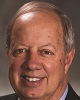 Gardner is the fifth full-time executive director of the NFHS, following H.V. Porter (1940-58), Cliff Fagan (1958-77), Brice Durbin (1977-93) and Bob Kanaby (1993-2010).
Gardner’s eight-year run as head of the national organization for high school athletics and performing arts activities will conclude a 48-year career in secondary education, including the final 18 years on the NFHS staff in Indianapolis.
Since assuming duties as NFHS executive director in 2010, Gardner has vigorously promoted the values of high school activity programs and expanded opportunities for participation by boys and girls nationwide. During his eight years as executive director, participation in high school sports has increased by almost 400,000, including the expanded opportunity for students with disabilities in high school sports.
Gardner has led the organization’s focus on risk minimization in high school sports, with particular emphasis on concussion awareness, and has brought a heightened national presence to the work of the NFHS and its member state associations. In addition to the continual expansion of the NFHS Learning Center during his tenure, Gardner is credited with starting the NFHS Network, the first-of-its-kind digital coverage of high school sports with more than 25,000 events covered during the 2016-17 school year.
In addition, during his eight years as chief executive of the organization, operating revenue for the NFHS increased by $4 million.
Ironically, Gardner’s entire 48-year career was spent in the state of Indiana. He was a teacher and coach at three schools for eight years and also served as an athletic director for a period of time. In 1978, Gardner became principal of Milan Junior-Senior High School, followed by a stint as superintendent of the Milan Community Schools.
After serving on the Indiana High School Athletic Association (IHSAA) Board of Directors during his time at Milan, Gardner joined the IHSAA staff in 1985 as assistant commissioner. He served 10 years in that role prior to becoming commissioner in 1995.
During his five years as IHSAA commissioner, Gardner led the change in the IHSAA football playoffs to permit participation by all schools, negotiated the association’s largest corporate sponsorship agreement in history with Indiana Farm Bureau Insurance and led the transition to multiple classes in team sports.
Gardner joined the NFHS staff in 2000 as chief operating officer and served in that position for 10 years prior to becoming executive director. During this time, he chaired the NFHS Rules Review Committee and was responsible for day-to-day operations of the organization.
Gardner earned his bachelor’s degree from the University of Evansville (Indiana) and his master’s and education specialist degrees from Ball State University in Muncie, Indiana. He has served on the Board of Directors for USA Football, USA Basketball and the Indiana Sports Corporation. He is a member of the Indiana High School Wrestling Hall of Fame.
Following the March 1 application deadline, finalists for the position will be interviewed by the NFHS Board of Directors April 17-18 in Indianapolis, with the new executive director expected to begin duties Aug. 1.

Marquette, Saginaw, Ann Arbor & Grand Rapids to Host MHSAA Sportsmanship Summits
By
Geoff Kimmerly
MHSAA.com senior editor
October 13, 2026
The MHSAA’s annual Sportsmanship Summit series will return this November with four stops across the Lower Peninsula, providing training on sportsmanship topics affecting students both on and off the field of play.
The MHSAA has conducted Sportsmanship Summits across Michigan for 30 years. This year’s series kicks off Nov. 9 in Marquette and finishes Nov. 18 in Grand Rapids.
MHSAA staff, with assistance from school administrators and the MHSAA Student Advisory Council, conduct Sportsmanship Summits. Up to 800 students are expected to take part in the four workshops, where they will discuss the line that separates good from bad sportsmanship, both as athletes during competition and while participating in off-field activities including as spectators at sporting events.
Workshop sessions will include discussions and hands-on activities on topics including working with game officials, building appropriate student cheering sections, social media behavior and parent conduct at school sports events. Summits also will feature a session developed and instructed by members of the Student Advisory Council. At the end of the day the delegation from each participating school will meet to develop a school sportsmanship campaign.
Sessions will take place at the following:
• Marquette – Nov. 9 – Northern Center at NMU – 9 a.m. - 1:30 p.m.
• Saginaw – Nov. 12 – The Conference Center at Saginaw Valley State University – 9 a.m. - 1:30 p.m.
• Ann Arbor – Nov. 16 – Sheraton Ann Arbor – 9 a.m. - 1:30 p.m.
• Grand Rapids – Nov. 18 – Sheraton Grand Rapids – 9 a.m. - 1:30 p.m.
The Sportsmanship Summit schedule rotates locations every year. In 2025, MHSAA staff conducted summits in Lansing, Troy, Traverse City and Kalamazoo.
Schools are welcome to bring as many as 10 total representatives, including two administrators. For additional registration information, contact Andy Frushour at the MHSAA office – [email protected] or (517) 332-5046. Registration information also is available on the Sportsmanship Resources page.