


Sampson to Join MHSAA Staff
July 12, 2016
By Geoff Kimmerly
Second Half editor
Jeremy Sampson, an award-winning sportscaster who founded and currently serves as president of the Lansing United semi-professional men’s soccer club, will join the Michigan High School Athletic Association staff later this month in the newly-created position of Ticketing, Promotions & Marketing Coordinator.
Sampson earned awards from the Michigan Association of Broadcasters and The Associated Press while serving as the weekend sports anchor from 2005-2013 for WILX in Lansing, where he also coordinated the station’s weekly high school highlights show. He previously worked as the sports broadcasting producer for Michigan State University from 2000-02 and most recently has served as a communications specialist for the Michigan Department of Treasury, coordinating internal communications and assisting with media relations.
He has gained valuable ticketing and event promotions experience from his role with Lansing United. Sampson created the franchise in 2013 and serves as its president and chief executive officer. In those roles, Sampson is in charge of all game day operations, hiring of the head coach and general manager, and developing and executing strategies for ticket sales and team promotion. Lansing United is a member of the National Premier Soccer League, which has more than 80 teams nationwide. The United has drawn on average just more than 1,000 fans per game during its three-season history, ranking third in the NPSL’s seven-team Great Lakes Conference West behind only franchises from much larger markets in Detroit and Grand Rapids.
In his role with the MHSAA, Sampson will take the lead in all ticketing operations and efforts to promote attendance at MHSAA events. The majority of revenue collected by the association for use in its operating budget is collected from ticket sales at postseason events it sponsors.
“The MHSAA is best-known for its tournaments, and this is the first time we have had someone on staff focused primarily on promotion of our events,” MHSAA Executive Director John E. “Jack” Roberts said. “Jeremy Sampson brings experience and ideas, and additionally he adds depth to our staff in a number of other important communications functions.”
Sampson, a native of Vermontville and graduate of Bath High School, also is a 1996 graduate of Michigan State University and earned a bachelor’s degree in journalism. He will begin his duties at the MHSAA on July 25.
2019-20 Officials Registration Underway
June 17, 2019
By Geoff Kimmerly
Second Half editor
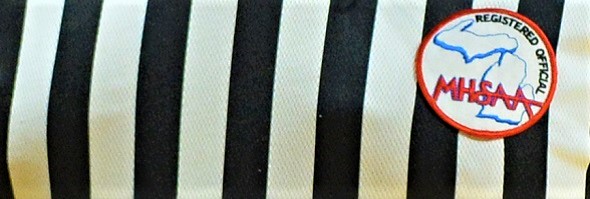
The MHSAA is accepting registrations online or by mail for game officials for the 2019-20 school year.
The MHSAA annually receives registration by more than 9,500 officials, and had 9,519 during the 2018-19 school year. The highest total of officials registered for basketball, 4,026, with football also with more than 2,000 registered officials during this past school year.
For all new and returning officials, those who register online again will receive a $5 discount off their processing fees. A $16 fee is charged for each sport in which an official wishes to register, and the online processing fee is $40. Officials submitting registration forms by mail or on a walk-up basis will incur a $45 processing fee. Officials registered in 2018-19 will be assessed a late fee of $30 for registration after July 31. The processing fee includes liability insurance coverage up to $1 million for officials while working contests involving MHSAA schools.
Online registration can be accessed by clicking “Officials” on the home page of the MHSAA Website. Forms also are available online that can be printed and submitted by traditional mail or hand delivery to the MHSAA Office at 1661 Ramblewood Drive in East Lansing. More information about officials registration may be obtained by contacting the MHSAA by phone at (517) 332-5046 or by e-mail at [email protected].
There is an officials' registration test for first-time officials and officials who were not registered during the past school year. The test is derived from the MHSAA Officials Guidebook, which also is available on the Officials page of the MHSAA Website. Additional exams must be taken by those registering for football or basketball for the first time or those who were not registered for those sports during the previous school year. Manuals for both sports also are available on the Officials page. New officials and those who didn’t officiate during 2018-19 also must complete the online MHSAA Principles of Officiating course, also available on the MHSAA Website.
There also are opportunities to officiate for students at least 14 years old and in grades 9-12 through the MHSAA Legacy Program. Juniors and seniors may officiate subvarsty contests, while freshmen and sophomores may officiate contests at the middle school/junior high levels. Mentor officials will work events with Legacy participants to provide guidance and support. Find information on the Legacy Program on the Officials page of the MHSAA Website.