

New Math: Division & Multiplication Problems
July 25, 2017
By Jack Roberts
MHSAA Executive Director
This is the second part in a series on MHSAA tournament classification, past and present, that will be published over the next two weeks. This series originally ran in this spring's edition of MHSAA benchmarks.
High school tournament classifications went viral before there was social media and most of us knew what “viral” meant.
Much as a virus infects computers today or has created epidemics of disease around the world for centuries, high school tournament classification – once introduced – tends to spread uncontrollably. Once started, it tends to keep expanding and rarely contracts.
While we are still some distance from providing every team a trophy as a result of expanding high school tournament classification across the country, there is criticism nevertheless that we are headed in that direction – a philosophy which is supposed to exist only in local youth sports for our youngest children.
Michigan could be blamed for all this. Michigan is generally accepted as the first state to provide different classifications for season-ending tournaments for different sized schools. It started a century ago. Today, every state has various classifications for its tournaments in most if not all sports. And it is a bit ironic that Michigan – creator of the classification chaos – more than most other states has kept the number of tournament classes or divisions under control.
Yes, there is evidence that tournament classifications have expanded over the years in Michigan, especially with the relatively recent introduction of tournaments in football and the late 1990s’ move from classes to divisions in most MHSAA tournaments. But the MHSAA Representative Council has held true to its word when it expanded the playoffs for football from four classes to eight divisions: this is needed because of unique factors of football, factors that exist in no other sport; and all other sports should be capped at a maximum of four classes or divisions.
Kentucky is the preeminent defender of single-class basketball. All of its 276 high schools compete for the single state championship for each gender. In Indiana, there are still open wounds from its move in 1998 from one to four classes for its 400 schools in basketball.
Multi-class tournaments have tended to increase the number of non-public school champions, which some states are trying to lower through enrollment “multipliers,” and also tend to increase the number of repeat champions, which some states are trying to affect with “success factors” which lift smaller schools into classifications for larger schools if they take home too many trophies.
While there is considerable evidence that state tournaments do as much bad as good for educational athletics, state associations persist in providing postseason tournaments because, on balance, the experiences are supposed to be good for student-athletes. And once we reach that conclusion it is just a small leap to believe that if the tournaments are good for a few, they must be better for more – which leads to creating more and more tournament classifications. One becomes two classes, then three, then four and so forth.
While the argument is that more classifications or divisions provides more students with opportunities to compete and win, it is undeniable that the experience changes as the number of tournament classifications expands. It is not possible for state associations to provide the same level of support when tournament classifications expand to multiple venues playing simultaneously. For example, there is less audio and video broadcast potential at each venue, and less media coverage to each venue. Focus is diluted and fans diminished at each championship.
No one can argue reasonably that today's two-day MHSAA Football Finals of eight championship games has the same pizazz as the one-day, four-games event conducted prior to 1990.
In some states the number of divisions has grown so much that it is difficult to see much difference between the many season-ending state championship games and a regular-season event in the same sport.
It is a balancing act. And Michigan has been studying that balance longer than any other state, and charting a steadier course than most.
Addition by Division
The shift to Divisions for MHSAA Tournament play in numerous sports has added up to a greater number of champions for teams and individuals across the state. Following are the sports currently employing a divisional format, and the procedures for determining enrollment and classification.
In 23 statewide or Lower Peninsula tournaments, schools which sponsor the sport are currently divided into nearly equal divisions. They are:
- Baseball - 4 Divisions
- Boys Bowling - 4 Divisions
- Girls Bowling - 4 Divisions
- Girls Competitive Cheer - 4 Divisions
- LP Boys Cross Country - 4 Divisions
- LP Girls Cross Country - 4 Divisions
- LP Boys Golf - 4 Divisions
- LP Girls Golf - 4 Divisions
- Ice Hockey - 3 Divisions
- Boys Lacrosse - 2 Divisions
- Girls Lacrosse - 2 Divisions
- Boys Skiing - 2 Divisions
- Girls Skiing - 2 Divisions
- LP Boys Soccer - 4 Divisions LP
- Girls Soccer - 4 Divisions
- Girls Softball - 4 Divisions
- LP Boys Swimming & Diving - 3 Divisions
- LP Girls Swimming & Diving - 3 Divisions
- LP Boys Tennis - 4 Divisions
- LP Girls Tennis - 4 Divisions
- LP Boys Track & Field - 4 Divisions
- LP Girls Track & Field - 4 Divisions
- Wrestling - 4 Divisions
Lists of schools for each division of these 23 tournaments are posted on MHSAA.com approximately April 1. Listings of schools in Upper Peninsula tournaments for their sports are also posted on MHSAA.com. The lists are based on school memberships and sports sponsorships in effect or anticipated for the following school year, as known to the MHSAA office as of a date in early March.
In football, the 256 schools which qualify for MHSAA 11-player playoffs are placed in eight equal divisions annually on Selection Sunday. Beginning in 2017, the 8-player divisions will be determined in a like manner on Selection Sunday as well, with 32 qualifying schools placed in two divisions.
Schools have the option to play in any higher division in one or more sports for a minimum of two years.
The deadlines for "opt-ups" are as follows:
- Applications for fall sports must be submitted by April 15
- Applications for winter sports must be submitted by Aug. 15
- Applications for spring sports must be submitted by Oct. 15
Subsequent to the date of these postings for these tournaments, no school will have its division raised or lowered by schools opening or closing, schools adding or dropping sports, schools exercising the option to play in a higher division, or approval or dissolution of cooperative programs.
When the same sport is conducted for boys and girls in the same season (e.g., track & field and cross country), the gender that has the most sponsoring schools controls the division breaks for both genders.
Thriving with Dual-Sport Athletes, Brandywine Claims 1st Girls Track Regional Title
By
Scott Hassinger
Special for MHSAA.com
June 17, 2026
NILES – Just a few days after the 2025 girls track & field season had ended at Niles Brandywine, Terry Borr and his coaching staff were already looking forward to the start of the 2026 campaign.
 "We had done a really good job at the 2025 Regional meet with the team finishing third. Our only goal that day was simply to qualify as many kids as we could for the state meet," Borr said.
Impressed with the effort put forth at last season’s meet by his Bobcats, Borr and his assistants used that as strong motivation for their athletes to attain high goals this spring.
"As a coaching staff we got together, talked things over and put some things in place with our No. 1 goal this spring being to win a Regional championship," Borr recalled.
Borr knew that wouldn't be an easy task at Brandywine, which like most small schools, must share several athletes with other spring sports teams. Out of 13 athletes on his 2026 track & field roster, eight were dual-sport participants.
Freshman Grace Colbert, junior Lily Gill, senior Karleigh Byrd and sophomore Alison Murray also played tennis.
"I managed to balance both tennis and track by prioritizing both as much as possible,” Byrd said. “Whether that was fitting in both practices and even matches and meets in the same day, that was easy to do because both my coaches are very understanding about each sport and my dedication to both programs.”
Freshman Hailey Smith also competed in softball, and freshmen Laila Wogatzke and Aubrey Burt are soccer players as well.
 "We don't have a lot of practice time with some of these girls. But a lot of them are all just quality athletes and that helped us out a great deal,” Terry Borr said. “Five of these girls have broken over six school records here over the last three years.”
Borr also credits the strong contributions of his assistant coaches Brian McNamara (distance runners), Becky Shafer (throws) and Jeff Miller (hurdles).
"Brian has really worked well with our distance runners. Jeff is our football coach and he worked this spring with some of our hurdlers. Becky does a great job with our throwers too," Borr said.
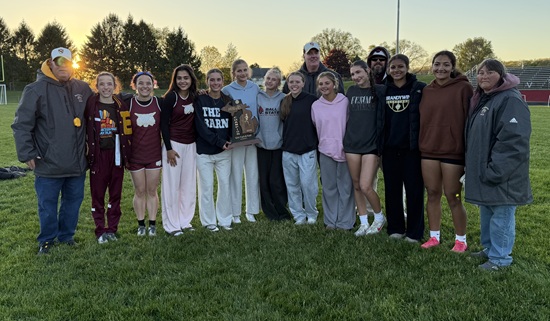
Despite being spread so thin with limited practice time for nearly half the squad, Brandywine accomplished its preseason goal of winning the first Regional championship in girls track. The Bobcats placed first with 97 points to claim the Division 3 Regional at Bangor.
Brandywine scored points in 13 of 17 events to take the top spot and edge Red Arrow (a cooperative of Three Oaks River Valley and New Buffalo) by three points.
"Almost everybody on our team scored for us in the Regional. It really was a team effort,” Borr noted. “A couple weeks before the meet we had the Red Arrow team beating us by three points. So we figured out where we could put kids in different events so we could gain the maximum amount of points.”
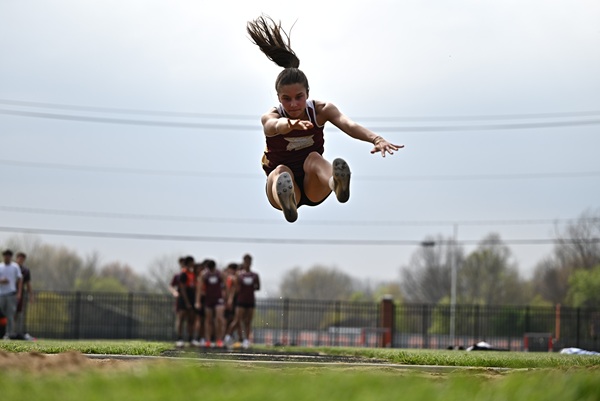
Brandywine junior Mackenna Price was the Regional long jump champion (15-10¼).
"I think what makes me such a good competitor in the long jump is my confidence and ability to set my mind to any distance I believe in. My athleticism helps me by allowing me to push myself to be the best athlete I can be," Price said.
She teamed with Allison Kline, Byrd and freshman Zaya Price for third in the 1,600 relay. She also placed eighth in the 800.
"Makenna's desire to work hard, get better, and improving her speed down the runway all make her a good long jumper. Now she's just working more on the technical aspects to keep improving," Borr said.
 Senior Allison Kline, sophomore Isabella Padron, Burt and freshman Laila Wogatzke took fifth in the 3,200 relay.
Zaya Price earned runner-up in the high jump. Murray placed second for Brandywine in the 1,600 run, fourth in the 3,200 and seventh in the 800.
"This year I succeeded the most in my 1,600. I enjoy that race the most because it takes a lot of mental strength, especially doing multiple events in one day. You really have to push yourself to the limit,” Murray said. “It's fun to watch myself and my mindset as years of running go by. My confidence and positivity are improving.
"I run cross country, and it prepares me well for track because it takes a lot of hard conditioning, like hills, pace workouts, long runs, and more. They are the same kind of workouts that you need to be successful in both sports. Since cross country is a whole 5K, the races in track, like the 800 and 1,600, feel way quicker and easier."
Byrd earned fifth in the 200 and joined Mackenna Price, Zaya Price and junior Lily Gill on the winning 800 relay (1:53.63).
"I think what makes our sprint relays so strong is that we are all so athletic and we have good chemistry. Everyone on our team pushes themselves, and we try our hardest," Zaya Price said.
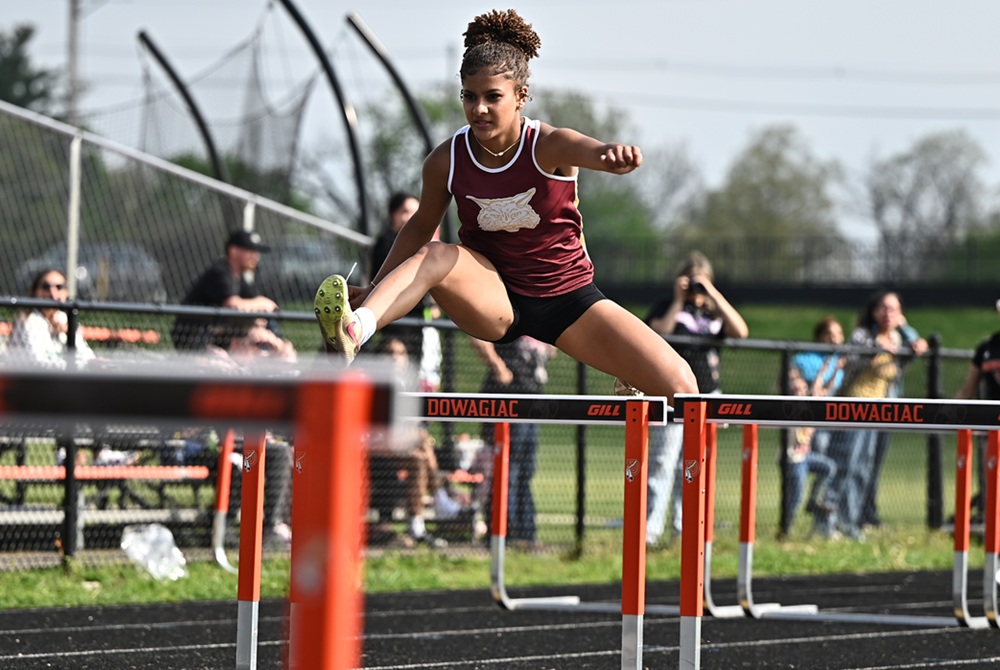
Gill was a Regional champ in the 100-meter hurdles (16.19) and earned second in the 300 hurdles. Colbert took second in the 100 hurdles.
"Lily is a great athlete who has yet to reach her full potential in the hurdles. Her mechanics have improved along with her speed and athleticism. That’s what makes her a great competitor,” Borr said. “We believe that Grace will be an all-stater within the next couple years in the hurdles as well.”
Colbert, Byrd, Zaya Price and Gill swiped second in the 400 relay.
"I enjoy running in the sprint relays because working with a team of really fast girls who work as hard as you is such a fun experience," Byrd said.
Brandywine had two all-state places at the Lower Peninsula Division 3 Finals on May 30 at Kent City. Gill finished sixth in the 100 hurdles, and Zaya Price was sixth in the high jump.
 Scott Hassinger is a contributing sportswriter for Leader Publications and previously served as the sports editor for the Three Rivers Commercial-News from 1994-2022. He can be reached at [email protected] with story ideas for Berrien, Cass, St. Joseph and Branch counties.
PHOTOS (Top) Niles Brandywine junior hurdler Lily Gill attacks a hurdle during one of her races this season. (Middle) Makenna Price sails through the air for Niles Brandywine in the long jump. (Below) The Niles Brandywine girls track & field team and coaching staff pose for a photo with the 2026 Division 3 Regional trophy at Bangor. (Action photos by Tanya Hagen. Team photo provided by the Niles Brandywine athletic department.)