

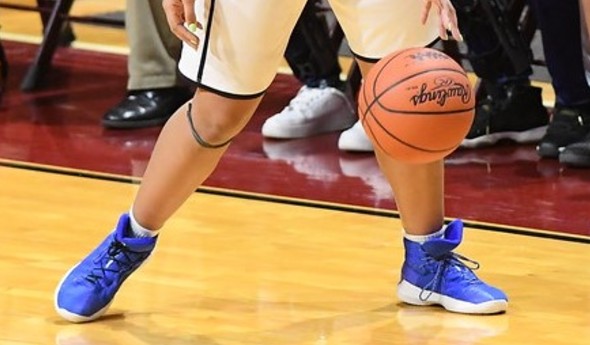
Navigating Twists, Turns Of Ankle Sprains
November 30, 2020

Henry Ford Health System
Oh, how the ankle turns! If you’ve had a misstep or wrong turn result in a sprained ankle, you know how painful this injury can be. Henry Ford podiatric surgeon Paul Di Liddo, DPM, discusses ankle sprains and treatments.
Ankle Injury 101
From risk factors to treatments (and nearly everything in between), here’s what to know — and do — about ankle sprains.
Sprained Ankles Are Painfully Common
In fact, they’re among the most frequent injuries in the United States, with up to 25,000 people per day spraining their ankles. Although often associated with sports, ankle sprains can happen to anyone, anywhere. “I see ankle sprains from tripping over curbs, stepping in holes in a yard or simply walking,” says Dr. Di Liddo. “Ankle sprains — like accidents — happen.”
Ankle Sprains Injure Ligaments
“Ankle sprains occur when the ankle suddenly and forcefully twists or rolls past a point that the ankle ligaments can tolerate,” remarks Dr. Di Liddo. “The ankle ligaments will stretch or tear, either partially or completely.” An ankle can twist, turn or roll during a fall, jump or change of direction, while walking on uneven ground and more.
A Weak Ankle Is A Vulnerable Ankle
Most sprained ankles heal without long-term concern. In some cases, however, ligaments may not fully heal, resulting in a weak or unstable ankle. “A weak or unstable ankle can make an individual more susceptible to repeated ankle sprains,” explains Dr. Di Liddo.
High Arches Can Be Risky Business
People who have high-arched feet are more at risk of rolling — and therefore spraining — their ankles. So are people who have “loose joints,” because the ankle can overstretch with a seemingly minor twist. People who are at-risk for ankle sprains should take extra precautions when playing sports or performing other activities.
Some Sprains Can Be Treated At Home — Emphasis On Some
How you treat a sprained ankle depends on the severity of the injury. Minor sprains can be treated at home with the RICE method. The RICE method include:
- Rest by avoiding use of the injured ankle
- Ice applied to the ankle (without touching the skin) for no more than 20 minutes every three to four hours
- Compression with an elastic bandage
- Elevation above the heart
Ice, compress and elevate your ankle for the first few days. Rest and refrain from sports until ankle pain and swelling have subsided.
At-home treatments aren’t right for everyone — or every ankle injury. “A swollen ankle is typical if you have experienced a sprain,” says Dr. Di Liddo. “However, if you have severe ankle swelling, are in extreme pain or notice an odd ankle appearance, seek medical attention.” This is also true if you can’t walk more than a few steps or have limited ankle mobility. A foot and ankle specialist can diagnose your injury and begin treatment.
Ankle Treatments Abound
Ankle sprain treatments are designed to decrease pain and swelling, while protecting the ligaments from further injury. Treatments include wearing an ankle brace, walking boot or cast. Physical therapy to strengthen the ankle and maintain range of motion may also be incorporated after the ligaments have started to heal.
“Of course, for more severe injuries, a thorough physical exam and X-rays are necessary,” says Dr. Di Liddo. “This helps ensure that there is no other underlying injury, such as a fractured ankle or Achilles tendon rupture.”
Healing Times Vary
The recovery time for a sprained ankle depends on the severity of the injury. Sprains with minimal ligament stretching and no tear require one to three weeks. Partially torn ankle ligaments may take up to six to eight weeks to heal. A fully torn ligament can take several months to fully heal.
What To Do When Ankle Problems Persist
For people who continue to experience ankle instability, there are a host of options. “Physical therapy is the first step — but not the only one,” says Dr. Di Liddo. “If physical therapy has not been beneficial, we can discuss surgical approaches.”
Surgical options include:
- Ligament repair or reinforcement via an outpatient procedure
- Osteotomy, which is surgical cutting of bone, to lower arches when ankle instability is caused by high arches
For those with frequent ankle sprains or instability, a medical assessment is necessary and may include:
- Physical exam
- X-rays to assess bones and joints
- MRI to evaluate ankle ligaments
With this information in mind, you can prevent — or address — the twists and turns of ankle sprains.
Want to learn more? Henry Ford Health System sports medicine experts are treating the whole athlete, in a whole new way. From nutrition to neurology, and from injury prevention to treatment of sports-related conditions, they can give your athlete a unique game plan.
Visit henryford.com/sports or call (313) 972-4216 for an appointment within 24 business hours.

NFHS Voice: Planning with Patience
May 30, 2020
By Karissa Niehoff
NFHS Executive Director
For several weeks, Americans have been awaiting answers to several questions. When will restaurants restart dine-in services? When will hair salons and gyms be open? When will people be able to congregate for worship services? And, of course, when will education-based sports and performing arts programs return?
And the answer to the all-important last question is the same as the first three – it varies from state to state.
If there was ever any doubt about the popularity and interest in high school sports and performing arts – and how much these programs have been missed during the past three months – it was erased last week as the NFHS released its Guidance for Opening Up High School Athletics and Activities document.
The response was non-stop through the mainstream media as well as our social media platforms as the first nationwide discussion about the return of high school sports and other activities was in full swing.
Since that disappointing week in mid-March when it seemed like all of life came to a halt, millions of people – from high school students, coaches, parents, administrators, officials and fans – have been looking forward to the return of school-based sports and other activity programs. And the guidance document offered some hope that soon the light at the end of tunnel will not be the oncoming train we have felt for many weeks.
Now, state high school associations are developing timetables and protocols for return of activities in their states. And those guidelines will be different from state to state. This is not a one-size-fits-all plan. Depending on the specific circumstances of a state with respect to the containment of the virus, its progression through the various phases of returning to activities could be much different than another state.
As the guidance document developed by the NFHS Sports Medicine Advisory Committee noted, our hope is that students can return to school-based athletics and activities in any and all situations where it can be done smartly. When it comes to education-based sports and performing arts within our nation’s schools, nothing is more important than the health and safety of the participants AND the individuals conducting those programs.
Some individuals have expressed concern that our guidance document is too cautious, noting that some non-school youth programs have already restarted in some areas.
In one state this past week, a non-school sports program was allowed to restart because the “data shows children are less affected by the coronavirus.” While the preponderance of evidence shows that to be true, plans in education-based activities will include also protection for adults who coach, officiate and administer those events, which may be seen as a more conservative approach.
Within high school sports, the drive of coaches and dreams of parents cannot run ahead of player safety. Last week, a successful high school football coach with three previous state titles was suspended for allegedly holding practices. And there have been reports of parents considering moving to another state with fewer COVID-19 cases to enhance the chance of their son playing football and earning a college scholarship.
The NFHS, through its Sports Medicine Advisory Committee, took action in developing its Guidance for Opening Up High School Athletics and Activities document. The various state high school associations are taking action in the coming weeks in developing plans for a return to activities at the state level.
Now, we would ask parents and other fans to take action – and that action is patience. The urge to return to normal is understandable, but the path back to where we were three months ago will take time, and that “time” will not happen at the expense of the safety and well-being of everyone involved in high school sports and performing arts programs.
Dr. Karissa L. Niehoff is in her second year as executive director of the National Federation of State High School Associations (NFHS) in Indianapolis, Indiana. She is the first female to head the national leadership organization for high school athletics and performing arts activities and the sixth full-time executive director of the NFHS, which celebrated its 100th year of service during the 2018-19 school year. She previously was executive director of the Connecticut Association of Schools-Connecticut Interscholastic Athletic Conference for seven years.