

Students Take Sports Leaders to Class
By
Rob Kaminski
MHSAA benchmarks editor
May 2, 2018
Compiled by Rob Kaminski
MHSAA benchmarks editor
MHSAA Student Advisory Council members were asked their opinions on several of the current issues facing the MHSAA Junior High/Middle School Committee and MHSAA Task Force on Multi-Sport Participation.
Click for Tuesday’s report on advances being made on both topics.
 Danny deForest
Senior
Holland West Ottawa
Danny has played soccer, basketball, and lacrosse in high school, while being involved in National Honor Society, Dance Marathon, WOBN (West Ottawa Broadcasting Network), and the Ping Pong Club. He played football, basketball and tennis, and ran cross country in junior high school.
Influence to Play Multiple Sports: “Sports have always just been a passion of mine and are something that helps keep all other aspects of my life in order. Without them I feel as if I'm not on a good schedule, and I find much more room to waste time, procrastinate, and overall lose productivity.”
On JH/MS Participation: “I believe it was important for me to start this in middle school because it just instilled a good work ethic in me to continue in high school.”
On Benefits of Multi-Sport Participation: “Playing multiple sports has benefitted me in countless ways. Socially, it has provided me with multiple different friend groups. Soccer alone has helped to give me a much better understanding of Hispanic culture, and I'm grateful to be friends with these teammates. It gives me a great reason to try hard in school, to keep my grades up, and makes me feel better about myself as I am very fit due to it.”
Ways in Which Schools Can Better Promote Multi-Sport Participation: “Schools should really work on having coaches cooperate for summer workouts in order to help multi-sport athletes. It is very difficult for us to make it to everything and we often feel as if it takes up nearly our whole summer, and stresses us out as coaches plan things at the same time. It’s hard on us because coaches get disappointed if we attend some and not others, but it’s very tough to manage it all.”
 Grace Reetz
Mount Pleasant Sacred Heart
Senior
Grace plays volleyball, basketball, softball, and runs track & field. She is a member of the NHS and in the drama club as well.
Influence to Play Multiple Sports: “I grew up with three brothers who all played baseball so I spent a good portion of my childhood at ballparks baking in the hot sun, but their interest definitely influenced my decision to play softball. After I joined the city youth team it was hard to stay away from any other activities. Softball was always my favorite, but over time I realized I didn't love softball nearly as much as I just loved to compete and be active. When I was younger I played soccer and swam competitively and was even in a dodgeball league. As I got into middle and high school sports I tailored my efforts towards those that I could actually play with my classmates through the school (Sacred Heart doesn't offer swimming or soccer).”
On JH/MS Participation: “Middle school sports for me were more social than anything else, but they helped me understand the game and get a good grasp on it before competing at the JV and Varsity level my freshman year. Being on a sports team as a 7th and 8th-grader gave me an immediate friend group and a sense of importance and helped make those years a little less painful.”
On Benefits of Multi-Sport Participation: “I found out that as much as I love the sports I play, I'm not cut out to play any of them year-round. I played for a travel softball team one year that played throughout the whole year from August to July with practice every weekend. By the end of that year, I basically hated the sport because I hadn't been able to take a break from it.
“I think my success I've had in each sport has been largely due to the fact that when I take some time off I get an itch to start playing them again. It keeps me from getting bored and allows me to stay highly motivated during every season.
“Physically working out different muscles also keeps me in better shape than if I were only playing one sport year-round. Playing defense in volleyball surprisingly translates very well into defense on the basketball court and down-and-backs in basketball practice keep me fit and develop my fast twitch muscles which benefit me in track season.
“I think being a part of many different teams has helped develop me as a person as well. In volleyball I act as the more serious leader and motivator, whereas on my basketball team I'm more of the comedic relief. In softball there's a little more tension so my role is just to keep everyone positive and together, and on the track team I become an ultra supportive teammate and back-up player. It's nice to play different roles on different teams with different people and see what new skills, both athletically and in a leadership sense, I'm capable of developing.”
Ways in Which Schools Can Better Promote Multi-Sport Participation: “In small schools like mine, if kids don't play multiple sports then there won't be multiple teams; there's just not enough kids. I play most of my sports with the same core group of girls, and it really makes team chemistry and switching from season to season an almost effortless process. I personally think it's kind of lame to only play one sport every day year-round. I think a lot of kids think the only way their dreams of playing at the collegiate level will come true is if they give up all their other activities to focus on that single sport. But that doesn't develop you as a person or as a leader; it only makes you a slightly more skilled athlete.”
 Neil Bazaj
Junior
Ann Arbor Greenhills
Neil is a soccer, basketball and track athlete, who played those sports and tennis in junior high school. He also adds Peer-to-Peer Math Tutoring, Captains Club and Gryphon Ambassadors to his activities.
Influence to Play Multiple Sports: “I have been playing soccer from a very young age, but have also had a natural love for basketball. I began running track as a way to stay fit, but I really enjoyed being part of the team and loved my coaches, so I stayed with the team. My decision to play numerous sports was mostly influenced by my love for the atmosphere that surrounds team sports and how much I enjoy sports myself.”
On JH/MS Participation: “I don’t think that it’s very important to start school sports in middle school; however, I do recommend it. It is an easy way to meet people, and if you are planning to play in high school it helps grow your skill in the respective sport.”
On Benefits of Multi-Sport Participation: “Participation in multiple sports has helped me physically by giving me more stamina and strength. It has also helped me stay in shape. Sports have helped me mentally by giving me something that is normally away from all the drama and problems that arise in high school (and lets me) just focus on the sports that I love.
“They have helped me socially by giving me opportunities to meet new people from each team for all grade levels. Track is co-ed, so it gives me a way to interact with girls as well as guys. Some of my best friends came from the teams I play on. Sports have helped me academically by giving me better time-management skills, which are important for when I do my homework and for my future.”
Ways in Which Schools Can Better Promote Multi-Sport Participation: “To help promote multi-sport participation, schools should show the bond that players on teams enjoy and show people how every team is like another family for someone. Also they could do a better job of making it clear that the school supports student-athletes, because I know at my school it often times feels like we lack support because we can barely get 10 people from the community to come out to events.”
 Chloe Idoni
Junior
Fenton
Chloe competes on the basketball and volleyball teams at Fenton, and also ran track in middle school in addition to those two sports. She also is a member of the NHS and Captains Club.
Influence to Play Multiple Sports: “It’s fun to be a part of a team and I love competing in sports.”
On JH/MS Participation: “It benefitted me a lot. You become familiar with your future teammates and the sport, which will help significantly when you get to high school.”
On Benefits of Multi-Sport Participation: “It taught me to manage my time well, and I made so many good friends that I still have today. It’s good to forget about everything that has happened that day and focus on the sport, and it keeps me in shape.”
Ways in Which Schools Can Better Promote Multi-Sport Participation: “I believe if your coach supported it, many more athletes would be multi-sport athletes. Sometimes athletes only play one sport because the coaches of different sports want to practice at the same time and the two overlap. Schools can also build up team chemistry within their sports teams because that will influence people to want to join the team because of how much fun they have.”
 Aaron Fahrner
Senior
Owendale-Gagetown
Aaron is a member of the school's football, basketball, and baseball teams, as he was in junior high school. He also is in the NHS and currently serve as the chapter’s president, and serves on the student council and youth advisory committees.
Influence to Play Multiple Sports: “Going to a small school, just about everyone has to play in order for there to be a team, so that is one of the main reasons I've played all the sports available.”
On JH/MS Participation: “I have an older brother who played every sport in high school. I always wanted to follow in his footsteps, so that led me to play all sports available in junior high, which carried over into high school.
“For me it was very important to start young. I started playing basketball on a school team in 5th grade, and that really helped me to develop my skills into the basketball player that I am today. I believe that if you start young you will learn the right way to play that sport and will continue to grow and further develop your skills.”
On Benefits of Multi-Sport Participation: “Playing in three sports helps me stay in shape for the next sports season. I am fortunate to be a 4.0 student and playing sports hasn’t had an effect, but I have seen teammates who keep better grades in order to be eligible to play that sport. I have met some of my closest friends through sports, whether they were on my team or an opposing team. Living in a rural area, many kids in the schools around me play many sports. By seeing these same kids throughout the year during sports, I have built many lasting friendships.”
Ways in Which Schools Can Better Promote Multi-Sport Participation: “At my school almost everyone who plays sports, plays all the sports. In other schools, I know that some kids don't play because they don't think they will make tryouts. If schools encouraged more kids to try out, then more kids will want to play.”
 Taylor Adams
Junior
Allendale
Taylor has played basketball and soccer since middle school, and is currently a member of the NHS.
Influence to Play Multiple Sports: “I really love soccer; it's my favorite sport. But when my mom started hyping up basketball, I really wanted to play it. In 7th grade I went out for basketball, and since then I've really enjoyed it. It's good to be a well-rounded two-sport or more athlete, especially if you're looking for athletic-related scholarships.”
On JH/MS Participation: “It was important to gain the knowledge and understanding of the sport before jumping into the big play at high school. It was great being able to get the opportunities and playing time that I needed to get good at the sport. It's important to learn the basics at a younger age so that you are able to compete once you get into high school.”
On Benefits of Multi-Sport Participation: “I've learned so many new skills and met so many new people. I've been able to grow as a leader and help others grow as well. From being a captain to being an underclassman on varsity, to being a part of the MHSAA SAC, sports have helped to shape my behavior and personality. It's pretty awesome when you can know people from all over your state and even outside your state because of sports. People are surprised when they hear how many connections I have because of my sports. And, it hasn't hurt my academics whatsoever; I've actually been able to still keep up my studies and continue to achieve a 4.0.”
Ways in Which Schools Can Better Promote Multi-Sport Participation: “I think that if sports games and teams are better advocated for both genders, as well as for every sport, that would be beneficial to the cause. If every sport is advocated, more people will know about them and want to participate.”
 Shane Dolan
Junior
Clarkston Everest Collegiate
Shane plays soccer, football, basketball, and runs track at the high school level, and is an NHS member. He participated soccer, football and basketball during middle school.
Influence to Play Multiple Sports: “Originally, it was my desire to try new things and see how well I could do. This led to me enjoying and constantly playing all of the sports I still play today.”
On JH/MS Participation: “It’s very important if you want to be elite or be one of the top players in a given sport at your school. The sooner you start, the sooner you can get a feel for the game and constantly work to improve yourself and your skills.”
On Benefits of Multi-Sport Participation: “Physically it has helped make me stronger and kept me in good shape. Mentally it has helped me make quick decisions and hone my reaction time. Socially it has helped me to make so many new friends and form strong bonds with others. Academically it has taught me the importance of time management and hard work.”
Ways in Which Schools Can Better Promote Multi-Sport Participation: “The one thing I would say that schools can improve upon is promoting all sports equally so that students will be encouraged to join any team they would want to as the school and other students show support for all sports, not just football and basketball.”
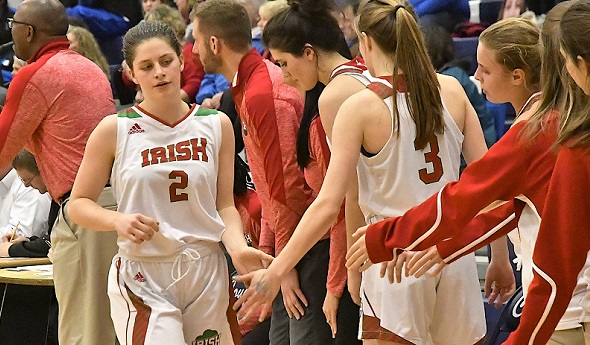
PHOTO: Mount Pleasant Sacred Heart's Grace Reetz comes off the court to congrats from her teammates after a win this winter. (Click to see more from HighSchoolSportsScene.com.)
Performance of the Week: West Bloomfield's Elizabeth Eichbrecht
November 28, 2025
 Elizabeth Eichbrecht ♦ West Bloomfield
Senior ♦ Swimming
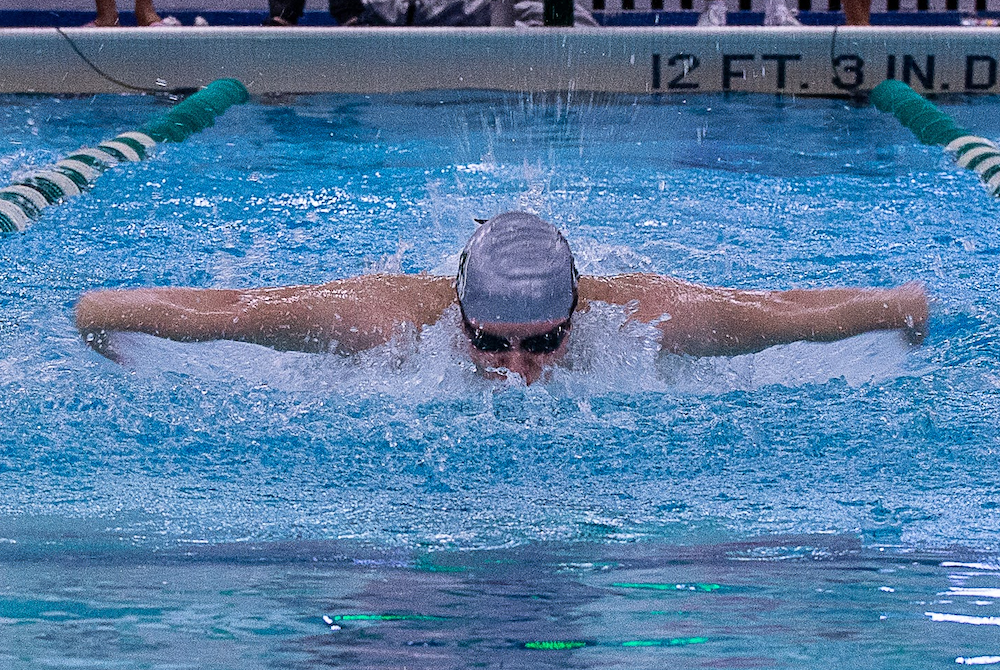
Eichbrecht finished her high school career last week by completing career Finals sweeps in the 200 and 500-yard freestyles at the Lower Peninsula Division 1 championship meet at Oakland University. She set all-Finals records in both races, swimming a 1:45.05 in her 200 prelim to break the 2007 record set by past Canton star and later Olympic medalist Allison Schmitt. Her 500 prelim time of 4:42.00 broke the 2017 record set by Grand Ledge's Lola Mull.
Eichbrecht went on to swim 1:45.98 in the 200 and 4:42.89 in her championship races to win them by more than 5 and 16 seconds, respectively. She had entered the meet with seed times of 1:45.48 and 4:41.54. She improved on her Finals times from a year ago by three seconds in the 200 and nearly 10 in the 500. Eichbrecht will continue at Indiana, which is coming off a record fourth-place finish at last season's NCAA championship meet.
@mhsaasports 🏊♀️POW: Elizabeth Eichbrecht #swimming #westbloomfield #highschoolsports #performanceoftheweek #MHSAA ♬ Bright and fun upbeat pops, Kids, Animals, Pets, Fun, Cute, Happy, Playful, Upbeat(1465232) - SAKUMAMATATA
@mhsaasports 🏊♀️POW: Elizabeth Eichbrecht #funfacts #tiktalk #performanceoftheweek #highschoolsports #MHSAA ♬ Girly and cute synth pop - SAKUMAMATATA
Follow the MHSAA on TikTok.
MHSAA.com's "Performance of the Week" features are powered by MI Student Aid, a division within the Department of Lifelong Education, Advancement, and Potential (MiLEAP). MI Student Aid encourages students to pursue postsecondary education by providing access to student financial resources and information. MI Student Aid administers the state’s 529 college savings programs (MET/MESP), as well as scholarship and grant programs that help make college Accessible, Affordable and Attainable for you. Connect with MI Student Aid at www.michigan.gov/mistudentaid and find more information on Facebook and Twitter @mistudentaid.
Previous 2025-26 honorees
Nov. 20: Brady Kieff, Blanchard Montabella football - Report
Nov. 13: Ella Laupp, Battle Creek Harper Creek swimming - Report
Nov. 7: Hunter Eaton, Charlevoix cross country - Report
Oct. 31: Stephen Gollapalli, Lansing Christian tennis - Report
Oct. 23: Talya Schreiber, Pickford cross country - Report
Oct. 16: Avery Manning, Dexter golf - Report
Oct. 9: Brady Van Laecke, Hudsonville football - Report
Oct. 2: Sarah Giroux, Flat Rock volleyball - Report
Sept. 25: Sam Schumacher, Portage Central tennis - Report
Sept. 18: Kaylee Mitzel, Saline field hockey - Report
Sept. 11: Natasza Dudek, Ann Arbor Pioneer cross country - Report
Sept. 4: Kate Posey, Big Rapids golf - Report
(Photos courtesy of the Eichbrecht family.)